
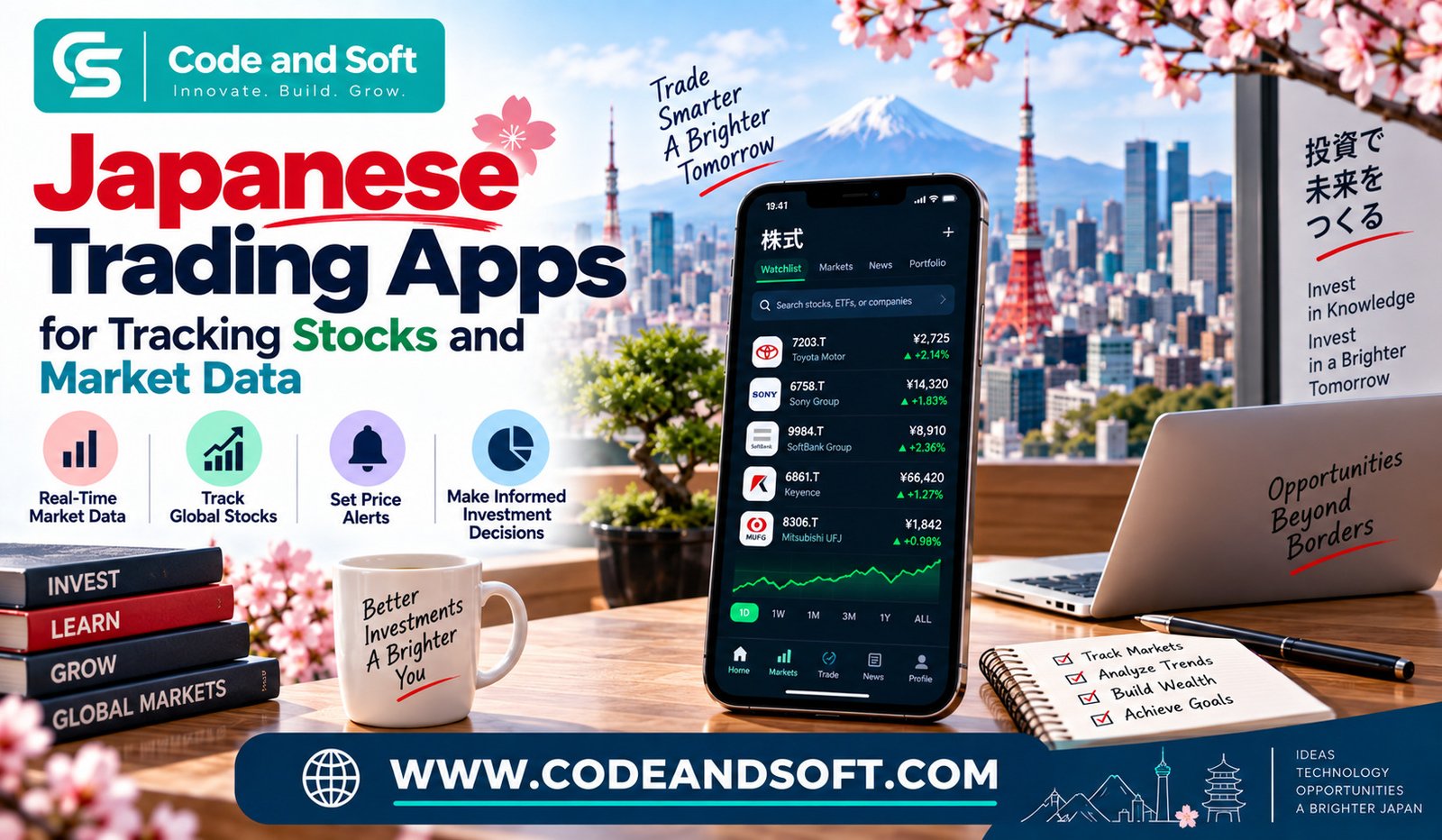

Tracking market movements in Japan requires clear information and fast updates. Retail investors need reliable tools to check prices on the Tokyo Stock Exchange. Selecting proper Japanese Japanese trading apps for tracking stocks and market data gives you immediate access to price charts and financial news. This detailed guide covers the best mobile tools available today and explains how to monitor your investments easily.
Essential Features in Stock Market Apps
Monitoring financial markets requires tools that deliver accurate price quotes and clear technical charts. Selecting an application with strong features helps you track asset values with accuracy.
- Real-time quote feeds: Live price updates allow you to monitor active price movements without frustrating delays during exchange hours. Delayed data often leads to inaccurate trade timing when stock prices move quickly in volatile conditions.
- Interactive technical charts: Visual charting tools allow users to study historical price patterns through clean graphics. Investors rely on technical analysis indicators like moving averages and volume bars to evaluate stock momentum across daily or weekly timeframes.
- Order book depth: Displaying the full order book reveals live buyer and seller interest for individual shares. Seeing the queue of bids and asks gives traders a clearer view of market liquidity before placing larger trades.
- Custom watchlists: Grouping target assets into organized lists makes daily price monitoring simple across various business sectors. You can monitor whole industries together on a single screen without needing manual searches every time.
- Push price alerts: Automated phone notifications inform you immediately when a stock hits your target price. Instant alerts prevent the need to look at your mobile screen continuously throughout the trading session.
- Financial news feeds: Integrated news streams deliver company quarterly reports and national economic updates directly to your device. Timely updates help you understand sudden shifts in share value during active market hours.
Top Japanese Trading Apps for Tracking Stocks and Market Data
Several mobile applications dominate the retail investment sector in Japan today. Each platform offers unique tracking tools designed for different trading styles and experience levels.
- iSPEED by Rakuten Securities: This application provides extensive customization options for active investors. Users can set up personalized market dashboards, track Nikkei index trends, and view detailed company financials easily. The platform integrates directly with Rakuten points programs, which appeals strongly to domestic retail investors in Japan.
- SBI Securities Mobile App: SBI Securities serves millions of individual account holders across the nation. The mobile tool delivers stable market data, detailed balance sheet breakdowns, and order tracking features. Beginners appreciate the straightforward menu layout, while experienced users value the reliable execution connections to local exchanges.
- moomoo Japan App: This international platform offers advanced visual charts and deep order book data for retail traders. Users access level two market quotes, institutional ownership data, and interactive stock screeners without paying high subscription fees. The clear graphic interface helps users compare global assets against Japanese equities on one unified screen.
- Monex Trader Mobile: Monex provides specialized analytical tools for equities and foreign currency tracking. The software features custom chart overlays, customizable watchlists, and comprehensive corporate event calendars. Investors who track corporate earnings releases frequently use this app for detailed schedule updates and financial summaries.
- Matsui Securities App: Matsui offers a simple interface focused on fast market tracking and quick order placement. The application displays live board conditions, historical dividend payouts, and simple stock screening criteria. Novice traders find the uncomplicated screen designs helpful when learning market basics without distraction.
Understanding Data Access and Platform Costs
Understanding operational expenses and data access rules helps you avoid unexpected platform charges. Different brokerages structure their data feeds and service fees in unique ways.
- Standard execution commissions: Certain mobile brokers charge a fixed fee per transaction, while others offer commission free trading on selected index funds. Reviewing execution fees beforehand protects your capital over long investment periods and high transaction volumes.
- Real-time market data fees: Basic price feeds are often free, but premium level two order book data may require active trading volume or monthly payments. Verifying data subscription rules ensures continuous access to live market feeds during busy market hours.
- Foreign exchange conversion rates: Converting foreign currencies into Japanese Yen incurs currency conversion margins. Choosing platforms with competitive foreign exchange spreads reduces costs when moving capital across international stock markets.
- Account maintenance expenses: Most modern digital platforms host accounts for free, but traditional financial institutions may charge annual handling fees. Checking maintenance terms prevents surprise deductions from your available cash balance over time.
- Fund withdrawal transfer fees: Transferring money back to your primary bank account is usually free through major domestic banks. Express money transfers or international wire transfers may carry additional processing charges from intermediary banking partners.
Tracking Tokyo Stock Exchange Data Efficiently
Following movements on the Tokyo Stock Exchange requires an organized approach to daily market schedules. Applying structured tracking habits ensures you stay informed without feeling overwhelmed by constant information.
- Monitor key benchmark indexes: Track the Nikkei 225 and TOPIX indexes every morning to gauge general market sentiment. Broader index movements show whether buyers or sellers control the overall market direction during the opening session.
- Review proprietary trading systems: Check evening price action through domestic proprietary trading systems to monitor off-hours trading activity. PTS session activity often signals how stock prices will open the next morning before official market hours begin.
- Organize sector watchlists: Group your target equities by industry sectors like technology, automotive, or financial services. Organizing stocks by business category helps you spot sector rotation trends quickly across different economic cycles.
- Set automated price threshold alerts: Program specific target prices into your app so you receive immediate mobile alerts. Automated alerts free you from checking live chart screens continuously during working hours or personal time.
- Track corporate earnings calendars: Mark upcoming quarterly results dates for every company on your personal watchlist. Earnings announcements frequently cause sharp price swings that present trading opportunities or unexpected market risks.
How to Choose the Right Mobile Platform
Selecting an application depends on your personal financial goals, trading frequency, and preferred research tools. Evaluating key criteria beforehand guarantees that your chosen app matches your routine.
- Verify regulatory registration: Confirm that the brokerage firm holds official licensing from the Financial Services Agency of Japan before opening an account. Regulated platforms protect user deposits through segregated client cash accounts and strict compliance audits.
- Assess user interface simplicity: Test how quickly you can search for stock ticker symbols, open price charts, and review portfolio balances. A clean interface prevents costly order errors during fast moving market conditions when seconds matter.
- Examine language settings: Check whether the application supports English or your preferred language if you do not read Japanese fluently. Several domestic apps operate exclusively in Japanese, while global platforms provide full English translation options across menus.
- Evaluate customer service response: Ensure the platform provides reliable customer support through live chat, phone, or email. Responsive support teams resolve deposit delays or platform technical issues quickly when you need assistance.
- Test bank connectivity speed: Verify how fast funds transfer from your local bank account into your trading portfolio. Instant deposit features allow you to capitalize on sudden market movements without waiting days for funds to clear through traditional methods.
Key Takeaways
- Regulatory safety: Authorized trading applications operate under strict supervision from the Financial Services Agency to safeguard client deposits.
- Data access: Leading mobile tools deliver real-time stock quotes, deep order book charts, and instant price notifications for active traders.
- Cost management: Comparing exchange commission rates, foreign currency fees, and data subscription costs protects long-term portfolio growth.
- Language options: International investors must check language settings, as several native Japanese applications operate only in Japanese.
FAQs
Are Japanese trading apps safe for retail investors?
Licensed Japanese trading apps follow strict protection rules set by the Financial Services Agency to safeguard client capital.
Can international investors use Japanese trading applications?
Foreign residents in Japan can open trading accounts if they possess valid residency cards and local tax numbers.
Which agency regulates stockbrokers in Japan?
The Financial Services Agency oversees all financial market institutions and licensed investment brokers in Japan.
Do stock tracking apps in Japan charge monthly subscription fees?
Most basic stock tracking applications offer free access to price charts and market news after registration.
Can I track international stocks on Japanese trading apps?
Many major Japanese investment applications allow users to monitor both domestic equities and international stock markets on one dashboard.
Conclusion
Selecting reliable Japanese trading apps for tracking stocks and market data helps you manage personal investments with confidence. Modern digital platforms combine regulatory security under national government agencies, clear charting tools, and live market updates. Evaluating your preferred asset classes, language needs, and research requirements ensures you find a software tool that supports your personal wealth strategy over time.