
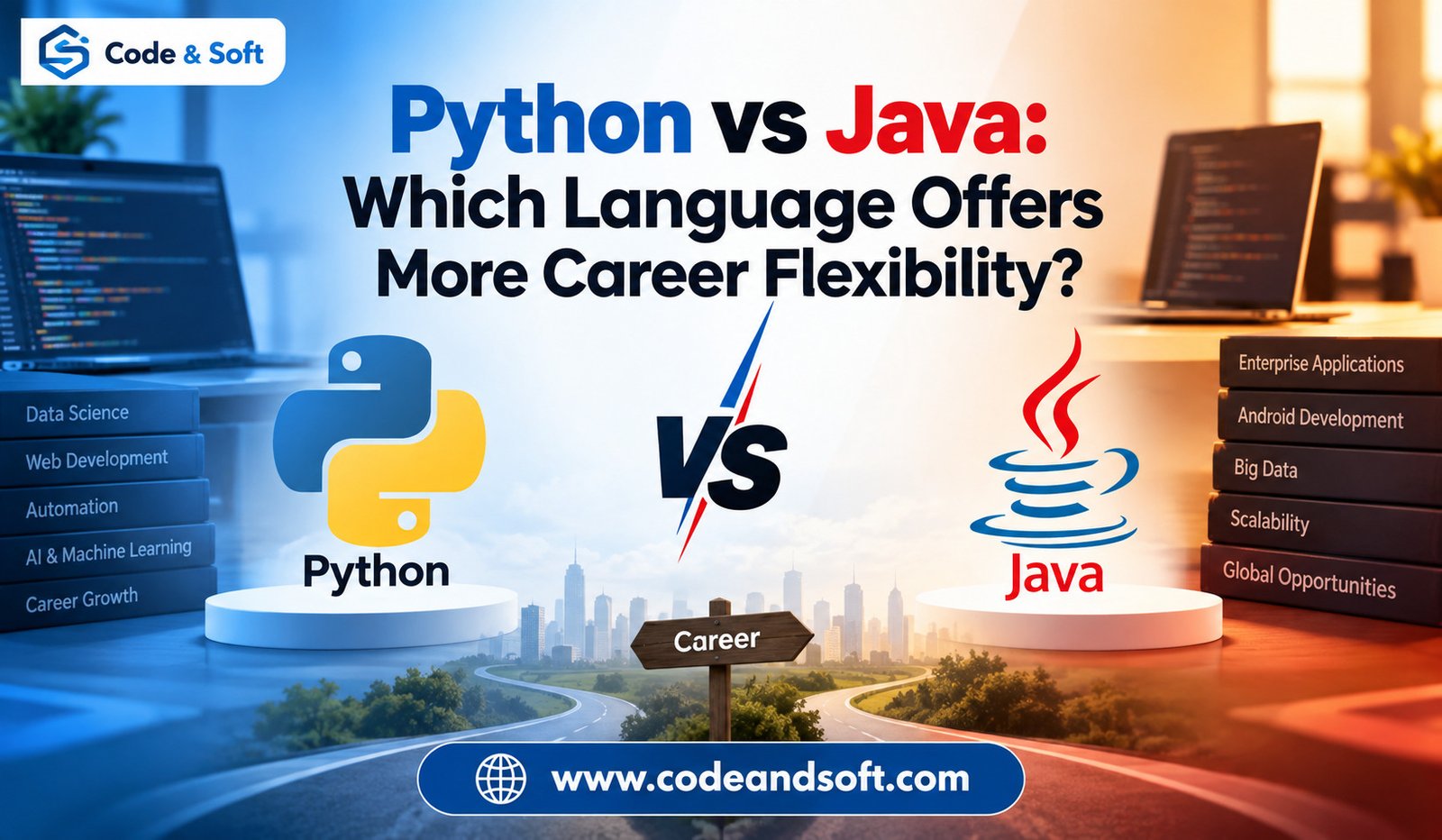

Choosing a programming language is one of the biggest decisions for anyone starting or growing a career in software development. Two names that continue to stand out are Python and Java. Both have been around for many years, both are widely used by companies, and both can lead to strong career opportunities.
However, Python and Java are not used in exactly the same way. Python is known for its simple syntax and wide use in areas such as data work, automation, artificial intelligence, web development, and education. Java is known for its reliability and long history in business software, Android development, web applications, and large company systems.
So, when it comes to career flexibility, which one is better?
The answer depends on what kind of work you want to do. Python generally gives beginners a wider range of modern career paths with less effort to get started, while Java remains a very strong choice for people who want to work on large business applications and long-running software projects. Understanding the differences can help you make a better decision.
Understanding Python and Java
Python is a programming language designed to be easy to read and write. Its code often looks closer to normal English than many other programming languages. This makes Python popular among beginners, students, developers, researchers, and professionals who want to build software without dealing with overly complicated code.
Python is used in many areas. A person who learns Python can move into web development, automation, data analysis, artificial intelligence, machine learning, testing, scripting, and other technology-related roles. Python is also used outside traditional software development, which gives it an interesting advantage for people who want to combine programming with another field.
Java has a different history. It has been used for decades to build software for businesses, websites, mobile applications, financial systems, and many other products. Java is designed for building reliable applications that can handle large amounts of work.
Java may take more time for a beginner to understand compared with Python, but learning it can provide a strong foundation for software development. Many large companies continue to use Java because they already have important applications built with it and need developers who can maintain, improve, and expand those systems.
Which Language Is Easier to Learn?
For most beginners, Python is easier to learn.
Python uses a clean and simple style. A new programmer can often write a small Python program after learning only a few basic concepts. This allows beginners to see results quickly, which can make the learning process more enjoyable.
Java requires more structure. Beginners have to understand several concepts before they can comfortably create larger programs. This does not make Java a bad choice, but it can make the first stage of learning feel more difficult.
For someone who has never written code before, Python can therefore be a good starting point. Once a person understands programming through Python, learning another language such as Java can become easier.
That said, ease of learning should not be the only factor when choosing a career language. A language that is easy to learn is useful, but career opportunities, personal interests, and the type of software you want to create are equally important.
Python Career Opportunities
Python has become popular across a wide range of technology fields. One reason is that it is not limited to one particular type of software.
Web developers use Python to create websites and online services. Python is also heavily used for working with data. Companies use it to process information, create reports, and find useful patterns in large collections of data.
Another major area is artificial intelligence. Python has become one of the most commonly used languages for building and testing modern AI applications. People working with machine learning, data science, automation, and related technologies often use Python.
Python is also useful for automation. Instead of doing the same computer task manually again and again, developers can write Python programs to handle repetitive work. This is valuable in areas such as testing, system administration, data processing, and office workflows.
Because Python appears in so many areas, a developer can change career direction without completely starting over. Someone who begins with web development, for example, may later move into automation or data-related work while continuing to use Python.
This ability to move between different types of work is one of Python’s biggest advantages when discussing career flexibility.
Java Career Opportunities
Java also provides a wide range of career opportunities, although its strongest presence is in different areas.
Java has a major role in business software. Banks, insurance companies, retailers, technology companies, and other large organizations have used Java to build important applications. These systems often need regular updates and maintenance, which creates continued demand for Java developers.
Java is also used for web applications and backend software. Many companies use Java to build the part of an application that handles business rules, user requests, data processing, and communication between different parts of a system.
Java has also had a long connection with Android development. Although Android development has changed considerably over the years and Kotlin has become very important, Java remains relevant because many existing Android applications were created using it.
Another advantage of Java is its strong presence in large companies. Businesses that have relied on Java for many years continue to need developers who understand their existing software. This can make Java a dependable career choice for people interested in long-term software development careers.
Python vs Java for Web Development
Both Python and Java can be used to build websites and web applications.
Python is attractive because developers can build applications relatively quickly. Its simple syntax can make everyday development easier, especially for small teams and developers who want to experiment with ideas.
Java is often found in larger business applications. Companies that need software to support complex business operations have used Java for many years. Developers working on these applications may spend their time improving existing systems, creating new features, fixing problems, and connecting different parts of a business platform.
For someone interested in web development, neither language is automatically the winner. Python can be a great choice for flexibility and ease of development, while Java can be a strong choice for people interested in large business applications.
Python vs Java for Artificial Intelligence and Data
This is an area where Python has a clear advantage.
Python is widely used for data analysis, machine learning, artificial intelligence, and scientific work. Its large collection of available tools makes it easier for developers and researchers to work with data and create AI applications.
This does not mean Java has no place in these areas. Java can be used to build systems that use AI and process large amounts of information. However, Python is much more common for learning, experimenting, developing, and testing AI and data projects.
As AI continues to become part of more industries, Python’s position in this area gives it an important career advantage.
Someone who wants to work in AI or data-related careers will usually find Python a more natural language to learn first.
Python vs Java for Enterprise Software
Java has a strong advantage when it comes to large business applications.
Many companies have spent years building their software around Java. These applications can be extremely important to daily business operations. Replacing them completely would often be expensive and unnecessary, so companies continue to hire Java developers to maintain and improve them.
This creates a stable career path for developers who enjoy working on large software projects.
Python is also used by businesses, but Java has a particularly strong reputation in traditional enterprise software. If your goal is to work for large organizations and build systems that support major business operations, Java can be an excellent choice.
Which Language Has Better Job Flexibility?
Python probably has the edge in overall career flexibility.
The reason is simple: Python can be used in many different areas. A Python developer may work in web development, automation, data, testing, AI, research, or other fields. This gives developers more opportunities to change direction while continuing to use the same main language.
Java is also flexible, but its strongest opportunities are more concentrated around software development, business applications, backend systems, and related areas.
This difference matters when thinking about your long-term career.
Technology changes quickly. A person who learns a language that can be used across several fields may have an easier time adapting when new opportunities appear. Python’s growing role in AI and data makes it especially attractive in this respect.
Which Language Is Better for Beginners?
Python is generally the better choice for beginners.
Its simple writing style lets new programmers focus on learning how programming works instead of spending too much time understanding complicated code. This can make it easier to build small projects and gain confidence.
However, beginners should not avoid Java simply because it is more difficult at first. Java teaches strong programming habits and can prepare developers for serious software development work.
If you already know that you want to work in large business software, Java may be worth learning from the beginning.
For someone who is unsure about their career direction, Python may provide a smoother starting point and more room to explore different areas.
Salary and Career Growth
Salary should not be the only reason to choose a programming language. Both Python and Java developers can earn good salaries, especially after gaining experience.
Your income will usually depend on your skills, experience, location, company, job role, and the type of projects you work on. Simply knowing Python or Java does not guarantee a high salary.
A developer who understands programming well and can solve real problems will usually have better opportunities than someone who only knows the basic commands of a language.
For long-term growth, it is therefore better to focus on becoming a strong developer rather than chasing the language that appears to have the highest salary at a particular moment.
Should You Learn Both Python and Java?
If you have enough time, learning both can be a smart decision.
You do not need to learn them at the same time. Starting with Python can help you understand basic programming concepts in a simpler environment. After gaining confidence, you can move to Java and learn how it approaches software development.
Knowing both can also make you more adaptable. You may find that one language is better for a particular project while the other is better for another type of work.
More importantly, learning multiple languages teaches you that programming is about solving problems, not simply memorizing commands from one language.
Once you understand the basic ideas behind programming, moving between languages becomes much easier.
Python vs Java: Which One Should You Choose?
If career flexibility is your main concern, Python is probably the better choice.
Python gives you opportunities across web development, automation, data, AI, testing, and several other areas. It is also beginner-friendly, which makes it easier to start building projects and gaining practical experience.
Java remains an excellent choice for people who want to work with large business applications, backend systems, and established software used by major organizations. It offers a dependable career path and remains an important language in the professional software world.
The best choice ultimately depends on your goals. If you want a simple starting point and the freedom to explore different technology fields, start with Python. If you are interested in large-scale business software and want to build a career around established development environments, Java may suit you better.
There is also nothing wrong with learning Python first and Java later. In fact, that combination can give you a broader understanding of software development.
Final Thoughts
Python and Java are both valuable programming languages, but they offer different advantages.
Python stands out for its simplicity, wide range of uses, and strong position in growing areas such as artificial intelligence and data. Java stands out for its reliability, long history, and strong presence in large business applications.
When the question is specifically about career flexibility, Python has a slight advantage because it allows developers to explore more types of work using the same language.
Still, your programming language is only one part of your career. Practical projects, problem-solving ability, communication, continuous learning, and real-world experience matter just as much.
Choose the language that matches the direction you want to explore, start building real projects, and keep learning. Whether you begin with Python or Java, strong programming skills can open the door to many different career opportunities.