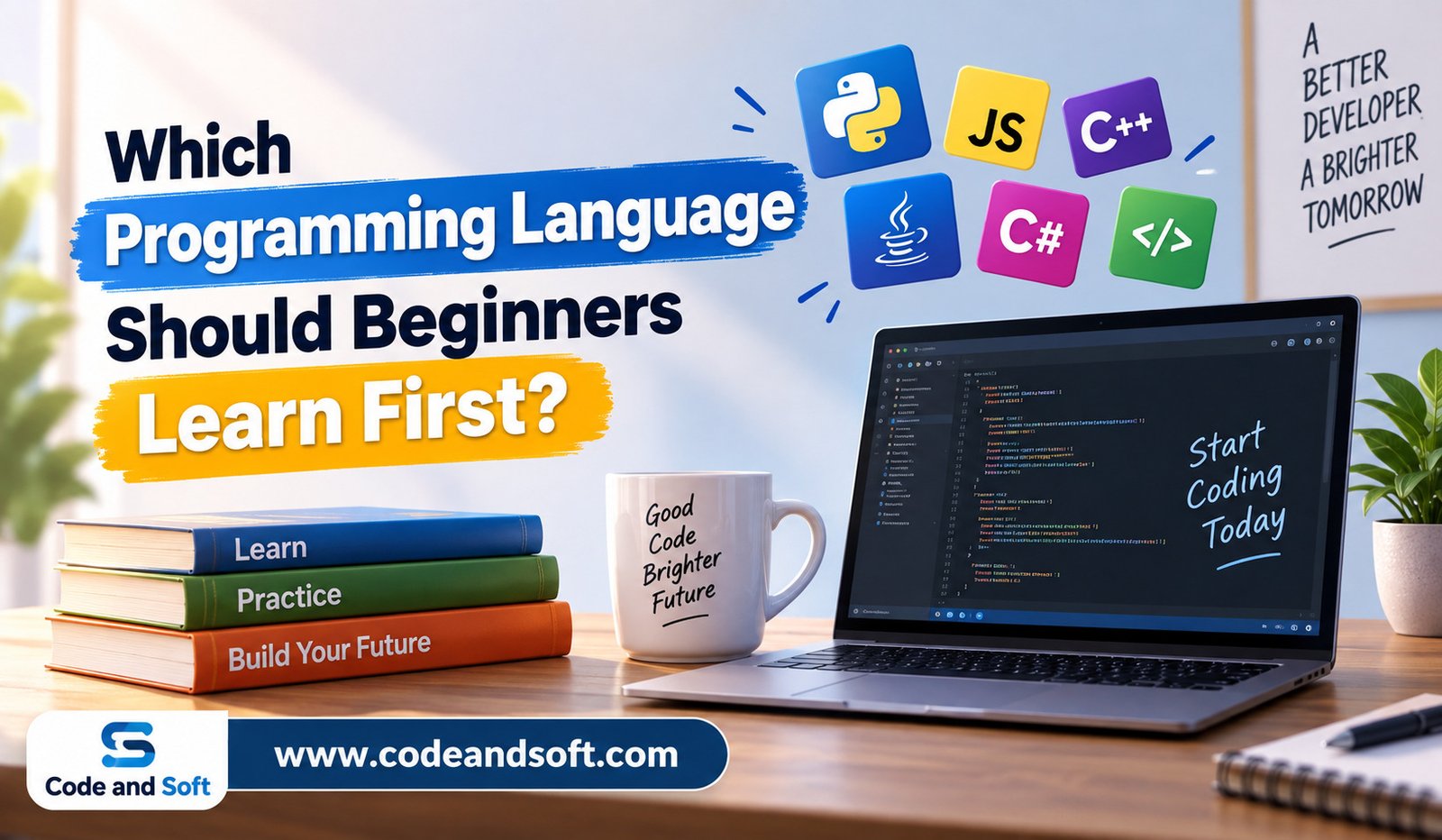

Learning to code can feel confusing at first. There are many programming languages, and each one seems to have its own purpose. Beginners often ask the same question: Which programming language should I learn first?
The good news is that there is no single language that is perfect for everyone. The best choice depends on what you want to create and how you want to use your programming skills. However, some languages are much easier for beginners to understand than others.
For most people starting from zero, Python is one of the best programming languages to learn first. It has simple-looking code, is widely used, and can help beginners understand the basic ideas of programming without making the first steps unnecessarily difficult.
That does not mean Python is the only good choice. JavaScript can be a better option for someone who wants to build websites, while Swift may be suitable for someone interested in iPhone apps. The important thing is to choose a language that matches your goal and then spend enough time practicing it.
Why Choosing Your First Programming Language Matters
Your first programming language can shape how you feel about learning to code. If the language is difficult to understand and the learning material is complicated, you may become frustrated before you have a chance to enjoy programming.
A beginner-friendly language lets you focus on learning how programming works. You can learn how to give instructions to a computer, work with information, make decisions, repeat actions, and solve simple problems.
Once these ideas become familiar, moving to another programming language becomes much easier. The language may change, but many of the basic ideas remain similar.
This is why beginners should not worry too much about choosing the “perfect” language. Your first language is a starting point, not a permanent decision.
Python Is a Great Choice for Beginners
Python is often recommended as a first programming language because its code is relatively easy to read. It does not require beginners to deal with a large amount of complicated writing just to perform a simple task.
For example, if you want the computer to display a message, Python allows you to write:
print(“Hello, world!”)
The meaning is easy to understand even if you have never programmed before.
Python also allows you to start with very small projects. You could create a simple calculator, a number guessing game, a basic quiz, or a program that works with files. As your knowledge improves, you can move toward larger and more useful projects.
Another reason Python is popular is that it is used in many different areas. People use it for websites, data work, automation, artificial intelligence, education, and many other types of software.
This gives beginners room to explore different areas without immediately needing to learn a completely different language.
JavaScript Is a Strong Choice for Web Development
If your main goal is to build websites, JavaScript is another excellent language to consider.
Web pages normally use HTML and CSS for their structure and appearance. JavaScript adds behavior to those pages. It can make buttons respond to clicks, update information on a page, create interactive forms, and much more.
For someone who wants to become a web developer, learning JavaScript early can be very useful because it is an important part of modern websites.
JavaScript can be slightly more confusing for a complete beginner than Python in some areas. However, beginners who are excited about creating websites may find it easier to stay motivated because they can quickly see the results of their work.
You can write some JavaScript, open a web page, and immediately see what your code does. That feeling of creating something visible can make learning more enjoyable.
What About Java?
Java is another well-known programming language and has been used for many years in software development. It is also important in areas such as large business applications and Android development.
Java can teach beginners strong programming habits, but it usually requires more writing than Python for simple tasks. Because of this, some beginners may find their first few weeks with Java more difficult.
Still, Java is not a bad first language. If you already know that you want to work with Java-based software or follow a course that teaches Java, there is no reason to avoid it.
The most important thing is not whether Java is slightly harder than Python. The important thing is whether you are willing to practice consistently.
Is C++ Good for a First Programming Language?
C++ is a powerful language and is widely used for games, software, and other demanding applications. It can teach you a lot about how programs work.
However, it is generally not the easiest place to start.
Beginners have to understand more details when writing C++. Small mistakes can sometimes create confusing errors, and the language gives programmers many features that are not necessary when they are learning the basic ideas of programming.
For someone who specifically wants to become a C++ developer, learning it from the beginning can still make sense. But for someone who simply wants to learn programming, starting with Python may provide a smoother experience.
Should Beginners Learn C?
C is one of the most important programming languages in the history of software development. It is still used for operating systems, hardware-related software, and other areas where programmers need close control over how a computer works.
Learning C can give you a strong understanding of programming. At the same time, it can be challenging for someone who has never written code before.
If your goal is to understand computers at a deeper level or work with hardware and system software, C may eventually be a very useful language for you.
But if your goal is simply to learn programming and start building small projects, there are easier choices.
What About Swift?
Swift is Apple’s programming language for building applications for devices such as the iPhone, iPad, Mac, Apple Watch, and Apple TV.
If you have a clear goal of creating Apple apps, Swift can be a smart first language. You will be learning something directly related to the type of software you want to create.
This is a good example of why there is no universal answer to the question of which programming language beginners should learn first.
Someone who wants to build websites may benefit more from JavaScript. Someone interested in Apple apps may prefer Swift. Someone interested in general programming may find Python more comfortable.
Your goal should have a major influence on your decision.
Think About What You Want to Create
Before choosing a programming language, think about what made you interested in programming in the first place.
If you want to create websites, JavaScript is worth considering. If you are interested in artificial intelligence or working with data, Python is a natural starting point. If you want to build Apple apps, Swift makes sense. If you want to explore games, C# or C++ may eventually be useful depending on the type of game development you want to do.
You do not need to know your entire career plan before starting. Even a simple goal is enough.
For example, saying “I want to make a small game” is enough to start learning. You can learn more about different tools later.
Do Not Try to Learn Several Languages at Once
One common mistake beginners make is trying to learn too many programming languages at the same time.
A person may start Python on Monday, JavaScript the following week, and then move to C++ because they read that it is powerful. After a few weeks, they may know a little about several languages but not enough about any of them to build something useful.
It is usually better to choose one language and stay with it for a while.
The goal should not be to memorize hundreds of commands. Instead, you should become comfortable solving small problems with your chosen language.
Once you can build simple programs without constantly feeling lost, you can start looking at another language.
Practice Is More Important Than the Language
The programming language you choose matters, but your practice matters even more.
A beginner can spend months searching for the “best” language without writing much code. Another beginner can choose a simple language and practice for thirty minutes every day. The second person will usually make much more progress.
Programming is a skill. You improve by using it.
Read a small lesson, write some code, make mistakes, fix those mistakes, and try again. This process teaches you more than simply watching programming videos.
You should also build small projects as soon as possible. Your first project does not need to be impressive. A simple calculator or quiz can teach you more than copying a large project from the internet.
Do Not Be Afraid of Errors
Every programmer encounters errors. Beginners sometimes think an error means they are not good at programming. In reality, errors are a normal part of writing code.
When something does not work, try to understand what went wrong. Read the message shown by the computer. Look at the line where the problem happened. Check whether you typed something incorrectly.
Over time, you will become better at finding and fixing problems.
This is one of the most valuable skills programming can teach you. You are not expected to write perfect code every time.
How Long Does It Take to Learn Your First Language?
There is no fixed amount of time required to learn a programming language.
You can understand the basic ideas within a few weeks if you practice regularly. Becoming comfortable enough to build useful projects can take several months. Becoming highly skilled can take years.
You should avoid comparing your progress with someone else’s.
A beginner who practices for one hour every day will naturally progress differently from someone who studies only once a week. Consistency matters more than trying to learn everything quickly.
The goal should be steady improvement rather than finishing a language as quickly as possible.
What Should You Learn After Python?
If you choose Python as your first language, you do not need to decide your second language immediately.
Spend time learning how to write small programs and solve basic problems. Once you become comfortable, think about the type of work you want to do.
If websites interest you, learning JavaScript would be a natural next step. If you want to explore software development, Java, C#, or another language may be useful. If you become interested in computer systems, C could be worth learning.
Your first language gives you a foundation. Your next language can then be chosen based on your interests.
Final Thoughts
For most complete beginners, Python is a strong first programming language because it is relatively easy to read, widely used, and suitable for many different types of projects.
However, Python is not automatically the best choice for everyone. If your main interest is web development, JavaScript may be a better starting point. If you want to create Apple apps, Swift could be the right choice. If you have a specific career goal, choose the language that supports that goal.
The most important thing is to stop worrying about finding the perfect language and start learning.
Choose one language, learn the basics, practice regularly, and build small projects. You will make mistakes along the way, but those mistakes are part of becoming a programmer. Once you understand the basic ideas, learning another programming language becomes much easier.
Your first programming language is simply the door into the world of coding. You do not need to know everything before opening it. You just need to take the first step.