
Whether you run a small startup, a growing company, or a large enterprise, accurate accounting helps you understand cash flow, control expenses, prepare taxes, and make better business decisions.
In the past, businesses depended heavily on manual bookkeeping and spreadsheets. However, modern accounting software has transformed financial management by automating calculations, generating reports, tracking invoices, and providing real-time financial insights.
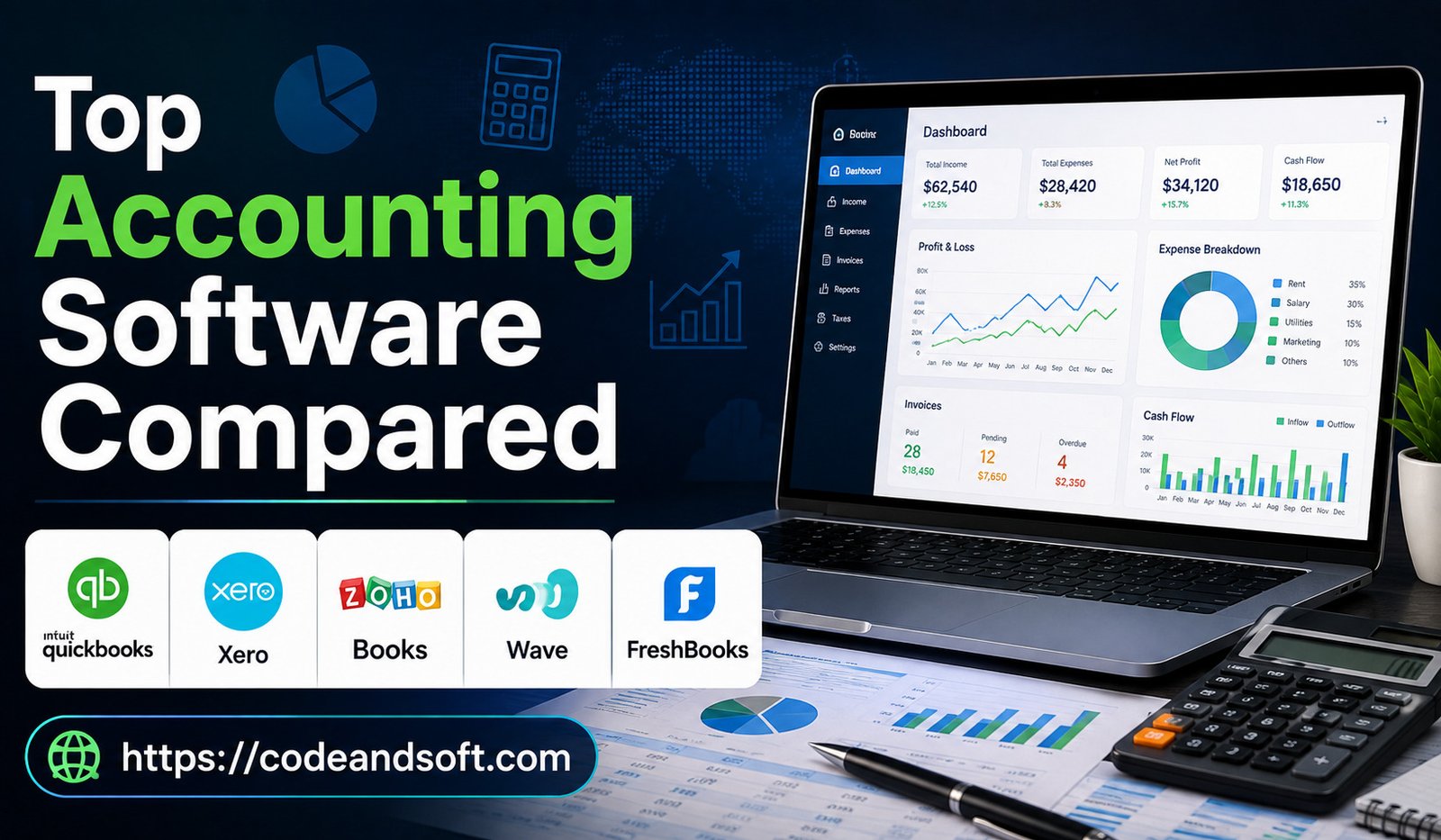
In 2026, accounting software is more advanced than ever. With so many options available, choosing the right accounting software can be challenging. This guide compares the top accounting software solutions, their features, pricing approach, and ideal users to help businesses select the best option.
Why Accounting Software Is Important for Businesses
Accounting software helps companies manage financial operations more efficiently. Instead of manually recording every transaction, businesses can automate important processes and reduce human errors.
Modern accounting tools help with:
- Tracking income and expenses
- Creating invoices
- Managing payroll
- Monitoring cash flow
- Preparing financial reports
- Handling taxes
- Analyzing business performance
For small businesses, accounting software saves valuable time. For larger organizations, it improves financial accuracy and provides better control over complex operations.
Key Features to Look for in Accounting Software
Before choosing an accounting platform, businesses should consider essential features that match their needs.
Invoicing and Billing
A good accounting system should make it easy to create professional invoices, track payments, and send reminders to customers.
Expense Management
Expense tracking helps businesses understand where money is being spent and identify opportunities to reduce costs.
Financial Reporting
Financial reports, including profit and loss statements, balance sheets, and cash flow summaries, offer important insights into a company’s financial health.
Payroll Management
Many accounting platforms include payroll features to manage employee salaries, deductions, and tax calculations.
Cloud Access
Cloud-based accounting software allows business owners and accountants to access financial information from anywhere.
Automation Features
AI-powered automation can reduce repetitive tasks such as data entry, transaction categorization, and report generation.
Best Accounting Software Compared in 2026
1. QuickBooks Online – Best Overall Accounting Software
QuickBooks Online is one of the most popular accounting solutions for small and medium-sized businesses.
It provides a complete set of financial management tools designed to simplify bookkeeping.
Key Features:
- Income and expense tracking
- Invoice creation
- Bank synchronization
- Tax management
- Financial reports
- Payroll integration
- Mobile applications
Advantages:
QuickBooks Online offers an easy-to-use interface with powerful accounting features. It is suitable for businesses that want professional financial management without complicated systems.
Pricing:
QuickBooks generally offers multiple subscription plans based on business size and required features. Basic plans are designed for small businesses, while advanced plans include more automation and reporting capabilities.
Best For:
Small businesses, freelancers, accountants, and growing companies.
2. Xero – Best Cloud Accounting Software
Xero is a cloud-based accounting platform known for collaboration features and ease of use.
It allows business owners, accountants, and employees to manage finances online.
Key Features:
- Online invoicing
- Bank reconciliation
- Expense tracking
- Inventory management
- Payroll features
- Financial reporting
Advantages:
Xero provides excellent collaboration tools, allowing multiple users to work together on financial information.
Pricing:
Xero offers different subscription levels based on business requirements, including plans for startups, growing businesses, and organizations needing advanced features.
Best For:
Small businesses, startups, and companies that prefer cloud-based accounting.
3. FreshBooks – Best Accounting Software for Freelancers
It focuses on invoicing, expense tracking, and client management.
Key Features:
- Professional invoices
- Time tracking
- Expense management
- Client management
- Online payments
- Project tracking
Advantages:
FreshBooks is simple and user-friendly, making it ideal for people who are not accounting experts.
Pricing:
FreshBooks provides several plans based on the number of clients and features required.
Best For:
Freelancers, consultants, agencies, and small service businesses.
4. Zoho Books – Best Affordable Accounting Software
Zoho Books is part of the Zoho business software ecosystem and provides affordable accounting solutions.
Key Features:
- Invoice management
- Expense tracking
- Bank reconciliation
- Inventory management
- Tax support
- Automated workflows
Advantages:
Zoho Books provides strong features at competitive pricing, especially for businesses already using other Zoho applications.
Pricing:
Zoho Books offers multiple pricing tiers designed for small businesses and growing companies.
Best For:
Small businesses looking for affordable accounting software.
5. Sage Accounting – Best for Small Business Financial Management
Sage Group provides accounting solutions designed for businesses of different sizes.
Key Features:
- Cash flow tracking
- Invoice management
- Expense monitoring
- Financial reports
- Business insights
Advantages:
Sage provides reliable accounting features with a strong focus on financial management.
Pricing:
Sage offers different plans depending on business requirements and included features.
Best For:
Small businesses and companies needing dependable accounting tools.
6. Wave Accounting – Best Free Accounting Software
Wave Financial provides accounting tools designed for entrepreneurs and small businesses.
Key Features:
- Free accounting tools
- Invoice creation
- Expense tracking
- Financial reports
- Payment processing
Advantages:
Wave is a good option for businesses that need basic accounting features without high costs.
Pricing:
Wave offers free accounting features, while additional services such as payment processing may have separate charges.
Best For:
Freelancers, startups, and small businesses with simple financial needs.
7. NetSuite ERP – Best Enterprise Accounting Solution
Oracle NetSuite is a comprehensive ERP solution that offers robust financial management capabilities for businesses.
Key Features:
- Enterprise accounting
- Financial planning
- Revenue management
- Business analytics
- Inventory management
- Global financial operations
Advantages:
NetSuite is designed for complex organizations that require advanced financial control.
Pricing:
Pricing depends on business size, modules required, and customization needs.
Best For:
Large companies and enterprises.
Accounting Software Comparison 2026
| Software | Best For | Main Strength | Pricing Approach |
| QuickBooks Online | Small businesses | Complete accounting features | Subscription plans |
| Xero | Cloud accounting | Collaboration | Subscription plans |
| FreshBooks | Freelancers | Easy invoicing | Client-based plans |
| Zoho Books | Budget businesses | Affordable features | Tiered pricing |
| Sage Accounting | Small companies | Financial management | Subscription plans |
| Wave | Startups | Free accounting | Free + paid services |
| NetSuite | Enterprises | Advanced ERP finance | Custom pricing |
How AI Is Changing Accounting Software
Artificial intelligence has become one of the biggest trends in accounting technology. AI helps businesses automate financial tasks and improve accuracy.
Automated Data Entry
AI can automatically categorize transactions and reduce manual bookkeeping.
Smart Financial Reports
AI tools can analyze financial data and provide business insights.
Fraud Detection
Advanced systems can identify unusual transactions and suspicious activity.
Automated Invoice Processing
AI can read invoices, extract information, and organize financial records.
Cash Flow Predictions
AI-powered systems can analyze past data and forecast future financial conditions.
How to Choose the Right Accounting Software
Selecting accounting software depends on several factors.
Consider Business Size
Small businesses usually need simple tools, while enterprises require advanced financial systems.
Identify Required Features
Businesses should decide whether they need:
- Payroll
- Inventory management
- Tax support
- Multi-user access
- Advanced reporting
Check Integration Options
Accounting software should connect with other business tools such as payment platforms, CRM systems, and banking services.
Evaluate Security
Financial information is sensitive, so businesses should choose platforms with strong security measures.
Consider Budget
Companies should compare pricing plans and choose software that provides the best value.
Free vs Paid Accounting Software
Many businesses wonder whether free accounting software is enough.
Free Accounting Software Benefits:
- Lower costs
- Basic bookkeeping features
- Suitable for startups
Free Software Limitations:
- Limited automation
- Fewer advanced reports
- Reduced customization
Paid Software Benefits:
- Advanced features
- Better support
- More integrations
- Improved scalability
Growing businesses often benefit from investing in paid accounting solutions.
Conclusion
Choosing the right accounting software is essential for maintaining accurate financial records and improving business efficiency. Platforms like QuickBooks Online, Xero, FreshBooks, Zoho Books, Sage, Wave, and NetSuite provide solutions for different business needs.
The best choice depends on company size, budget, industry, and required features.
With AI automation, cloud technology, and smarter financial tools becoming more common, accounting software will continue playing a critical role in helping businesses manage finances, reduce manual work, and achieve long-term growth in 2026 and beyond.