
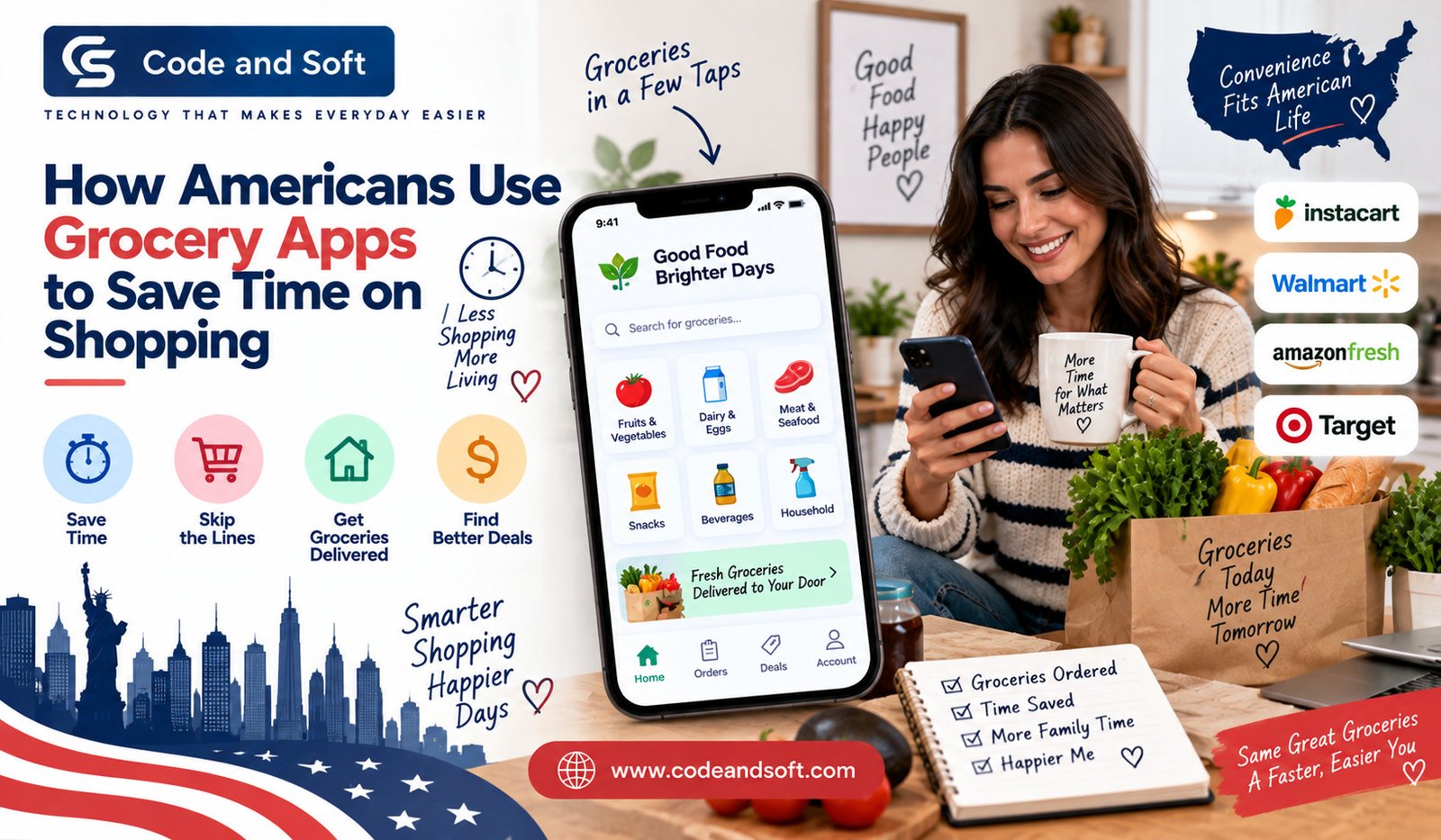
Grocery shopping used to mean making a list, driving to the store, walking through several aisles, waiting in line, and then carrying everything home. Today, you can avoid much of that routine with just your smartphone. From planning your weekly meals to ordering essentials from your couch, grocery apps have changed the way you manage one of the most regular household chores.
If you have a busy work schedule, a family to look after, or simply do not want to spend your weekend wandering around a supermarket, grocery apps can make a noticeable difference. Americans use grocery apps to compare products, build shopping lists, find deals, place orders, and choose convenient delivery or pickup options.
The biggest advantage is not necessarily buying more groceries. It is gaining back the time you would normally spend planning and completing a shopping trip.
Why Grocery Shopping Can Take So Much Time
A typical grocery trip involves more than simply picking up food. Before you even leave home, you may need to figure out what is missing from your kitchen, check your budget, create a shopping list, and decide where to shop.
Once you arrive at the store, finding specific products can take longer than expected. You may also encounter crowded aisles, checkout lines, parking problems, or the temptation to buy things that were not on your original list.
When you add all these small tasks together, a simple grocery run can consume a significant part of your day.
Grocery apps help you move many of these activities onto your phone. Instead of spending time physically searching for products, you can search for them digitally, add them to your cart, and complete your order before leaving home—or without leaving at all.
How Americans Use Grocery Apps for Faster Shopping
One of the simplest ways to save time is by creating your grocery list directly inside an app. Rather than writing your list on paper and potentially forgetting it at home, you can keep everything in one place.
You can search for milk, vegetables, cereal, snacks, cleaning supplies, or other household products and add them to your digital cart. Some apps also make it easy to reorder products you regularly buy.
For example, if you purchase the same breakfast items every week, you do not have to start your list from scratch each time. You can quickly find previous purchases and add the products again.
This can turn weekly grocery planning from a long task into something you can finish in a few minutes.
You Can Shop From Almost Anywhere
Another reason grocery apps have become useful is flexibility.
You do not have to wait until you are physically inside a supermarket to remember what you need. You can add products to your list while sitting at your desk, relaxing at home, or planning meals for the week.
If you suddenly realize that you are running low on coffee or cooking oil, you can add it to your digital shopping list immediately. This reduces the chance of forgetting essential items before your next grocery trip.
For busy households, this small convenience can make grocery planning much easier.
Grocery Delivery Helps You Avoid Store Visits
Perhaps the biggest time-saving feature is grocery delivery.
Instead of driving to a store, searching for parking, walking through aisles, waiting at checkout, and driving back home, you can select your products through an app and choose a delivery window.
This can be especially useful when you have a packed schedule.
Imagine finishing work late and realizing that your refrigerator is almost empty. Rather than spending another hour or more going to the supermarket, you can place an order from your phone and have your groceries delivered during a suitable time slot.
You still need to plan your purchases, but you can eliminate much of the physical shopping process.
Pickup Offers Another Convenient Option
Delivery is not the only way to save time. Grocery pickup can also be a practical choice.
With pickup, you place your order through the app, select a convenient time, and let the store prepare your groceries. You then travel to the store and collect your order.
This gives you the convenience of online shopping without necessarily paying for delivery.
For you, the biggest benefit is that you can skip most of the time-consuming parts of traditional shopping. There is no need to walk through every aisle looking for individual products or spend a long time waiting at a checkout counter.
Digital Shopping Lists Make Repeat Trips Easier
If you follow a fairly predictable grocery routine, digital lists can save even more time.
You may purchase certain products every week and others once a month. By keeping these items organized in an app, you can quickly identify what needs to be purchased.
You can also separate items according to different needs. For example, you might create lists for weekly groceries, household products, weekend meals, or special occasions.
Once you develop a routine, you spend less time trying to remember what you bought last week.
That convenience becomes particularly valuable when several people in a household contribute to grocery planning.
Comparing Prices Becomes Easier
Saving time does not always mean spending less money, but grocery apps can help you make quicker purchasing decisions.
Instead of visiting multiple stores to compare prices, you can browse products and prices digitally. Some apps also display promotions, discounts, loyalty offers, or digital coupons.
If you are shopping on a budget, this can make it easier to identify deals before placing an order.
You can also see the estimated cost of your cart as you shop. This gives you a better idea of how much you are spending before completing the purchase.
Rather than reaching the checkout counter and discovering that your total is higher than expected, you can adjust your cart while you are still shopping.
Apps Can Help You Avoid Impulse Purchases
There is another interesting advantage to online grocery shopping: you can be more intentional about what you buy.
When you walk through a supermarket, attractive displays and promotional products can encourage you to make unplanned purchases. You may enter the store looking for bread and milk and leave with snacks, drinks, kitchen accessories, and other items you did not originally need.
With an app, you can start with a list and search specifically for those products.
This does not guarantee that you will never make an impulse purchase, but shopping digitally can make it easier to stay focused on your original plan.
Meal Planning Becomes More Organized
Grocery apps can also make meal planning easier.
Before placing your order, you can think about what you want to cook during the week and purchase the necessary ingredients together. This approach can reduce the number of last-minute trips to the store.
For example, you might plan pasta for Monday, tacos for Tuesday, grilled chicken and vegetables for Wednesday, and a simple soup for Thursday.
Once your meals are decided, you can build your grocery list around those recipes.
This approach saves time because you are not repeatedly asking yourself what to cook or discovering halfway through the week that you are missing an important ingredient.
Grocery Apps Are Useful for Busy Families
For families, grocery shopping can become a surprisingly complicated task.
You may need to remember children’s snacks, school lunch items, breakfast foods, beverages, cleaning products, and household essentials—all at the same time.
A grocery app gives you a central place to organize these purchases.
You can also add items whenever you remember them instead of trying to recall everything immediately before a shopping trip.
If another family member notices that something is running low, they can potentially add it to a shared list, depending on the app’s features.
That makes grocery planning more collaborative and reduces the possibility of forgetting important items.
What You Should Look for in a Grocery App
Not every grocery app offers exactly the same experience. If your goal is to save time, focus on features that genuinely reduce effort.
A useful grocery app should ideally offer:
- Easy product search
- Digital shopping lists
- Previous-order or reorder options
- Grocery delivery
- Store pickup
- Digital coupons and deals
- Multiple payment options
- Order tracking
- Clear delivery or pickup time slots
- Easy cart editing
You should also check whether the stores you normally shop at are supported by the app.
The best app for you is not necessarily the one with the most features. It is the one that fits naturally into your regular shopping routine.
Are Grocery Apps Really Worth Using?
For many shoppers, the answer comes down to how much they value convenience.
If you enjoy visiting supermarkets and prefer choosing fresh products yourself, you may still want to shop in person. However, even then, using an app to create a list, check prices, or arrange pickup can make the experience faster.
If you have limited free time, grocery delivery can be even more valuable because it removes much of the traditional shopping process.
The real benefit is not simply that you can order groceries online. It is that you can turn grocery shopping into a more predictable and organized part of your weekly routine.
The Future of Grocery Shopping Is More Convenient
As smartphones and digital services become increasingly integrated into everyday life, grocery shopping is likely to become even more personalized and convenient.
You can already use apps to search for products, compare prices, receive promotions, create lists, order groceries, and track deliveries. Over time, smarter recommendations and more personalized shopping features may make the process even easier.
For you as a shopper, that means spending less time handling repetitive tasks and more time focusing on work, family, hobbies, or simply enjoying your day.
Final Thoughts
The biggest reason Americans use grocery apps is simple: they want to make everyday shopping less time-consuming.
A grocery app can help you create a list, find products, compare prices, discover deals, order groceries, and choose delivery or pickup. Instead of treating grocery shopping as a large weekly chore, you can break it into smaller tasks that fit around your schedule.
You may still enjoy an occasional trip to the supermarket, but you no longer have to spend your valuable free time there every week.
When you use grocery apps strategically, you are not just shopping for groceries—you are also shopping for convenience and giving yourself something that is increasingly valuable: more time.