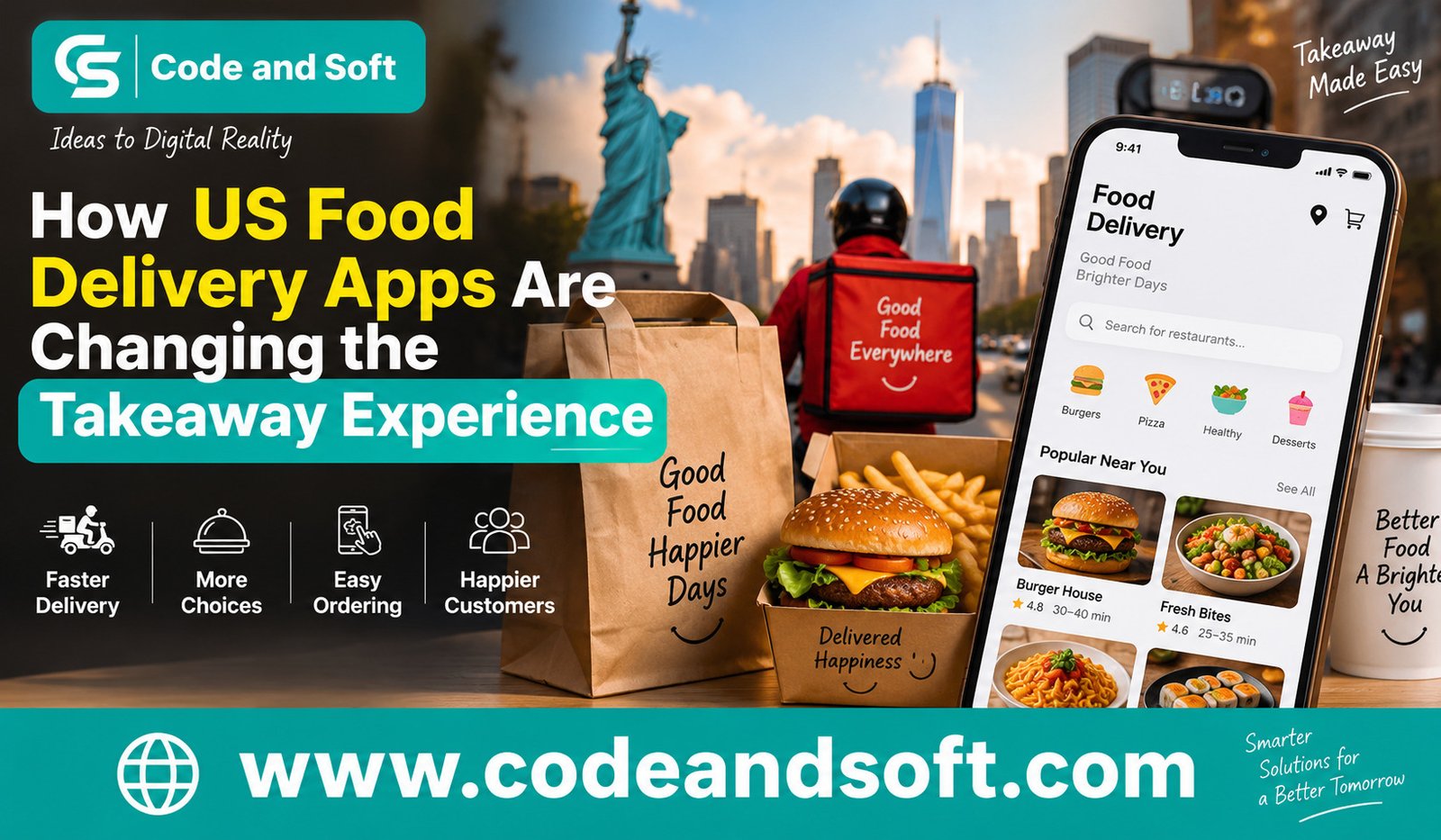
Ordering takeaway has become much more than simply choosing a restaurant and waiting for your food to arrive. Today, you can open your phone, browse hundreds of meals, compare prices, customize an order, track a driver, and receive your food without making a single phone call. US Food Delivery Apps have changed the way you think about takeaway, making the entire process faster, more convenient, and increasingly personalized.
Whether you are ordering dinner after a long day at work, planning food for a family gathering, or simply craving your favorite burger, these apps put the takeaway experience directly in your hands. Services such as DoorDash, Grubhub, Instacart, Postmates, Caviar, and ChowNow have each contributed to this shift in different ways.
But what exactly has changed, and why have food delivery apps become such an important part of everyday dining?
Takeaway Has Become a Digital Experience
In the past, ordering takeaway usually meant calling a restaurant, checking the menu, explaining your order, and waiting for someone to give you an estimated delivery time. You had limited information and often had no idea where your order was once it left the restaurant.
With US Food Delivery Apps, the process looks completely different.
You can search restaurants based on cuisine, location, ratings, delivery time, or price. Once you find something you like, you can view the menu, add items to your cart, make changes, pay digitally, and follow the order from preparation to delivery.
This means you are no longer simply ordering food. You are managing the entire takeaway experience from your smartphone.
DoorDash Makes Convenience the Priority
DoorDash has become one of the most recognizable names in food delivery, largely because of the convenience it offers.
When you use DoorDash, you can explore restaurants in your area without having to visit multiple websites or make several phone calls. The platform brings menus, prices, estimated delivery times, and order tracking into one place.
For you, one of the biggest advantages is flexibility. You can order from a restaurant when you do not have the time or energy to travel there. You can also customize your order according to available options and keep an eye on the delivery progress.
That simple visibility can make takeaway feel less uncertain. Instead of wondering when your food will arrive, you can check its status directly from the app.
Grubhub Brings Restaurants and Customers Together
Grubhub has also played a major role in changing how Americans order takeaway.
Its biggest contribution is the way it turns restaurant discovery into a digital browsing experience. You can explore different types of food, check menus, look at customer ratings, and place an order without needing to contact each restaurant individually.
Imagine that you are looking for pizza but are not sure which restaurant to choose. Rather than searching through individual restaurant websites, you can browse several options in one place. This makes the decision-making process much easier.
For you, takeaway becomes less about knowing exactly what you want and more about discovering what you might want.
Instacart Expands the Meaning of Food Delivery
Instacart has taken food delivery in a slightly different direction. While it is strongly associated with grocery shopping, its role in convenient food access shows how delivery expectations have evolved.
You can use Instacart to have groceries, prepared foods, snacks, beverages, and everyday essentials delivered to your home. This is particularly useful when you want to prepare something yourself but do not want to spend time visiting a store.
For you, the takeaway concept can therefore extend beyond restaurant meals. Convenience increasingly means having the food and ingredients you need delivered when you need them.
This shift has helped blur the traditional line between restaurant delivery, grocery delivery, and everyday food shopping.
Postmates Turns Your Phone Into a Personal Delivery Assistant
Postmates became well known for its broader approach to delivery. Rather than limiting the experience to traditional restaurant takeaway, Postmates helped popularize the idea that you could have many different products brought to your door.
For you, this creates a different kind of convenience. You might order a meal, snacks, groceries, or other essentials through a delivery platform rather than making separate trips.
The larger impact is important: food delivery apps have trained consumers to expect convenience across more parts of their daily lives.
You no longer necessarily ask, “Should I go and get this?” Instead, you may ask, “Can I have this delivered?”
Caviar Focuses on a More Curated Takeaway Experience
Caviar takes a more curated approach to restaurant delivery. Rather than simply giving you an enormous list of options, the platform has traditionally emphasized restaurants and dining experiences that may feel more distinctive.
This can change the way you discover food.
Instead of ordering from the same familiar fast-food restaurant every week, you can explore independent restaurants and different cuisines. That makes the app useful when you want takeaway to feel a little more special.
For you, this can turn an ordinary night at home into something closer to a restaurant experience — without leaving your sofa.
ChowNow Helps Restaurants Maintain Their Own Identity
ChowNow offers another perspective on the changing takeaway market. Its approach focuses on helping restaurants offer online ordering and delivery while maintaining a stronger connection with their customers.
This matters because the growth of third-party delivery platforms has changed the relationship between restaurants and diners.
With digital ordering tools, restaurants can make the online experience feel more connected to their own brand. For you as a customer, this can mean a more direct relationship with the restaurant rather than feeling like you are ordering through a completely separate marketplace.
It also demonstrates that the future of takeaway is not only about delivery speed. The ordering experience itself has become part of a restaurant’s identity.
Tracking Has Changed Your Expectations
One of the biggest changes brought by US Food Delivery Apps is order tracking.
When you order takeaway today, you may expect to see when the restaurant receives your order, when your food is being prepared, when it is picked up, and when it is approaching your home.
This level of information has changed your expectations.
Waiting for food used to involve uncertainty. Now, you expect updates.
That transparency can make delivery feel more reliable because you have a better understanding of what is happening. Even when there is a delay, knowing about it can be more useful than simply waiting without information.
Reviews Help You Make Faster Decisions
Another major advantage is access to customer feedback.
Before ordering, you can often check restaurant ratings and read reviews from other customers. This gives you additional information beyond the restaurant’s own menu descriptions.
If you are trying a new restaurant, reviews can help you decide whether it is worth ordering from. You can also compare several restaurants based on ratings, cuisine, price, and estimated delivery time.
In other words, US Food Delivery Apps have turned takeaway into a more informed purchasing decision.
You have more information before you spend your money.
Personalization Is Making Ordering Easier
Food delivery apps are also becoming better at understanding what you like.
If you frequently order burgers, Indian food, Chinese food, pizza, or desserts, your app experience can increasingly reflect those habits. Recommendations can make it easier to find something without starting your search from scratch every time.
For you, this can save valuable time.
Instead of scrolling endlessly through hundreds of restaurants, you may be presented with choices that match your previous interests or current ordering habits.
The result is a takeaway experience that feels more personalized.
Delivery Apps Are Changing Restaurant Competition
The impact is not limited to customers. Restaurants are also adapting to a market where online visibility matters.
A restaurant with excellent food but little digital presence may struggle to attract customers who primarily discover restaurants through apps. Meanwhile, restaurants with strong ratings, attractive menus, good photographs, and reliable service can gain greater visibility.
This means your experience as a customer can influence the success of a restaurant.
A positive review can encourage others to order. A poor experience can have the opposite effect. Delivery apps have therefore created a feedback loop between customers and restaurants.
The Convenience Comes With More Choices
There is no denying that food delivery apps make takeaway easier, but more choice can sometimes create a new problem: decision fatigue.
When you have dozens or even hundreds of restaurants available, choosing what to eat can become surprisingly difficult.
You might spend ten minutes comparing restaurants when you could have already placed an order.
That is why features such as recommendations, filters, ratings, estimated delivery times, and personalized suggestions have become so important. They help you narrow down the enormous number of choices available.
The Future of Takeaway Is More Than Delivery
The biggest change created by US Food Delivery Apps is that takeaway is no longer simply about transporting food from a restaurant to your home.
It is now an entire digital journey.
You discover restaurants through an app, compare menus, read reviews, customize your order, pay electronically, receive updates, track the delivery, and eventually rate your experience. Every stage has become connected.
DoorDash and Grubhub emphasize restaurant discovery and delivery convenience. Instacart expands the idea into grocery and everyday food shopping. Postmates helped establish broader on-demand delivery expectations. Caviar demonstrates how delivery can support curated dining experiences, while ChowNow highlights the importance of maintaining a direct restaurant-customer connection.
For you, the takeaway experience has become faster, more transparent, and more personalized than it was just a few years ago.
And as delivery technology continues to develop, your expectations will likely continue to rise. Faster ordering, smarter recommendations, better tracking, and more flexible delivery options could make ordering food even easier.
Ultimately, US Food Delivery Apps have changed takeaway by putting control in your hands. You decide what you want, when you want it, and how you want the experience to unfold — all from a device that is already in your pocket.