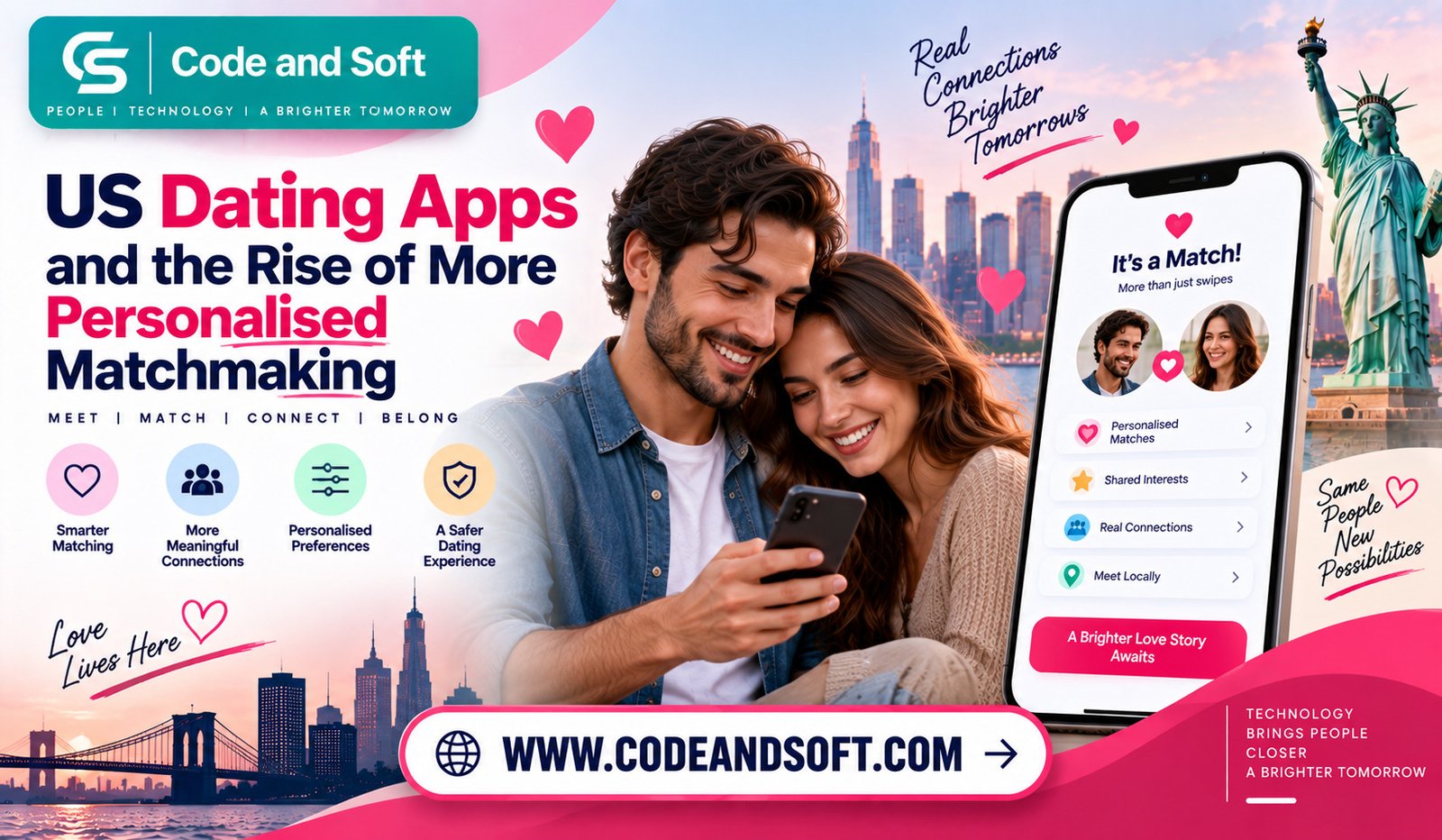
Dating apps used to work the same way. You swiped through photos, matched, and hoped for a good conversation. That routine is changing fast. Across the United States, personalized matchmaking is replacing plain swiping, as apps lean on AI and detailed compatibility data to connect people who actually fit.
This change comes from a real problem. Many daters feel worn out after hours of swiping with little to show for it, a pattern often called swipe fatigue. This article looks at how five major US dating apps, Tinder, Hinge, Bumble, OkCupid, and eHarmony, are each building more personal matching into their platforms.
Tinder: From Swiping to AI-Matched Chemistry
Tinder held its first product keynote in March 2026, called Tinder Sparks 2026. The event introduced a new AI-driven personalization layer named Chemistry, which studies a user’s preferences, activity, and profile details to suggest more relevant matches.
The company also rolled out Learning Mode, a system that studies in-app activity and adjusts match suggestions as it goes. Another feature, Camera Roll Scan, is opt-in. It scans a user’s photos to spot interests and personality traits, then folds that into the profile.
Beyond straight matching, Tinder added Music Mode and Astrology Mode, which connect people through shared music taste or star signs. A new Events feature, still in beta and starting in Los Angeles, lets users find local meetups tied to people they have matched with.
Tinder says more than half of its users are under 30. Company leaders describe these updates as a direct answer to swipe fatigue, the exhaustion many daters feel after browsing hundreds of profiles with few real connections to show for it.
Hinge: Matching Built Around Mutual Compatibility
Hinge built its reputation on pairing people who are likely to want each other back, not just people who look good on paper. The app has referenced Gale-Shapley stable matching, a concept that won its creators a Nobel Prize in economic sciences, as part of how it frames its approach.
Hinge does not publish its full algorithm or a single attractiveness score for each user. It does confirm a feature called Most Compatible, which sends one recommendation a day that expires after 24 hours.
In a recent update, Hinge said a deep learning model produced a double digit increase in matches overall. Extra weight now goes to likes that include a written comment rather than a plain tap. The app also rewards varied profile prompts over a generic one-line bio.
This approach explains why Hinge often feels different from swipe-heavy apps. Instead of ranking people by broad appeal, it tries to find pairs where both sides have a realistic shot at mutual interest, not just one-sided attraction.
Bumble: Trading the Swipe for an AI Matchmaker
Bumble has taken the boldest step toward personalized matchmaking among major US apps. In March 2026, the company introduced an AI assistant called Bee during its quarterly earnings call.
Bee is meant to learn a user’s values, relationship goals, communication style, and dating intentions through private conversation. It then recommends compatible matches directly, rather than leaving users to browse a stack of profiles on their own. Bumble has said it plans to phase out its signature swipe feature in select markets, shifting toward assistant-led matching instead.
Bumble CEO Whitney Wolfe Herd called the AI shift a supercharger to love and relationships. Earlier in 2026, the company also launched AI-suggested Profile Guidance, which gives personalized feedback on bios and prompts, along with an AI photo feedback tool for users in the United States.
Not everyone has welcomed the change. Some users pushed back online after the announcement, arguing that human connection should not be handed over to software. Whether that reaction fades once Bee is actually available remains to be seen.
OkCupid: Personalized Matchmaking Through Compatibility Questions
OkCupid took a different path toward personalization long before AI became a talking point in online dating. Founded in 2004, the platform built its identity around detailed compatibility questions rather than quick swiping.
Users can now answer from a pool of more than 5,000 questions covering politics, religion, lifestyle habits, and relationship values. For each question, a user notes how important that topic is to them. The app then calculates a match percentage between members based on the answers.
OkCupid explains its matching in three steps. First, it filters by basic criteria such as age and location. Second, it checks for mutual interest between two users. Third, it compares question answers to estimate deeper compatibility.
The system tends to reward effort. Members who answer more questions and stay active generally get more precise, and more visible, match suggestions than those who fill out the bare minimum.
eHarmony: Matching Based on 32 Dimensions of Compatibility
eHarmony, founded in 2000, built one of the earliest personalized matchmaking systems in online dating. Its Compatibility Matching System centers on what the company calls the 32 Dimensions of Compatibility.
New members complete a detailed questionnaire covering personality traits, values, communication style, and conflict resolution habits. The system uses these answers to search for other members who align on the traits eHarmony considers most important for a lasting relationship.
Unlike swipe-based apps, eHarmony limits how many matches a user sees at once. The platform presents a curated set of profiles instead of an endless, scrollable feed of strangers.
This approach tends to draw an older, more relationship-focused crowd. Many eHarmony users are in their thirties and forties and are looking for something serious rather than something casual.
Key Takeaways
- Tinder: Added Chemistry, an AI layer that studies behavior and interests to suggest matches, along with Music Mode and Astrology Mode.
- Hinge: Uses a mutual-compatibility approach tied to Gale-Shapley matching and gives extra weight to commented likes.
- Bumble: Introduced Bee, an AI assistant meant to replace parts of the swipe with conversation-based matching.
- OkCupid: Relies on thousands of compatibility questions and a calculated match percentage between users.
- eHarmony: Matches members through a 32-dimension personality and values assessment rather than open browsing.
Frequently Asked Questions
Why are dating apps moving toward AI matchmaking?
Many apps are responding to swipe fatigue, the tiredness daters feel after browsing many profiles without meaningful results.
Which dating app relies most on AI right now?
Bumble has gone furthest by building an AI assistant, Bee, meant to learn user preferences and suggest matches directly.
Does OkCupid still use its old compatibility questions?
Yes, OkCupid still bases its match percentage on thousands of user-answered compatibility questions.
Is eHarmony still based on the 32 Dimensions of Compatibility?
Yes, eHarmony continues to build its matching system around the 32 Dimensions of Compatibility assessment.
Will Bumble remove swiping completely?
Bumble plans to phase out swiping in select markets, not remove it everywhere at once.
Conclusion
Personalized matchmaking is no longer a side feature bolted onto swipe-based apps. Tinder, Hinge, Bumble, OkCupid, and eHarmony are each building deeper compatibility signals into how they connect people, whether through AI assistants, compatibility questions, or mutual-match algorithms. The common thread across all five is a move away from browsing endless photos and toward matching based on values, behavior, and stated goals.