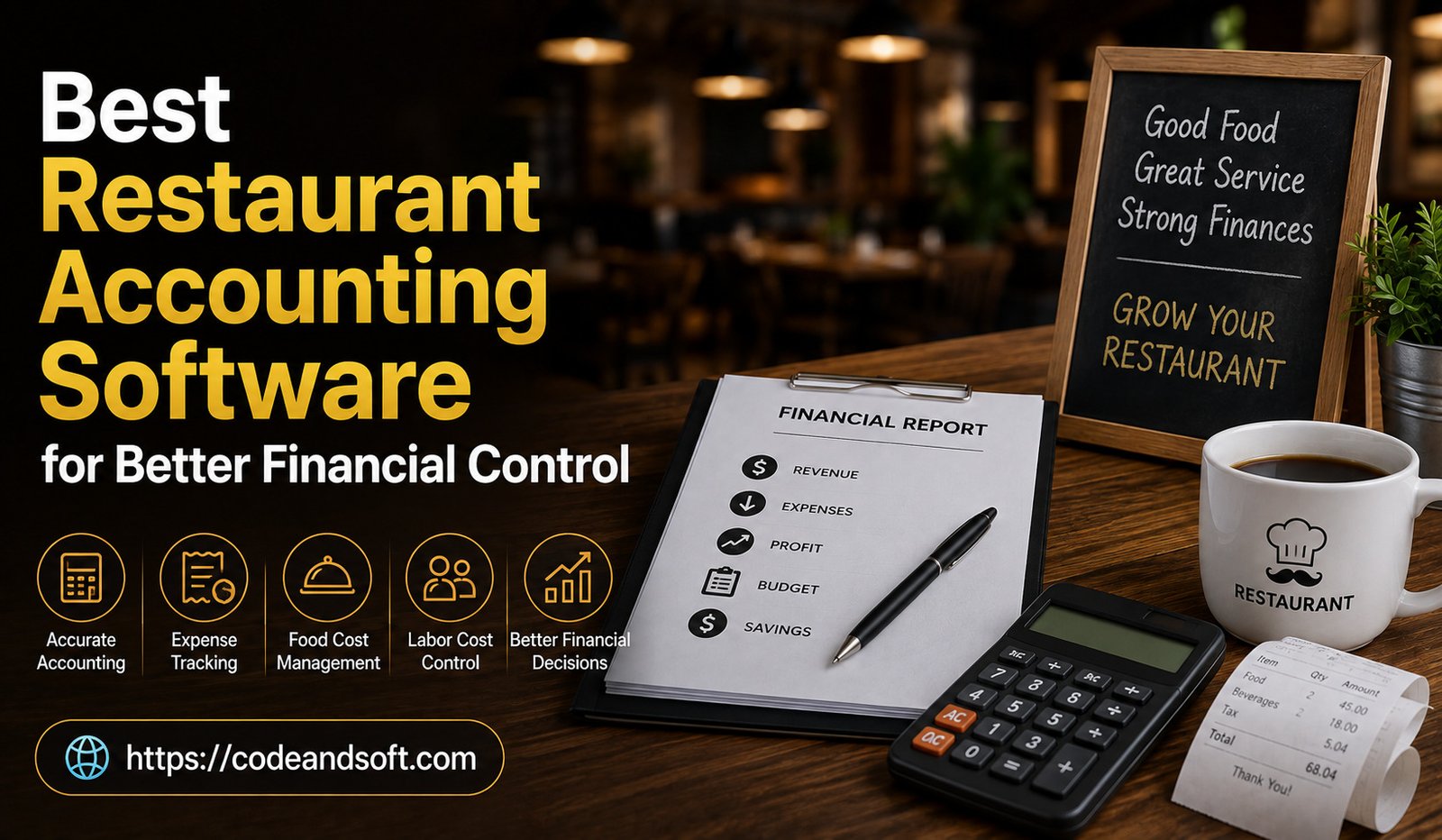

Running a successful restaurant requires more than serving great food and providing excellent customer service. Behind every profitable restaurant is a well-managed financial system that tracks revenue, controls expenses, monitors inventory, manages payroll, and ensures compliance with tax regulations. As the restaurant industry becomes increasingly competitive in 2026, accounting software has evolved into an essential business tool for maintaining financial health and making informed decisions.
Restaurant accounting is more complex than standard business accounting. Daily sales, multiple payment methods, inventory fluctuations, supplier invoices, employee wages, tips, food costs, and operational expenses all require accurate recording and analysis. Manual bookkeeping often leads to errors, delays, and limited financial visibility.
Modern restaurant accounting software automates routine accounting tasks, provides real-time financial insights, and integrates seamlessly with point-of-sale (POS) systems, inventory management platforms, payroll services, and banking applications. This allows restaurant owners and managers to focus on improving customer experiences while maintaining strong financial control.
This guide explores the best restaurant accounting software for better financial control in 2026, key features to look for, major benefits, and best practices for selecting the right solution.
Why Restaurants Need Specialized Accounting Software
Restaurants operate in a fast-paced environment where financial transactions occur continuously throughout the day. Every sale, purchase, inventory adjustment, payroll entry, and supplier payment affects profitability.
Unlike many businesses, restaurants must manage:
- Daily cash sales
- Card payments
- Online ordering revenue
- Food and beverage inventory
- Employee payroll
- Staff tips
- Vendor payments
- Kitchen costs
- Utility expenses
- Multiple business locations
Specialized accounting software centralizes these financial activities, helping restaurants improve accuracy and reduce manual work.
Essential Features of Restaurant Accounting Software
The best restaurant accounting software offers industry-specific tools that simplify financial management.
Important features include:
- Sales tracking
- POS integration
- Inventory management
- Cost of goods sold (COGS) calculation
- Payroll processing
- Tip management
- Bank reconciliation
- Invoice management
- Vendor payment tracking
- Tax reporting
- Financial dashboards
- Budget planning
- Profit and loss reporting
- Cash flow monitoring
- Multi-location accounting
These features provide a complete picture of restaurant finances and improve operational efficiency.
Top Restaurant Accounting Software in 2026
1. QuickBooks Online Advanced
QuickBooks remains one of the most popular accounting platforms for restaurants due to its flexibility and ease of use.
Key Features
- Income and expense tracking
- Bank reconciliation
- Payroll integration
- Financial reporting
- Budget management
- Cloud accessibility
- POS integrations
Best For
Independent restaurants and small restaurant chains.
Advantages
- User-friendly interface
- Large integration ecosystem
- Affordable subscription plans
- Reliable reporting capabilities
2. Restaurant365
Restaurant365 is designed specifically for restaurant operations.
Key Features
- Restaurant accounting
- Inventory management
- Labor scheduling
- Payroll integration
- Vendor management
- Food cost analysis
- Financial reporting
Best For
Multi-location restaurants and restaurant groups.
Advantages
- Industry-specific features
- Strong automation
- Comprehensive operational reporting
3. Sage Intacct
Sage Intacct offers advanced financial management suitable for growing restaurant businesses.
Key Features
- Multi-location accounting
- Financial consolidation
- Budget forecasting
- Cash flow analysis
- AI-powered reporting
- Expense management
Best For
Medium-sized and enterprise restaurant businesses.
Advantages
- Scalable platform
- Advanced financial reporting
- Strong internal controls
4. Xero
Xero provides cloud accounting with excellent integrations for restaurants.
Key Features
- Expense tracking
- Invoice management
- Financial dashboards
- Payroll integrations
- Bank reconciliation
- Cash flow reporting
Best For
Small restaurants and cafés.
Advantages
- Easy implementation
- Modern interface
- Cloud accessibility
5. Oracle NetSuite ERP
NetSuite delivers enterprise-grade accounting and financial management.
Key Features
- Revenue management
- Financial consolidation
- Inventory tracking
- Procurement management
- Cash flow forecasting
- AI-powered analytics
Best For
Large restaurant chains.
Advantages
- Highly scalable
- Excellent reporting
- Strong automation
6. Zoho Books
Zoho Books offers affordable accounting automation for restaurant businesses.
Key Features
- Automated workflows
- Expense management
- Tax reporting
- Bank reconciliation
- Vendor management
- Financial reporting
Best For
Small restaurants and startups.
Advantages
- Budget-friendly
- Easy to learn
- Good integration capabilities
7. MarginEdge
MarginEdge focuses specifically on restaurant financial operations.
Key Features
- Invoice processing
- Food cost tracking
- Inventory management
- Recipe costing
- Vendor analysis
- Daily financial reporting
Best For
Restaurants focused on food cost optimization.
Advantages
- Automated invoice entry
- Strong inventory insights
- Restaurant-specific reporting
8. FreshBooks
FreshBooks offers straightforward accounting features suitable for smaller food businesses.
Key Features
- Expense tracking
- Invoicing
- Financial reports
- Time tracking
- Payment processing
- Cash flow monitoring
Best For
Small cafés, bakeries, and food trucks.
Advantages
- Simple interface
- Quick implementation
- Affordable pricing
9. Microsoft Dynamics 365 Finance
Microsoft provides enterprise-level accounting with AI-driven financial insights.
Key Features
- Budget management
- Financial reporting
- AI forecasting
- Multi-company accounting
- Cash flow analysis
- Power BI integration
Best For
Large hospitality businesses.
Advantages
- Enterprise security
- Advanced analytics
- Excellent scalability
10. Wave Accounting
Wave is a budget-friendly solution for small restaurants.
Key Features
- Income tracking
- Expense management
- Financial reporting
- Receipt scanning
- Bank synchronization
- Basic invoicing
Best For
New restaurants and small independent businesses.
Advantages
- Free core accounting features
- Easy to use
- Good for startups
Benefits of Restaurant Accounting Software
Better Financial Visibility
Restaurant owners can monitor sales, expenses, profits, and cash flow in real time.
Reduced Manual Work
Automation eliminates repetitive bookkeeping tasks, allowing managers to focus on operations and customer service.
Improved Inventory Control
Inventory tracking helps reduce food waste, prevent stock shortages, and improve purchasing decisions.
Stronger Cash Flow Management
Cash flow dashboards help restaurants monitor incoming revenue and outgoing expenses more effectively.
Enhanced Tax Compliance
Accounting software simplifies tax calculations and organizes financial records for filing and audits.
Inventory Management and Food Cost Control
Inventory is one of the largest expenses in restaurant operations.
Modern accounting software helps businesses:
- Track ingredient usage
- Monitor inventory levels
- Calculate food costs
- Reduce waste
- Forecast purchasing needs
- Analyze supplier pricing
Better inventory management directly improves profitability.
Payroll and Employee Management
Restaurants often employ large numbers of hourly workers.
Accounting software simplifies:
- Payroll processing
- Overtime calculations
- Tip distribution
- Tax deductions
- Employee scheduling integrations
- Labor cost reporting
Automated payroll reduces errors and saves administrative time.
Financial Reports Every Restaurant Should Monitor
Effective accounting software should generate:
- Profit and Loss Statement
- Balance Sheet
- Cash Flow Statement
- Sales Reports
- Food Cost Reports
- Labor Cost Reports
- Inventory Reports
- Vendor Expense Reports
- Tax Reports
- Budget vs Actual Reports
These reports help managers understand financial performance and identify opportunities for improvement.
AI Is Transforming Restaurant Accounting
Artificial intelligence is becoming an integral part of restaurant accounting software.
AI can:
- Categorize transactions automatically
- Predict cash flow
- Forecast demand
- Detect unusual expenses
- Generate financial summaries
- Analyze food costs
- Recommend purchasing decisions
- Identify financial risks
AI-powered insights enable restaurants to make faster and more informed business decisions.
Cloud-Based Accounting Advantages
Cloud accounting software offers several benefits.
These include:
- Secure remote access
- Automatic backups
- Real-time collaboration
- Lower IT costs
- Automatic software updates
- Mobile accessibility
- Multi-location management
Cloud technology has become the preferred deployment model for modern restaurants.
How to Choose the Right Restaurant Accounting Software
Selecting the right solution depends on several factors.
Restaurant Size
Independent restaurants require different features than large restaurant chains.
Integration Capabilities
Ensure the software integrates with:
- POS systems
- Payroll software
- Inventory management tools
- Banking services
- Online ordering platforms
Ease of Use
An intuitive interface reduces staff training requirements.
Scalability
Choose software capable of supporting future business growth.
Reporting Features
Look for customizable reports that provide meaningful financial insights.
Security
The software should include:
- Data encryption
- Multi-factor authentication
- User permissions
- Audit logs
- Secure cloud infrastructure
Common Implementation Challenges
Restaurants may encounter:
- Data migration issues
- Staff training needs
- POS integration challenges
- Initial setup costs
- Workflow adjustments
Best Practices for Better Financial Control
To maximize the benefits of restaurant accounting software:
- Reconcile bank accounts regularly.
- Review financial reports every week.
- Monitor food costs closely.
- Track labor expenses daily.
- Keep inventory records updated.
- Automate recurring accounting tasks.
- Secure financial data with strong access controls.
- Use financial insights to improve pricing and purchasing decisions.
Following these practices helps restaurants maintain financial stability and support long-term growth.
Conclusion
Restaurant accounting software has become a vital tool for achieving better financial control in 2026. From automating bookkeeping and payroll to tracking inventory, managing cash flow, and generating real-time financial reports, modern accounting platforms provide restaurant owners with the information needed to make confident business decisions.
Solutions such as Restaurant365, QuickBooks Online Advanced, Sage Intacct, Xero, Oracle NetSuite ERP, Zoho Books, MarginEdge, FreshBooks, Microsoft Dynamics 365 Finance, and Wave Accounting offer a wide range of features suitable for restaurants of different sizes and operational needs.
By selecting software that integrates accounting, inventory management, payroll, and reporting into one streamlined platform, restaurants can improve efficiency, reduce costs, strengthen financial control, and focus on delivering exceptional dining experiences while building a more profitable and sustainable business.