
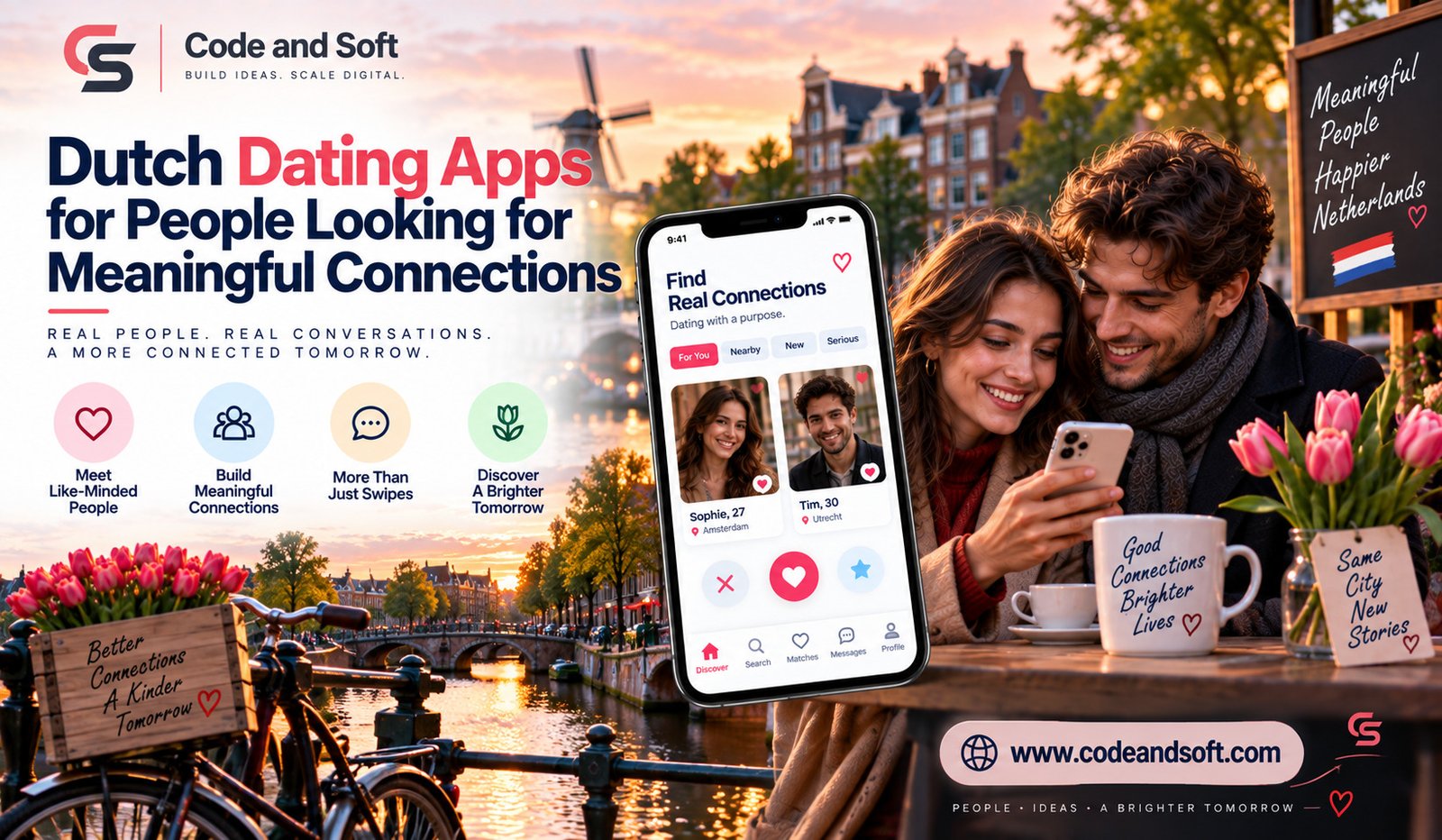
Online dating in the Netherlands is not just about swiping through endless profiles anymore. Many Dutch singles now say they want fewer matches and more actual dates, which has pushed Dutch dating apps toward features built around real conversations and real meetups instead of open-ended browsing. This article looks at five apps used across the Netherlands for exactly that goal: Bumble, Tinder, Hinge, Happn, and Breeze.
Bumble: The Netherlands’ Most Used Dating App
Bumble holds the top spot among dating apps in the Netherlands, ahead of both Tinder and the homegrown app Breeze. Its long-standing rule, where women send the first message in matches between a man and a woman, was designed to slow down the exchange and push users toward more intentional conversations.
In 2026, Bumble began rolling out an AI assistant called Bee, built to learn a user’s values, relationship goals, and communication style through private conversation before suggesting matches. The company has said it plans to phase out swiping in favor of this more conversation-first approach in select markets.
Bumble also introduced AI-suggested Profile Guidance, which gives users personalized feedback on their bio and prompts. The goal, according to the company, is to help members build profiles that reflect who they actually are, rather than profiles built only to get more likes.
Tinder: Wide Reach With a New Focus on Compatibility
Tinder remains widely used across the Netherlands, though it sits behind Bumble in overall popularity. The app has traditionally been built around fast, high-volume swiping, but recent updates have pushed it toward deeper personalization.
At its first product keynote in March 2026, Tinder introduced Chemistry, an AI-driven layer that studies a user’s preferences, activity, and profile details to suggest more relevant matches. A related feature, Learning Mode, adjusts recommendations over time based on how a user actually behaves in the app.
Tinder also added Music Mode and Astrology Mode, which connect users through shared music taste or star signs, along with a beta Events feature for finding local meetups. Company leaders have described these changes as a response to swipe fatigue, the tiredness many daters feel after browsing large numbers of profiles with little to show for it.
Hinge: Made for People Who Want to Stop Swiping
Hinge markets itself around ending the search rather than extending it, and its matching approach reflects that goal. The app has referenced Gale-Shapley stable matching, a concept that earned its creators a Nobel Prize in economic sciences, as part of how it explains its focus on mutual compatibility rather than one-sided appeal.
Instead of an open feed, Hinge sends one Most Compatible recommendation a day, which expires after 24 hours. A recent deep learning update gave extra weight to likes that include a written comment, which the company reports led to a double digit increase in matches overall.
Hinge also encourages varied, specific profile prompts over a generic one-line bio. This tends to appeal to Dutch users who want a profile to say something real about who they are, rather than serving as a quick visual scroll.
Happn: Matching People Who Already Crossed Paths
Happn works differently from most apps by building matches around real-world proximity instead of an open search radius. The app uses GPS to detect when another user comes within a short distance of your location, then shows that profile on a timeline of people you have crossed paths with during the day.
If two users like each other, Happn calls it a Crush, and a chat opens up from there. In dense Dutch cities such as Amsterdam, Rotterdam, and Utrecht, this approach can turn a daily commute or a regular coffee stop into a source of matches, giving conversations a built-in sense of shared context.
Happn also offers a feature that lets both people signal when they are ready to meet in person, taking away some of the pressure of being the one to suggest a date. The app performs best in areas with high population density, so it works better in cities than in smaller towns.
Breeze: A Dutch App That Skips Chat and Books the Date
Breeze started in Rotterdam in 2019, created by a group of students from TU Delft who wanted to fix what they saw as the worst parts of modern dating: endless matching pools of profiles, ghosting, and weeks of messaging that go nowhere. The app removes most of the chatting stage entirely.
Each day, Breeze sends users a small set of potential matches. If two people match, they do not message each other directly. Instead, both fill in their availability, and Breeze books the date at one of its partner bars, with in-app chat opening only a few hours before the meetup so users can confirm details.
The app has grown quickly since launch. As of 2026, Breeze operates in six countries and 94 cities, with more than two million downloads and over 737,000 dates arranged. In the Netherlands, it now ranks as the third most popular dating app, behind only Bumble and Tinder.
Key Takeaways
- Bumble: The Netherlands’ top dating app, now adding an AI assistant called Bee to guide matching through conversation.
- Tinder: Still widely used, now built around an AI personalization layer called Chemistry.
- Hinge: Focused on mutual compatibility through its Most Compatible feature and detailed profile prompts.
- Happn: Matches based on real-world proximity and shared physical paths.
- Breeze: A Dutch-founded app that skips chatting and books a real date directly.
Frequently Asked Questions
Which dating app is most popular in the Netherlands?
Bumble currently ranks as the most used dating app in the Netherlands, ahead of Tinder and Breeze.
How is Breeze different from apps like Tinder or Bumble?
Breeze skips online chatting almost entirely and books a real date at a partner venue as soon as two users match.
What does Happn’s Crush feature mean?
A Crush happens when two users like each other after their paths have crossed in real life, which then opens a chat.
Does Hinge show every profile to every user?
No, Hinge limits daily recommendations and highlights one Most Compatible match rather than an open, scrollable feed.
Is Bumble replacing swiping completely?
Bumble has said it plans to phase out swiping in select markets as its AI assistant Bee takes on more of the matching process.
Conclusion
Dutch daters now have several real alternatives to plain swiping, each built around a different idea of what a meaningful connection looks like. Bumble and Tinder lean on AI to sharpen who gets suggested, Hinge narrows the field to one strong recommendation a day, Happn works from real-world proximity, and Breeze removes online chat from the process almost entirely. Together, these apps show that Dutch dating apps are shifting away from endless browsing and toward getting people to an actual date faster.