
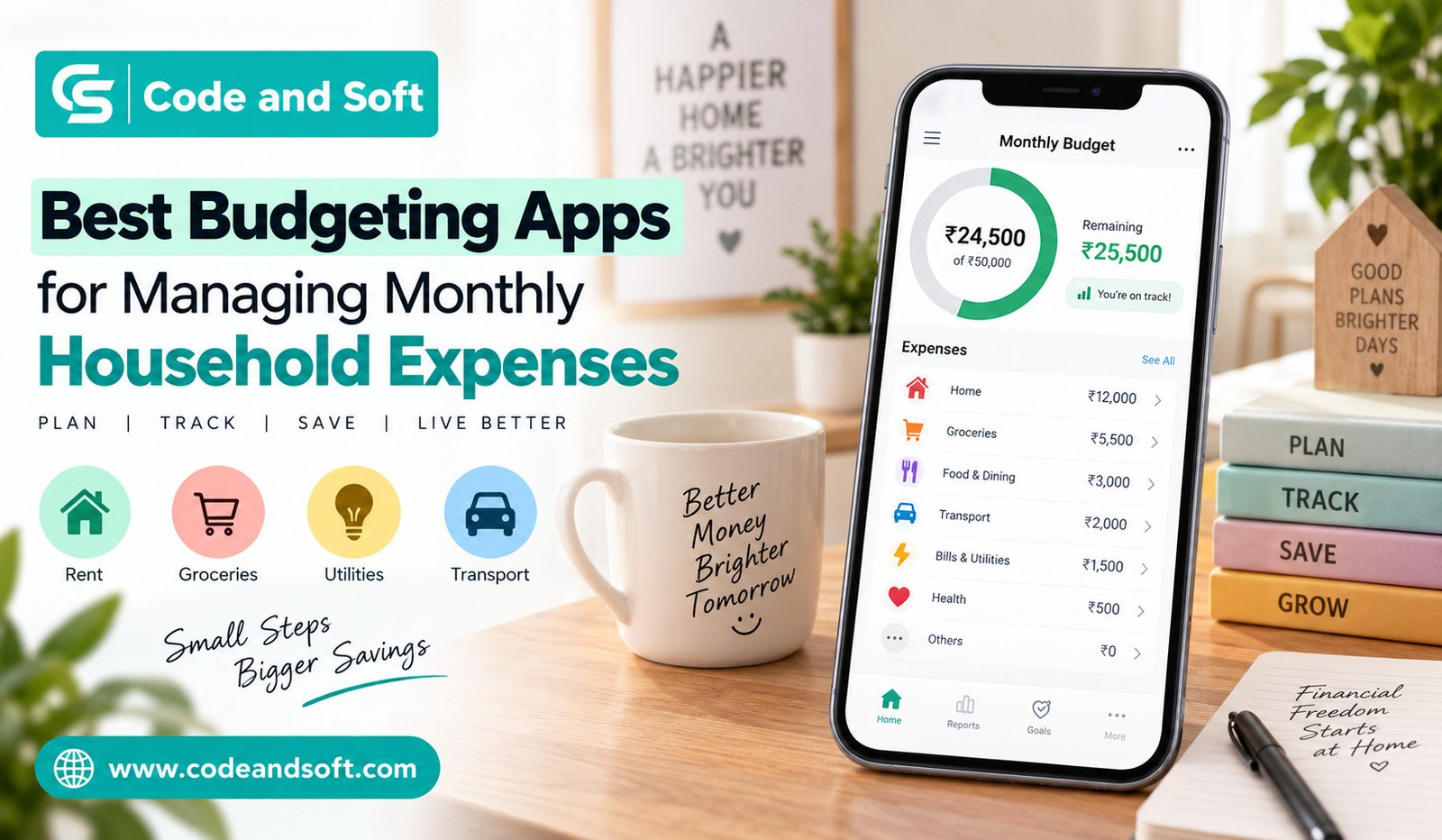
Managing household expenses can feel simple at the beginning of the month. You know roughly how much you earn, you have a list of bills to pay, and you may even have a savings goal in mind. But as the days pass, small purchases start adding up. Groceries, online shopping, subscriptions, eating out, utility bills, fuel, school expenses, and unexpected costs can quickly push your budget off track.
This is where budgeting apps can make your financial routine much easier.
Instead of maintaining a spreadsheet or trying to remember where every rupee went, you can use an app to record expenses, set spending limits, monitor bills, and understand your monthly spending habits. The right app can essentially put your household budget in your pocket.
If you’re looking for the Best Apps for Manage Household Expenses, you have plenty of options to choose from. However, the best choice depends on how you prefer to track money, whether you manage finances alone or with your family, and how detailed you want your budget to be.
Why Should You Use a Budgeting App?
You don’t necessarily need an app to manage your money, but it can make the process considerably easier.
When you track your expenses manually, you may forget smaller transactions. A ₹100 coffee, ₹300 food delivery order, or ₹500 impulse purchase may not seem important individually. However, when several such expenses appear throughout the month, they can make a noticeable difference to your budget.
A budgeting app helps you see the bigger picture.
You can categorize your spending into areas such as groceries, transportation, entertainment, utilities, shopping, rent, subscriptions, and savings. Once you start tracking these categories consistently, you can identify where your money is actually going.
You can then make better decisions instead of simply wondering why your bank balance seems lower than expected.
What Should You Look for in a Household Budgeting App?
Before choosing one of the Best Apps for Manage Household Expenses, consider what you actually need from the app.
1. Easy Expense Tracking
The first thing you should look for is convenience. If entering an expense takes too much time, you may stop using the app after a few days.
Look for an app that lets you quickly record transactions and categorize them without unnecessary steps.
2. Budget Categories
Your household spending isn’t limited to one or two areas. You may need separate categories for groceries, rent, electricity, mobile bills, fuel, children’s expenses, entertainment, shopping, and savings.
A good app should allow you to create or customize categories according to your lifestyle.
3. Monthly Spending Reports
Numbers are useful, but visual reports can make them easier to understand. Charts and summaries can help you see which categories are consuming most of your monthly income.
For example, you may discover that dining out and online shopping are taking up more of your budget than you expected.
4. Bill and Payment Reminders
Missing a bill can lead to late fees or unnecessary stress. Some budgeting apps offer reminders for recurring payments, helping you stay on top of important household expenses.
5. Security and Privacy
Your financial information is sensitive, so security should never be an afterthought. Before connecting financial accounts or entering personal information, check the app’s privacy policy, security features, and permissions.
You should also use strong passwords and enable two-factor authentication whenever available.
Best Budgeting Apps for Managing Household Expenses
There isn’t one perfect budgeting app for everyone. Instead, you should choose an app based on how you prefer to manage your household finances.
1. Goodbudget
Goodbudget is a useful option if you like the traditional envelope budgeting method.
The basic idea is straightforward: you divide your available money into different spending categories, or “envelopes.” You might have envelopes for groceries, transportation, entertainment, utilities, and other household needs.
This approach can be helpful if you want to be more intentional about how much you spend in each category.
One of its advantages is that the concept is easy to understand, even if you aren’t particularly interested in complicated financial tools.
2. YNAB
YNAB, short for You Need A Budget, focuses heavily on proactive budgeting.
Instead of simply looking at what you spent last month, the approach encourages you to give every amount of available money a specific purpose. This can help you prioritize essentials, savings, debt payments, and discretionary spending.
If you want to take a more structured approach to household finances, YNAB can be worth considering.
However, it may feel more detailed than necessary if you simply want a basic expense tracker.
3. Money Manager
Money Manager is a practical choice if you want to manually record household income and expenses.
You can organize transactions into categories and review your spending through summaries and charts. Because you control the information you enter, it can also be useful if you don’t want to connect your bank accounts to a budgeting service.
The app can work particularly well if you prefer a straightforward approach: record your spending, check your monthly totals, and adjust your budget when necessary.
4. Wallet
Wallet by BudgetBakers combines expense tracking with broader personal finance management features.
You can use it to organize expenses, create budgets, monitor financial patterns, and review your overall spending. Depending on the features available in your region and plan, it can also offer account synchronization and additional financial insights.
If you want something that goes beyond simply writing down expenses, Wallet can be an option to explore.
5. Spendee
Spendee focuses on making financial tracking relatively visual and accessible.
You can organize expenses into different categories and create budgets for specific areas of your life. Its visual presentation can make it easier to understand your spending patterns without having to study a long list of transactions.
This can be especially useful if you’re managing household finances and want a quick overview of where your money is going.
How to Choose the Right App for Your Household
Choosing between the Best Apps for Manage Household Expenses becomes easier when you first understand your own requirements.
If you prefer complete control and don’t mind entering transactions manually, a simple expense tracker may be enough.
If you want a structured budgeting system, you may prefer an app built around planned spending.
If you’re managing finances with a partner, look for features that make shared budgeting and expense visibility easier.
You should also consider whether you want to connect your financial accounts. Automatic synchronization can save time, but some people prefer manual tracking because it gives them greater control over their financial information.
Don’t choose an app simply because it has the longest list of features. A simpler app that you actually use every day is more valuable than a sophisticated app that you abandon after a week.
Tips to Get More From Your Budgeting App
Downloading a budgeting app is only the first step. The real benefit comes from using it consistently.
Set Your Monthly Budget Before You Start Spending
At the beginning of every month, estimate how much you need for essential expenses. Include rent, groceries, utilities, transportation, insurance, subscriptions, and other predictable payments.
Then decide how much you want to save.
Once these priorities are covered, you’ll know how much is realistically available for flexible spending.
Track Small Purchases
Don’t ignore small transactions. A few hundred rupees here and there can become a significant amount over an entire month.
Tracking these purchases gives you a realistic picture of your spending habits.
Review Your Budget Every Week
You don’t have to spend an hour analyzing your finances every day.
Instead, set aside 10–15 minutes once a week. Check your spending, compare it with your budget, and see whether any category is getting out of control.
This small habit can prevent unpleasant surprises at the end of the month.
Create an Emergency Fund Category
Unexpected expenses are part of life. A medical bill, vehicle repair, appliance replacement, or urgent trip can disrupt your finances if you aren’t prepared.
Consider creating a separate emergency fund category in your budgeting app. Even small monthly contributions can gradually create a financial cushion.
Adjust Your Budget When Your Life Changes
Your budget isn’t supposed to remain identical forever.
Your grocery expenses may increase, a subscription may become unnecessary, or you may start paying a new loan or school expense. Review your categories whenever your financial situation changes.
The goal isn’t to create a perfect budget. The goal is to create a realistic one that works for your current lifestyle.
Final Thoughts
Managing monthly household expenses doesn’t have to mean constantly worrying about where your money went. With the right budgeting app, you can turn scattered transactions into a clear picture of your finances.
The Best Apps for Manage Household Expenses are ultimately the ones that fit naturally into your routine. Whether you prefer envelope-style budgeting, detailed financial planning, or simple manual expense tracking, there’s an option that can help you stay organized.
The most important thing is consistency. Start by tracking your essential expenses, set realistic monthly limits, review your spending regularly, and make adjustments when necessary.
Once you make budgeting a regular habit rather than a once-a-month chore, managing household expenses can become much less stressful. More importantly, you’ll have a clearer understanding of where your money is going—and greater control over where you want it to go next.