
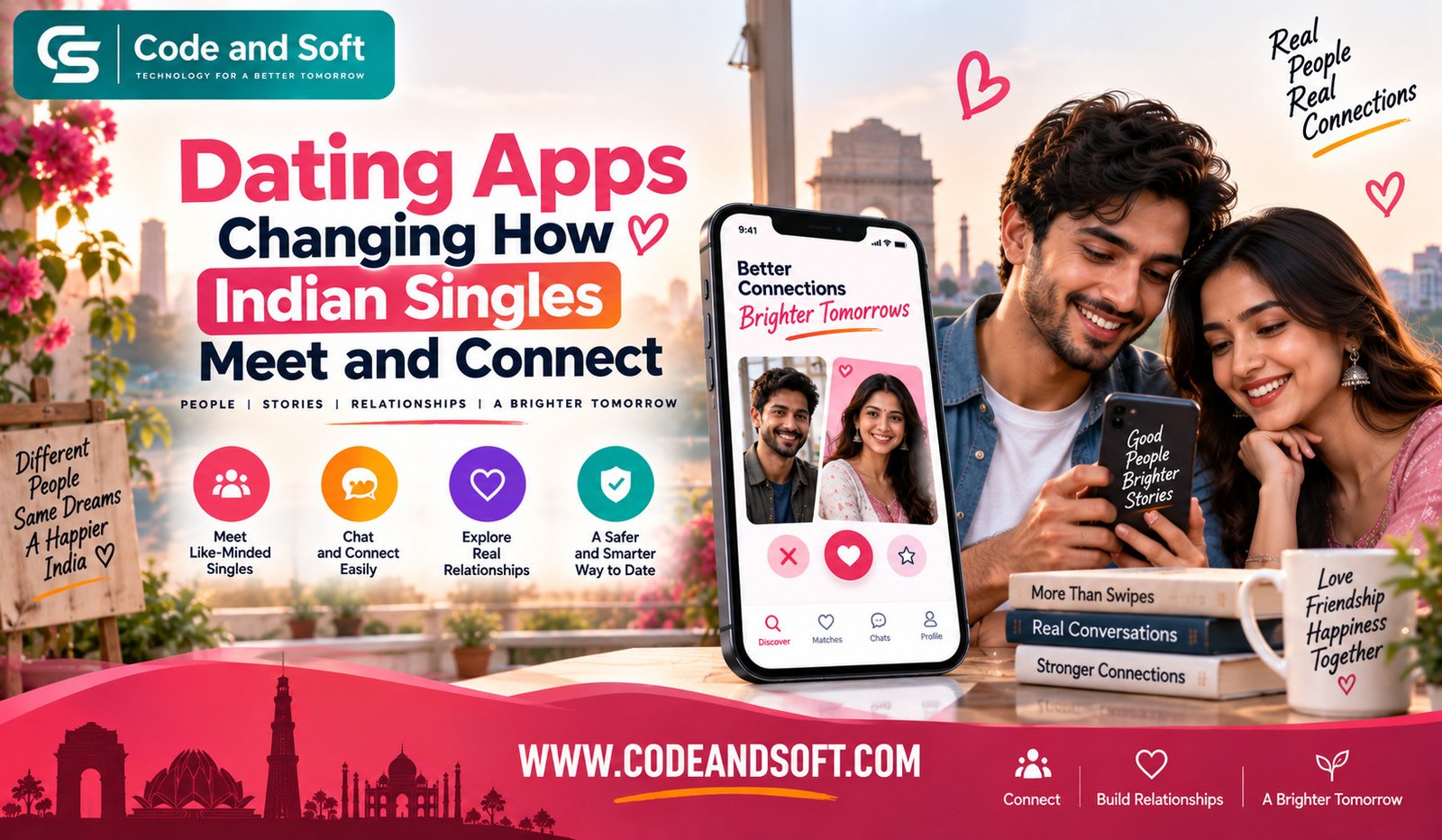
A decade ago, meeting someone usually meant a setup through family, a friend, or pure chance. That has shifted fast. Dating apps in India have gone from a niche experiment to a normal part of how singles look for partners, whether they want marriage, a relationship, or simply someone new to talk to. This article looks at five of the platforms driving that change: Aisle, Hinge, QuackQuack, TrulyMadly, and the Bumble-Tinder rivalry, and how each one has shaped its product around Indian dating habits.
Aisle
Aisle launched out of Bangalore in 2015 with a specific pitch: it is not for casual swiping, it is for people who already know they want something serious.
The app connects Indians and members of the South Asian diaspora around the world, and its matching algorithm leans on details that matter for long-term compatibility, including mother tongue, faith, and life goals. Aisle calls this a high-intent approach to dating.
Some features that set it apart:
- Comments, which let a user respond directly to something specific on another profile instead of sending a generic opening line.
- Concierge, a paid matchmaking tier where the team hand-picks profiles for people who want a faster, more curated search.
- Private Browsing, aimed mainly at women who want to look through profiles without being visible themselves.
- Advanced filters based on lifestyle habits and recent activity, not just age and location.
Aisle has also changed how it prices things. From July 2025, it introduced weekly premium plans starting at 99 rupees, a shift away from its older long-duration subscriptions. That same month, it ran a limited offer giving verified women free access to premium tools such as unlimited likes and advanced filters. The company reports more than 2.2 million success stories on the platform to date.
Hinge
Hinge arrived in Mumbai in 2015, not long after it had expanded from the United States into London. Its founder, Justin McLeod, built the app to feel less like browsing a catalogue and more like meeting someone through a mutual friend, which is why it leans on detailed profiles, prompts, and shared context rather than an endless photo-swipe.
Match Group bought a controlling stake in Hinge in 2018, and the extra funding helped push the app into more countries, India included. The app has kept building around one core idea: give people enough information to actually judge compatibility before they start chatting.
Recent additions include:
- Face Check, a verification tool meant to confirm that the person on the profile matches their photos.
- Prompts, voice notes, and compatibility questions built into the profile itself, rather than a simple bio field.
- A feature in testing called Direct to Date, planned for spring 2026, which would let two matched users share their availability right away so the conversation moves toward an actual meeting instead of staying stuck in chat.
According to Match Group’s own disclosures, Hinge’s paying user numbers and direct revenue kept climbing through late 2025 and into 2026, even as Tinder, its sister app, saw declines in the same period.
QuackQuack: One of the Most-Used Dating Apps in India
QuackQuack has a claim that most rivals cannot make: it started before Tinder existed. Ravi Mittal founded the platform in October 2010 out of Hyderabad, well before “swiping” was even a word people used for dating.
The app sticks to a simple structure. Users are matched with people in the same city and age bracket, and every account has to be verified through a mobile number before it can interact with anyone. QuackQuack also runs a 12-step verification process on the backend to catch fake or duplicate accounts.
A few things worth knowing about how it runs today:
- The company has reported crossing 35 million registered users, a majority of them in major Indian cities, with growing numbers from Tier 2 and Tier 3 towns as well.
- A feature called Chat Before Match lets two people talk a little before officially matching, which the app says helps build rapport earlier.
- QuackQuack publishes weekly figures on suspended accounts inside its Privacy and Safety section, an unusual level of openness about how much moderation happens behind the scenes.
- Founder Ravi Mittal has said the platform sees close to 250 profile reports a day, and that the majority of reported accounts get suspended after review.
Among dating apps in India, QuackQuack has leaned hardest into being the local, no-frills option, which seems to be exactly why it has stuck around this long.
TrulyMadly
TrulyMadly was co-founded in 2013 by Sachin Bhatia, Hitesh Dhingra, and Rahul Kumar, three entrepreneurs with a background at MakeMyTrip and Letsbuy. The app itself launched in August 2014, positioned in the gap between casual dating apps and the far more traditional matrimonial sites that dominated Indian matchmaking before it.
Trust, or at least the appearance of it, was the founding problem the team wanted to solve. Their answer was the Trust Score, a rating built from things like whether a user connected a real Facebook or LinkedIn account and verified their phone number. Only users above a 30 percent Trust Score threshold are allowed to match or start a conversation.
Other details that shape the app:
- TrulyMadly rejects a portion of submitted profile photos daily as part of its screening process, aiming to keep fake accounts off the platform.
- The company has pushed to grow beyond metro cities, reporting strong growth from Tier 2 and Tier 3 cities such as Bhubaneswar, Gwalior, Kanpur, Patna, Rajkot, Varanasi, and Vijayawada.
- By 2021, the platform had reported more than 8.5 million users, alongside a pre-Series A funding round of 16 crore rupees.
- TrulyMadly has also run community initiatives outside the core app, including a tree-planting program called Forever Garden.
Bumble and Tinder
No conversation about dating apps in India is complete without Tinder and Bumble, two platforms that arrived with very different philosophies and have spent years borrowing ideas from each other.
Bumble launched in India in 2018, backed publicly by actress Priyanka Chopra as both an investor and brand ambassador. Its defining rule, at least at launch, was that women had to send the first message after a match, and matches expired after 24 hours if nobody did. For the Indian market specifically, Bumble added a feature letting women show only their first name’s initials on their profile, a small but deliberate move aimed at reducing unwanted attention from strangers on other platforms.
Tinder responded directly. It rolled out a feature called My Move, which lets women in India choose to be the only ones who can send the first message to a match, similar to Bumble’s model but optional rather than mandatory. Tinder was careful to frame it as a choice, not a default setting.
Since then, both platforms have kept adjusting:
- Bumble has since introduced “Opening Moves,” letting women set a pre-written question that men can respond to first, a shift away from requiring women to always message first.
- Both apps use photo verification, with Bumble marking verified profiles with a blue tick.
- Bumble has also emphasized safety features around AI-generated content and synthetic media as part of its broader platform guidelines.
Key Takeaways
- Marriage-focused matching: Aisle builds its algorithm around long-term compatibility markers like faith, mother tongue, and life goals.
- Profile depth over swiping: Hinge leans on prompts, voice notes, and verification tools like Face Check to slow down the process and encourage real conversation.
- Local-first design: QuackQuack has stayed rooted in matching users within their own city and age group since 2010, with heavy manual and automated moderation.
- Trust as a mechanic: TrulyMadly built its entire early product around a Trust Score that gates who can message whom.
- Competing philosophies on first moves: Bumble and Tinder have spent years adjusting who gets to send the first message and how much control that gives women.
FAQs
Which dating app is the oldest one operating in India?
QuackQuack has the earliest founding date among the apps covered here, launched in October 2010.
Do any of these apps focus specifically on marriage rather than casual dating?
Aisle positions itself as a high-intent app built mainly for Indians looking for a serious, long-term relationship or marriage.
What does TrulyMadly’s Trust Score actually control?
A user needs a Trust Score of 30 percent or higher, built from verified accounts and information, before they are allowed to match or message anyone.
How is Tinder’s My Move feature different from Bumble’s original model?
My Move lets women in India choose to be the only ones who can send the first message, while Bumble originally made that the default rule for every match.
Is verification a common feature across these dating apps in India?
Yes, all five platforms use some form of verification, ranging from mobile number checks to photo verification and multi-step moderation processes.
Conclusion
Dating apps in India have moved well past being a novelty for the tech-savvy few. Aisle and TrulyMadly built their products around trust and long-term intent, Hinge and QuackQuack focused on deeper profiles and steady local growth, and Bumble and Tinder turned the question of who messages first into an ongoing back-and-forth between two competitors. Each platform found a different answer to the same underlying question: how do you help strangers trust each other enough to meet. That question is still shaping how these apps build new features today.