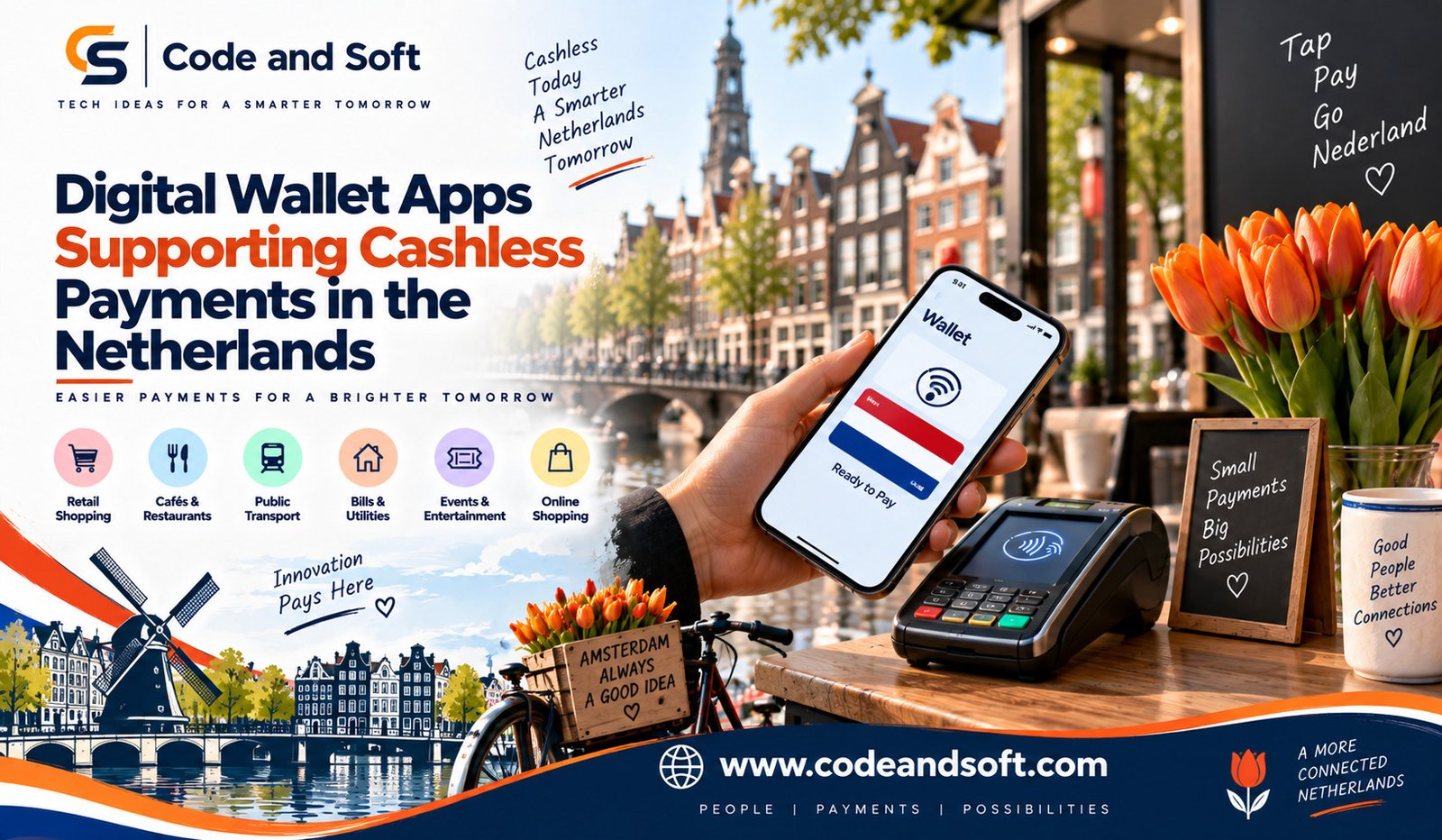

The way you pay for everyday things in the Netherlands has changed quickly. You can walk into a supermarket, grab a coffee, use public transport, shop online, or split a bill with friends without reaching for your physical wallet. Your smartphone can now handle much of the payment process for you.
This shift is part of a wider move toward a cashless lifestyle. In fact, more than seven out of ten point-of-sale payments in the Netherlands were already contactless in 2023, while payments made through smartphones and smartwatches continued to grow.
If you are looking for a convenient way to manage payments, digital wallets give you several options. From Apple Pay and Google Pay to PayPal and Samsung Wallet, you can choose a service that fits your phone, bank, and shopping habits.
The Digital Wallets Use In Netherlands is also becoming more interesting because these apps are no longer limited to simple tap-to-pay transactions. Many can store cards, tickets, loyalty information, payment details, and other digital credentials in one place.
Why Digital Wallets Are Becoming Popular in the Netherlands
Think about how often you use your phone during a normal day. You probably use it for communication, banking, navigation, shopping, and entertainment. Adding payments to that list simply makes your phone more useful.
With a digital wallet, you can add an eligible debit or credit card to your smartphone and use it at compatible contactless terminals. The process is generally simple: unlock or authenticate your device, hold it near the payment terminal, and wait for the transaction to be approved.
The Dutch Payments Association describes digital wallets as apps that can store digital payment cards on smartphones or smartwatches and allow you to make contactless payments at checkout.
For you, the biggest advantage is convenience. You do not necessarily need to take your physical card out every time you make a purchase.
NL Wallet
NL Wallet deserves a mention when discussing the Netherlands’ broader digital-wallet landscape, although it is important to understand what it is designed for.
Rather than treating NL Wallet simply as another replacement for your bank card, you can think of it as part of the Netherlands’ move toward managing important digital credentials and services through your phone. The concept of a national digital wallet is closely connected to the wider European development of digital identity wallets.
This distinction matters. When you search for a wallet app for everyday supermarket payments, Apple Pay, Google Pay, or Samsung Wallet may be more directly relevant. NL Wallet is more interesting from the perspective of how you may eventually manage verified digital information alongside other digital services.
As digital identity and payment technologies continue developing, you can expect the line between proving who you are and completing digital transactions to become increasingly connected.
Apple Pay
If you use an iPhone, Apple Pay is one of the easiest options to consider.
Apple Pay is built into compatible Apple devices, so you do not need to download a separate payment application simply to get started. You can add an eligible debit or credit card through the Wallet app and authenticate payments using Face ID, Touch ID, or your device passcode.
For everyday purchases, the experience is straightforward. You can hold your iPhone or Apple Watch near a contactless terminal and complete the payment.
You can also use Apple Pay for online shopping and payments inside supported apps. Apple says the service can be used wherever contactless payments are accepted, including many shops, supermarkets, vending machines, taxis, and other locations.
Security is another reason you may prefer Apple Pay. Your card details are not simply handed over to every merchant during a transaction. Authentication through your Apple device adds another layer of protection.
If you already rely heavily on Apple products, Apple Pay can therefore feel less like adding another financial service and more like adding another function to the device you already carry.
Google Pay and Google Wallet
For Android users, Google offers a similar experience through Google Wallet, which supports Google Pay contactless payments.
You can add supported cards to Google Wallet and use an NFC-enabled Android phone for contactless transactions. However, there is one important point to remember: whether your particular card works depends on the bank or card issuer. Google maintains a list of supported payment methods for the Netherlands, and supported cards can vary between providers.
Once your card is supported, paying is simple. You can authenticate on your phone and hold the device against the payment terminal.
Google Wallet can also be useful beyond payments because it is designed to bring different digital items together. Depending on your device, region, and available services, you may be able to manage payment cards and other passes from the same wallet environment.
For you, the main attraction is convenience without having to carry your physical bank card everywhere.
PayPal
PayPal takes a slightly different approach from Apple Pay and Google Wallet.
Instead of primarily acting as a contactless payment layer for your physical bank card, PayPal gives you an account-based digital wallet where you can connect payment cards and bank account information. You can then use PayPal when shopping at participating online stores.
This makes PayPal particularly useful if you regularly buy products or services online, especially from international retailers.
You can also use the PayPal app to send and request money, manage transactions, and keep track of your payment activity. PayPal says transactions are encrypted and that merchants do not receive your full financial information when you pay through PayPal.
For you, PayPal can therefore complement rather than completely replace a contactless wallet. You might use Apple Pay or Google Wallet when buying something in a physical shop and use PayPal when an online retailer offers PayPal at checkout.
Samsung Wallet
If you have a compatible Samsung Galaxy device, Samsung Wallet gives you another option.
Samsung Wallet is designed as more than a payment application. You can use it to keep digital payment cards alongside other digital items such as membership cards, tickets, boarding passes, and certain digital keys.
That can be useful if you prefer having fewer separate apps on your phone.
Setting up Samsung Wallet involves opening the app, signing into your Samsung account, choosing a verification method, and adding your first supported item.
Security is also built into the experience. If you lose your Samsung phone, Samsung provides options to remotely lock or erase payment cards stored in Samsung Wallet.
For you, Samsung Wallet makes the most sense if you already use a Samsung Galaxy device and want your payment cards and other digital credentials in one ecosystem.
Other Digital Payment Options You Can Consider
The Dutch payment environment is not limited to the five names above.
You may also come across services such as Garmin Pay, particularly if you use a compatible Garmin smartwatch. Wearable payments can be useful when you are exercising, travelling, or simply do not want to take your phone out of your pocket.
You will also encounter iDEAL, which remains highly relevant to online payments in the Netherlands. However, it is better understood as an online payment method rather than a conventional digital wallet like Apple Pay or Samsung Wallet.
Dutch consumers can also use bank apps and payment-request services for transferring money. The Netherlands has a strong digital banking culture, so your own bank’s mobile application can be just as important as a standalone wallet.
The country’s payment infrastructure is increasingly designed around digital transactions. DNB notes that consumers can pay using a debit card, smartphone, or smartwatch at a checkout, while online purchases can use methods such as iDEAL or cards.
What Should You Choose?
The best option depends mainly on the devices and services you already use.
If you own an iPhone, Apple Pay is the natural choice. If you use an Android phone, Google Wallet can provide a similar contactless experience, provided your card is supported.
If you own a Samsung Galaxy device, Samsung Wallet can be attractive because it combines payments with other digital cards and credentials.
For international online shopping, PayPal can be particularly useful because you can connect cards or a bank account and avoid repeatedly entering financial information at checkout.
Meanwhile, NL Wallet is worth watching as part of the broader development of digital identity and wallet technology in the Netherlands and Europe rather than viewing it simply as another tap-to-pay competitor.
Is the Netherlands Becoming Fully Cashless?
The country is certainly moving in that direction, although cash has not disappeared.
Recent figures show how quickly contactless and mobile payments have grown. By the end of 2024, around 94% of electronic payments were contactless, and more than 42% of debit-card transactions were reportedly made without a physical card, using a smartphone or smartwatch.
DNB has also pointed out that cash represents a shrinking share of point-of-sale payments in the Netherlands.
For you, this means paying with your phone is no longer an unusual alternative. It is becoming a normal part of everyday life.
Still, keeping a physical payment card or some cash as a backup can be sensible. Your phone can run out of battery, a device can be lost, or a particular payment method may not be accepted.
The Future of Digital Wallets in the Netherlands
The next stage of digital payments is unlikely to be about simply replacing your plastic bank card with a phone.
Instead, your wallet may become a central place for payments, tickets, loyalty cards, identity credentials, transport information, and other services.
That development is already visible in the way companies are expanding wallet functionality beyond payments. Samsung Wallet, for example, combines payment cards with tickets, memberships, and digital keys, while Apple and Google are also building broader wallet ecosystems.
At the same time, Dutch authorities are paying closer attention to the resilience and independence of the payment system. DNB’s 2026 payment strategy highlights the importance of keeping payments secure, accessible, and future-proof as technology and geopolitical risks evolve.
For you as a consumer, that means more choice — but also more responsibility to understand which services you are using and how your payment information is protected.
Final Thoughts
The Digital Wallets Use In Netherlands is no longer just a futuristic idea. You can already use your smartphone or smartwatch for a growing number of everyday payments, whether you are buying groceries, ordering something online, travelling, or paying for a service.
Apple Pay, Google Pay, PayPal, Samsung Wallet, NL Wallet, Garmin Pay, iDEAL, and mobile banking services all contribute to a broader digital payment ecosystem, although they do not all work in exactly the same way.
The smartest approach is to choose the wallet that matches your device, bank, and everyday habits. Once you find the right combination, cashless payments can become almost invisible — you simply tap, authenticate, and carry on with your day.