
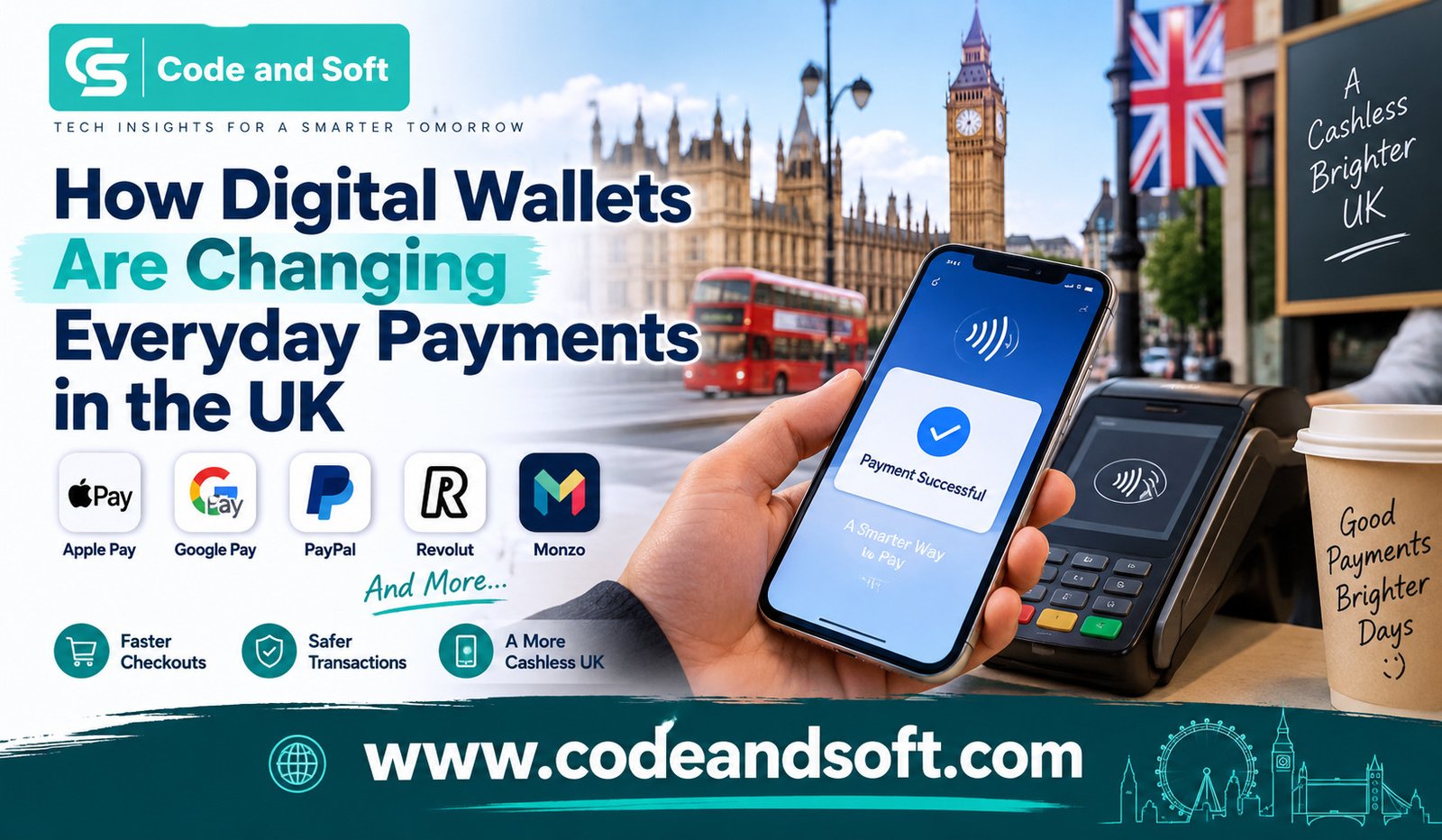

If you have ever stood at a checkout, reached for your phone instead of your wallet, and simply tapped to pay, you have already experienced how quickly everyday payments are changing. What once seemed like a futuristic way to buy a coffee or pay for groceries has become an ordinary part of life across the UK.
The rise of Digital Wallets Apps Use In UK reflects a wider shift in how you manage money. Instead of carrying several physical cards, you can store payment cards on your smartphone, smartwatch or another compatible device. You can then use that device for shopping, transport, online purchases and, depending on the service, other financial activities.
Contactless payments are now deeply established in the UK. UK Finance reported that contactless accounted for 67% of credit-card transactions and 76% of debit-card transactions in 2025, showing just how normal tap-to-pay has become.
But digital wallets are doing more than replacing plastic cards. They are changing the experience of paying, making transactions faster, more connected and increasingly centred around your smartphone.
What Is a Digital Wallet?
A digital wallet is essentially a secure way of storing payment information electronically so you can make payments without physically carrying the corresponding card.
You might add a debit or credit card to your smartphone, verify your identity and then use your phone or smartwatch at a compatible payment terminal. Digital wallets can also be used for online checkout, depending on the provider.
Services such as Apple Pay and Google Wallet generally act as a bridge to your existing cards rather than replacing your bank account. Other services, such as PayPal, can work differently and may also allow you to hold funds or send money.
MoneyHelper explains that digital wallets can allow you to pay online, in shops and, depending on the service, send or receive money.
For you, the biggest attraction is simple: you can leave your physical wallet in your pocket and still pay.
Apple Pay Makes Your iPhone a Payment Tool
If you use an iPhone, Apple Pay is likely to be one of the most familiar digital wallet options available to you.
You can add supported debit and credit cards to your Apple Wallet and use your iPhone or Apple Watch for contactless payments. Instead of pulling out your bank card, you authenticate the payment using your device and hold it near the reader.
This can be especially convenient when you are travelling around a city, buying lunch during work or making a quick purchase at a shop.
Apple Pay also works beyond physical stores. You can see it as another checkout option when shopping through supported websites and apps.
The UK government’s payment documentation recognises Apple Pay and Google Pay as digital wallets and supports their use for certain GOV.UK payments.
The result is a payment experience that feels less like a separate financial activity and more like a natural extension of using your phone.
Google Wallet Brings Payments to Android Users
If you use an Android smartphone, Google Wallet gives you a similar way to turn your device into a payment tool.
You can add supported cards, enable NFC and use your phone at compatible contactless terminals. Google states that your bank determines whether a particular card can be used with Google Wallet, so support can vary between cards and providers.
For everyday use, the appeal is obvious. You do not need to open your wallet, find the right card and put it back again. Your phone can handle the process.
You can also use Google Wallet for other digital items, depending on availability, making the app more than simply a payment tool.
For you, this means your smartphone can become a central place for both payments and everyday digital essentials.
PayPal Goes Beyond Tap-to-Pay
PayPal has been around much longer than many modern mobile wallet features, but it remains an important part of the digital payments landscape.
Unlike a wallet that mainly stores virtual versions of your existing cards, PayPal can function as an online payment account. You can connect cards, use funds held in your PayPal account, pay participating retailers and send or receive money.
MoneyHelper notes that PayPal can be used for online purchases, in-store QR-code payments and sending or receiving money internationally.
This makes PayPal particularly useful when you are shopping online and do not want to enter your card information directly into every website.
However, you should still understand how your payment is being processed. Protection and fees can differ depending on how you pay, where you are sending money and which PayPal service you use.
Samsung Wallet Keeps Payments Convenient
Samsung users have their own option through Samsung Wallet.
If you have a compatible Galaxy device, you can add supported payment cards and use your smartphone or compatible wearable for contactless transactions.
The idea is similar to Apple Pay and Google Wallet: you authenticate yourself and use your device instead of physically presenting your card.
This matters because digital wallets are increasingly becoming part of the wider smartphone ecosystem. Your choice of wallet often depends less on which payment technology you prefer and more on which phone, bank and cards you already use.
For you, the convenience comes from keeping your payment method close to the device you already carry everywhere.
Curve Brings Multiple Cards Together
Curve takes a slightly different approach.
Instead of simply digitising one card, Curve can bring multiple eligible cards together in one wallet. Its current Curve Pay service supports contactless payments on Apple and Android devices in the UK and EEA.
That can be useful if you regularly switch between different debit or credit cards.
Imagine having one card for everyday spending, another for rewards and another for travel. Rather than carrying all three everywhere, a service such as Curve can give you a centralised way to manage your payment cards.
This is an important direction for Digital Wallets Apps Use In UK because digital wallets are gradually becoming more than electronic versions of physical wallets. They can also become tools for organising how you spend.
And More Digital Wallet Options Are Emerging
Apple Pay, Google Wallet, PayPal, Samsung Wallet and Curve are only part of the wider digital payment ecosystem.
Banks increasingly offer their own mobile banking and payment features, while retailers and transport networks continue to improve digital checkout options.
You may also encounter wallets connected with loyalty programmes, tickets, memberships and other everyday services.
The boundaries between a banking app, payment wallet and everyday smartphone app are becoming less obvious.
That is one reason digital wallets are becoming so useful. Instead of thinking about payments as something you do separately, you can increasingly manage them alongside the other things you already do on your phone.
Why Digital Wallets Are Becoming So Popular
1. You can pay faster
You do not necessarily need to search through your bag for your physical card. Your phone may already be in your hand.
Contactless technology uses NFC to transmit payment information between your device and the payment terminal.
2. You carry fewer physical cards
Your smartphone can store several eligible payment cards, reducing the number of cards you need to physically carry.
That can make a difference when you are travelling, commuting or simply trying to keep your pockets light.
3. Security is built into the experience
Digital wallets can use fingerprint recognition, facial recognition, passcodes and other security measures before allowing a payment.
Your actual card details are also not simply exposed to the merchant in the same way as handing over a physical card.
Of course, you still need to protect your phone, account passwords and authentication methods.
4. They fit naturally into online shopping
When you shop through your phone, entering card details repeatedly can be frustrating.
A supported digital wallet can reduce the number of steps between choosing a product and completing your purchase.
5. They work with modern lifestyles
Your smartphone is already your camera, communication device, map, entertainment centre and banking tool.
Adding payments to that list simply makes the device more useful.
Are Digital Wallets Replacing Physical Cards?
Not completely.
There will still be situations where you may prefer or need a physical card. Your phone could run out of battery, a particular payment method might not be supported, or you may simply prefer carrying a card.
There is also the question of compatibility. Your bank, card type and device can determine which digital wallet features are available to you. Google, for example, notes that banks can restrict whether their cards work with Google Wallet.
So the future is probably not about choosing between physical cards and digital wallets.
Instead, you are likely to use both depending on the situation.
The Future of Everyday Payments in the UK
The biggest change brought by digital wallets is not simply that you can tap your phone.
It is that payments are becoming increasingly invisible.
You can order food online, tap your phone on public transport, buy groceries, pay for coffee and complete an online purchase without reaching for a traditional wallet.
UK contactless payments reached £311 billion across 19.2 billion debit and credit card transactions in 2025, according to UK Finance. That gives you an idea of how deeply contactless technology has entered everyday spending.
As smartphones, smartwatches and payment platforms continue developing, you can expect digital wallets to become even more closely connected with banking, loyalty programmes, travel and online shopping.
Ultimately, Digital Wallets Apps Use In UK is not just about replacing cash or plastic cards. It represents a broader change in how you interact with money.
For you, paying is becoming quicker, more mobile and more integrated into everyday life. Your wallet is no longer necessarily something you carry in your pocket. Increasingly, it is something you carry in your phone.

