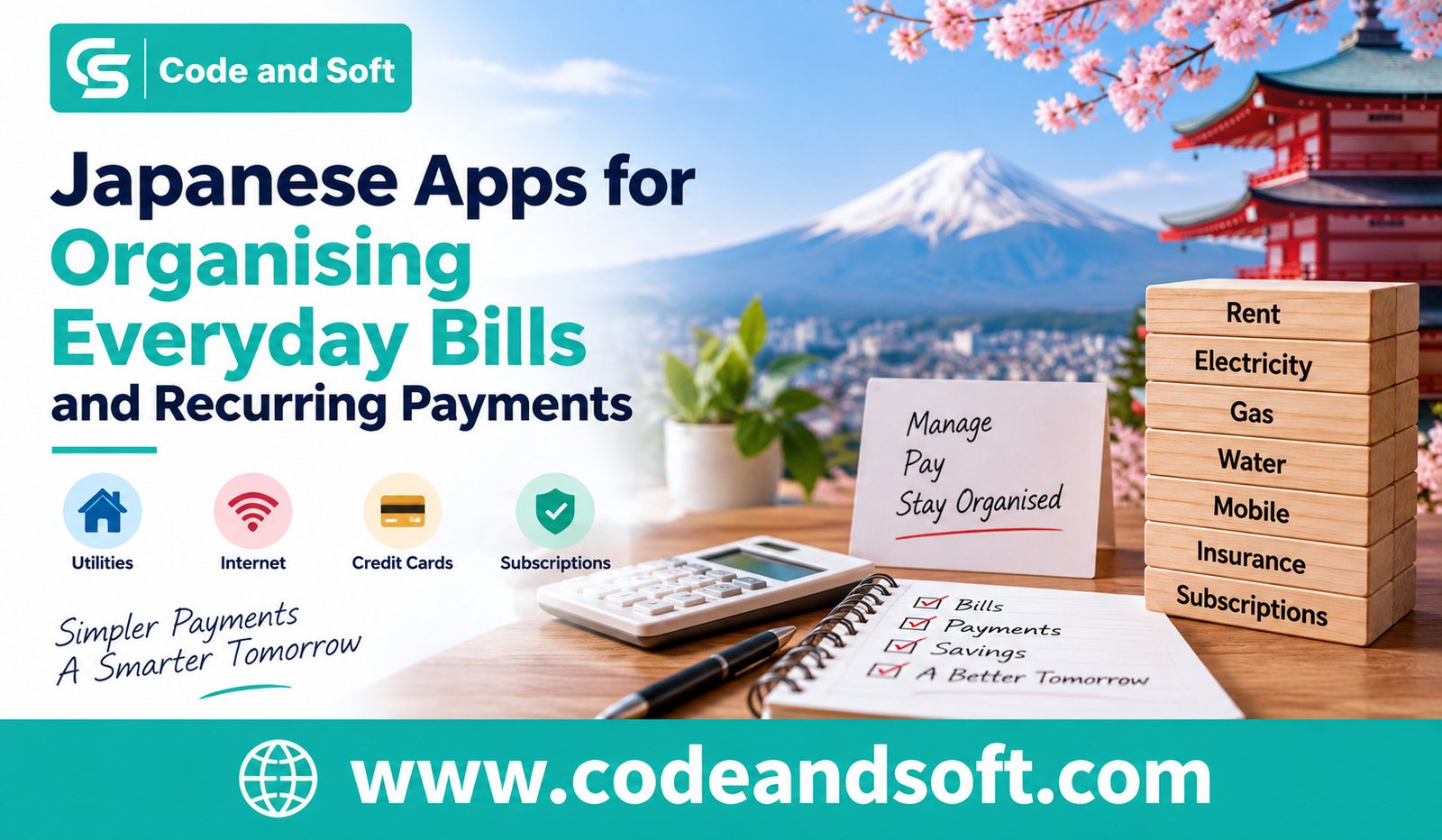

Managing everyday bills can become surprisingly complicated. Electricity, gas, water, mobile services, internet, taxes, shopping invoices, subscriptions, and other recurring expenses all arrive on different schedules. If you still handle every payment separately, it is easy to lose track of what is due and when.
That is where digital payment apps can make your routine much easier.
When you look at the Bills Payment Apps Use In Japan, you will find that several major Japanese payment platforms have moved beyond simple shopping payments. Apps such as Rakuten Pay, PayPay, d払い (d Barai), and au PAY can also be used for eligible utility bills, taxes, and other invoices. Depending on the provider, you can scan a barcode or QR code from your bill and complete the payment without visiting a convenience store or bank.
For you, the biggest advantage is not simply paying faster. It is having more of your everyday financial routine in one place.
Why Bill Payment Apps Are Becoming Useful in Japan
Think about a typical month. You may have a water bill, electricity bill, gas bill, phone bill, internet charge, insurance payment, tax notice, or shopping invoice waiting for you.
Traditionally, some of these payments could mean carrying a paper payment slip to a convenience store or arranging another payment method. Digital payment apps give you another option.
For supported bills, you can open an app, scan the barcode or QR code, check the amount, and pay from your available balance. PayPay, for example, supports bill payments for categories including electricity, gas, water, communications, broadcasting, services, and certain taxes.
This is particularly convenient when you are busy. Instead of thinking, “I need to remember to take this bill with me,” you can deal with it when you receive it.
However, you should always check whether your particular bill or provider is supported. Availability, payment methods, limits, and rewards can differ between apps.
1. Rakuten Pay
If you already use the Rakuten ecosystem, Rakuten Pay can be a natural choice for handling eligible bills.
Its invoice payment (請求書払い) feature allows you to scan the barcode or QR code printed on supported bills. You can use it for various public utility charges, including electricity, gas, and water, as well as certain taxes and other invoices.
One feature you may particularly appreciate is the ability to use Rakuten Points or Rakuten Cash for eligible payments. Rakuten also supports eL-QR payments for certain local taxes.
The process is straightforward:
- Open Rakuten Pay.
- Select invoice payment.
- Scan the barcode or QR code.
- Check the payment details.
- Pay immediately or, where supported, schedule the payment date.
That last option can be useful if you prefer to organise payments around your monthly budget.
There is an important detail to remember, though: invoice payments do not necessarily earn Rakuten Points, and some bills may have restrictions on using points.
So, if you choose Rakuten Pay, think of the convenience and integration with your existing Rakuten balance as the main benefits rather than assuming every bill will generate rewards.
2. PayPay
PayPay is another major name you will come across when looking at the Bills Payment Apps Use In Japan.
Its bill-payment function lets you scan a barcode or eL-QR from an eligible payment slip and pay directly through the app. Supported categories include utilities, taxes, communications, services, and some other invoices.
The biggest attraction is convenience. You can pay from home rather than making a separate trip to a convenience store. PayPay also offers payment-date reservation for supported barcode-based bill payments, which can help if you are trying to avoid forgetting a due date.
Imagine receiving your electricity bill while you are working. Instead of putting it somewhere “safe” and then forgetting about it, you can scan it immediately and finish the task.
There are restrictions, however. Different types of bills can require different PayPay payment methods. Certain taxes, for example, have specific balance or credit requirements. PayPay also notes that receipts or tax-payment certificates are not issued through the app in some cases.
For that reason, keep the original bill when you may need formal proof of payment.
3. d払い (d Barai)
If you are familiar with the NTT DOCOMO ecosystem, d払い can also become part of your bill-management routine.
With d払い invoice payment, you can scan a barcode or eL-QR printed on an eligible bill and pay using your d払い balance. Supported payments include various public utilities, taxes, shopping-related invoices, and services.
One useful aspect is that the service is available 24 hours a day, allowing you to make eligible payments from home rather than travelling somewhere specifically to pay a bill.
There is also a payment limit. The official d払い information currently states a maximum of ¥500,000 for invoice payments. dポイント cannot be used for these payments or earned from them.
For you, d払い may make the most sense if you already use other DOCOMO-related services and want to keep another part of your everyday spending within the same ecosystem.
4. au PAY
au PAY is another option worth considering, particularly if you already use au-related services.
Its invoice-payment feature allows you to scan the QR code or barcode printed on eligible bills and pay using your au PAY balance. Electricity, gas, public charges, and taxes are among the types of payments supported.
You do not necessarily need to visit a convenience store simply because you received a paper bill. If the bill is eligible, you can handle it directly through the app.
There are some limitations to keep in mind. au PAY currently lists a ¥300,000 payment limit for invoice payments, and its invoice-payment transactions are not eligible for the standard base-point accumulation.
So again, convenience is the main reason to use the feature—not the expectation of earning points on every payment.
And More Apps You Can Consider
The four apps above are not the only digital options available to you.
For example, Rakuten Bank’s app offers a service that allows eligible convenience-store payment slips to be scanned and paid directly from your Rakuten Bank account. It covers categories such as utilities, taxes, public payments, and certain business payments.
You may also encounter provider-specific apps and payment services. Tokyo’s water authority, for instance, lists PayPay, au PAY, FamiPay, d払い, and Rakuten Pay among smartphone payment options for its water-service customers.
This illustrates an important point: you do not necessarily need one app for everything.
Instead, you can choose the payment service that fits the bills you actually receive and the financial ecosystem you already use.
How You Can Organise Your Monthly Payments
The real benefit of these apps comes when you use them as part of a routine.
At the beginning or end of each month, make a quick list of your regular expenses:
- Electricity
- Gas
- Water
- Mobile phone
- Internet
- Insurance
- Taxes
- Subscriptions
- Shopping invoices
- Other recurring services
Then separate them into two groups: payments that can be handled through your preferred payment app and payments that require another method.
This simple habit can prevent you from assuming that every bill can be paid through the same app.
You should also keep an eye on payment deadlines. Digital payment is convenient, but it does not automatically mean every bill is paid automatically. Many invoice-payment functions require you to scan the bill yourself.
That distinction is important.
A bill-scanning service and an automatic recurring payment are not always the same thing.
What You Should Check Before Paying
Before you start relying heavily on one app, check four things.
First, check whether your provider is supported. Payment availability can vary by utility company, municipality, service provider, and bill type.
Second, check the payment method. Some bills may require a particular balance or payment source. PayPay, for example, has different requirements depending on whether you are paying taxes, a deferred-payment invoice, or another type of bill.
Third, check the limits. Rakuten Pay, d払い, and au PAY each have their own restrictions, while individual bills can have additional requirements.
Finally, think about records. Some digital bill payments do not produce a conventional paper receipt or tax certificate. If you may need official proof later, keep the original documentation or check the provider’s rules before disposing of it.
Choosing the Right App for Your Routine
There is no single winner for everyone.
If you already use Rakuten services and collect Rakuten Points, Rakuten Pay may fit naturally into your routine.
If PayPay is already your everyday payment app, its bill-payment tools can save you the trouble of switching between different services.
If you are deeply connected to DOCOMO services, d払い may be the convenient option.
And if you regularly use au services, au PAY can bring eligible invoice payments into the same ecosystem.
The important thing is to choose based on the bills you actually receive rather than simply choosing the most popular app.
Final Thoughts
The biggest change brought by Japanese bill-payment apps is not that paying a bill suddenly becomes complicated or high-tech. It is actually the opposite.
They can make a boring monthly task feel much smaller.
Instead of carrying a payment slip around, finding time to visit a convenience store, or postponing a payment until the deadline approaches, you can often scan an eligible bill and deal with it immediately from home.
Rakuten Pay, PayPay, d払い, and au PAY all provide useful options, while services such as Rakuten Bank and provider-specific apps give you additional choices.
When you use these tools thoughtfully, Bills Payment Apps Use In Japan becomes less about simply making payments and more about building a cleaner, easier monthly routine.
The trick is simple: know which bills you receive, know which app supports them, check the payment rules, and make bill payments part of your regular financial routine.