Data science has become an important part of modern technology. Businesses use data to understand customers, improve products, predict future trends, and make better decisions. If you want to build a career in this field, learning a programming language is one of the first steps.
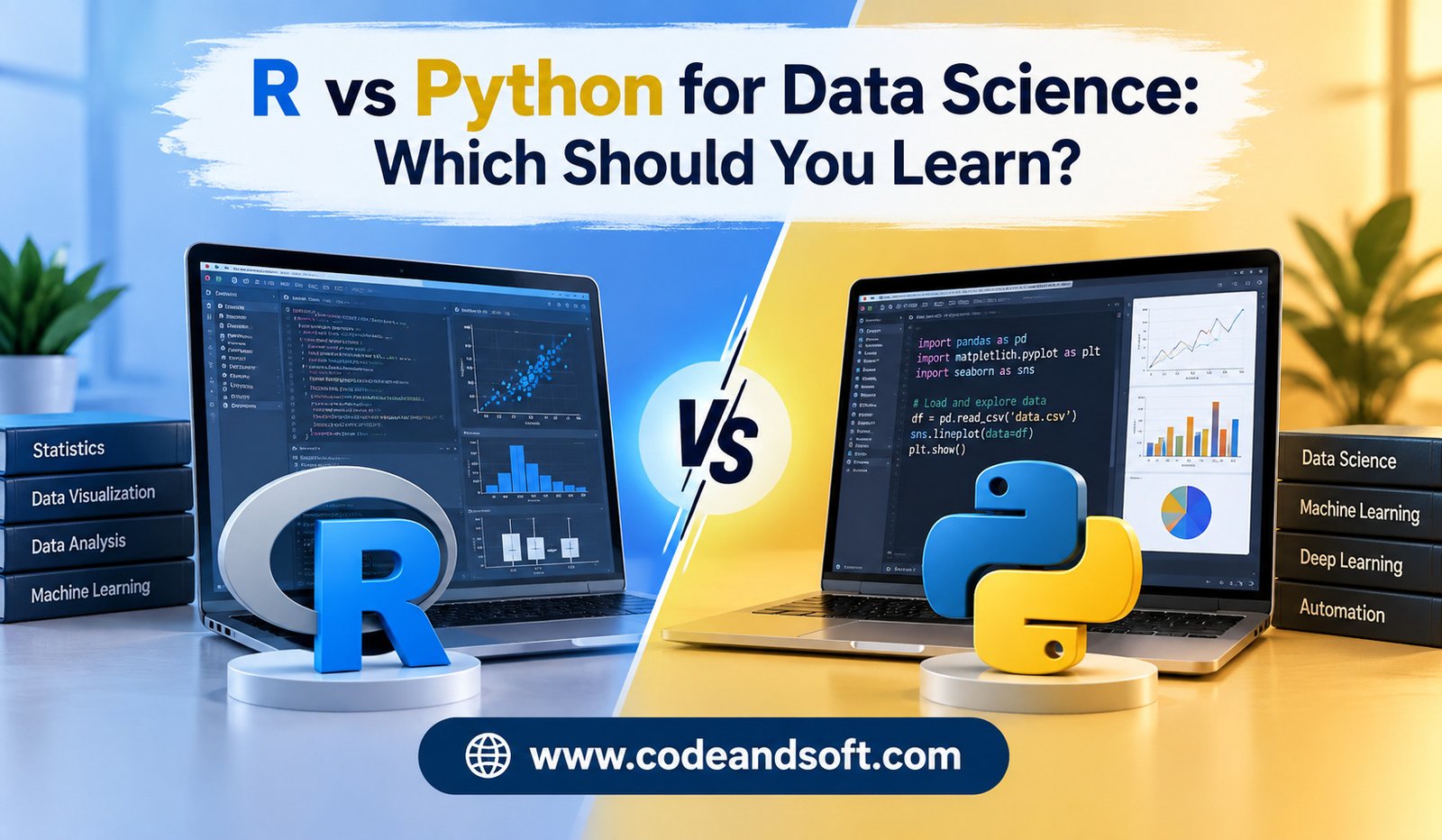
Two of the most popular choices for data science are R and Python. Both can be used to work with data, create charts, build prediction models, and solve real-world problems. However, they are designed with different goals in mind, and the better choice depends on what you want to do.
For beginners, the choice between R and Python can sometimes feel confusing. You may hear that Python is more popular, while others may recommend R because it was created with statistics and data work in mind. The truth is that both are useful, but they offer different experiences.
This guide compares R and Python in simple terms so you can decide which one is worth learning for your data science journey.
What Is Python?
Python is a general-purpose programming language. This means it can be used for many different types of software, not just data science. Developers use Python to build websites, automate tasks, create applications, work with artificial intelligence, and handle data.
One reason Python is popular among beginners is its simple and readable code. The language often looks closer to normal English than many other programming languages. This can make it easier to understand when you are learning programming for the first time.
Python also has many tools designed for working with data. These tools allow you to clean information, study large datasets, create charts, and build models that can make predictions.
Another major advantage is that learning Python can open doors beyond data science. Once you become comfortable with Python, you can use the same language for other technology jobs and projects.
What Is R?
R is a programming language created mainly for statistics, data analysis, and research. It is especially popular among statisticians, researchers, universities, and people who work heavily with numbers.
R makes many common data tasks easier because it was designed around statistical work. It has a large collection of packages that can help users study data, perform calculations, and create detailed charts.
R is also well known for its ability to create attractive data visualizations. If your work involves exploring data and presenting findings through charts and graphs, R can be a very useful choice.
Unlike Python, R is not normally used as a general programming language for building all kinds of software. Its biggest strength is working with data and statistics.
Python vs R for Beginners
If you have never programmed before, Python is usually the easier starting point. Its basic syntax is relatively straightforward, and there are countless beginner-friendly learning resources available.
For example, Python lets you store information in a variable using a simple statement such as name = “John”. You can then use that information elsewhere in your program. The basic structure is easy to understand after some practice.
R is also possible for beginners, especially if you are interested in statistics. However, its style can feel less familiar if your goal is to learn general programming first.
The best choice also depends on your background. Someone studying statistics may find R comfortable because many of its features are closely connected to statistical work. Someone interested in software development or artificial intelligence may find Python more useful.
Python for Data Analysis
Python is widely used for handling and studying data. One of its biggest strengths is the number of tools available for this work.
A popular tool called pandas makes it easier to organize and examine data. You can use it to open files, arrange information, remove unwanted data, calculate values, and find patterns.
Python also works well with numerical calculations. Tools such as NumPy help with large amounts of numbers and mathematical operations.
When you need charts, Python provides several useful options. Matplotlib and Seaborn are commonly used to create graphs and visual explanations of data. These tools allow you to turn rows and numbers into charts that are easier for people to understand.
Because these tools work together, Python can handle many parts of a data science project in one environment.
R for Data Analysis
R has a strong reputation in statistics and data analysis. It provides many features that are useful when your main goal is to understand data rather than build software.
One popular collection of R tools is called the tidyverse. It includes tools that make it easier to organize, change, study, and display data.
R is also particularly strong when it comes to statistics. Researchers can use it for tasks such as comparing groups, finding relationships between values, and studying patterns in collected information.
Another major advantage is data visualization. R’s ggplot2 package is widely appreciated because it gives users a flexible way to create detailed charts.
If you work in a research environment or regularly need to explain statistical results, R can be an excellent choice.
Which Has Better Data Visualization?
Both languages are capable of creating excellent charts, but R has traditionally had an advantage in this area.
R was built around data analysis, and its charting tools are designed to help users understand and present information. With ggplot2, you can create professional-looking charts without writing extremely complicated code.
Python has also become very strong in this area. Tools such as Matplotlib, Seaborn, and Plotly provide many options for creating graphs and interactive charts.
For basic charts, there may not be a major difference between the two. However, people who focus heavily on statistics and research often enjoy R’s approach to visualization.
Which Is Better for Machine Learning?
Python is generally the stronger choice if machine learning is an important part of your plans.
Python has a large collection of tools for creating prediction systems and artificial intelligence applications. Libraries such as scikit-learn make it possible to build and test many types of machine learning models.
Python is also widely used for more advanced artificial intelligence work. Tools such as TensorFlow and PyTorch allow developers and researchers to create complex systems that work with images, text, sound, and other forms of information.
R can also be used for machine learning. It has packages that support many common methods, and it remains useful for statistical modeling.
However, if you want to move from traditional data analysis into artificial intelligence and software development, Python gives you a broader path.
Which Language Has More Job Opportunities?
Python currently has a broader range of job opportunities. It is used in data science, software development, automation, artificial intelligence, web development, and many other areas.
This does not mean R has no career value. R is still used in areas such as research, statistics, healthcare research, economics, finance, and academic work.
The type of company you want to work for also matters. Technology companies and startups commonly use Python for data-related work. Research organizations and statistics-focused teams may use R more often.
If your main goal is to maximize the number of different technology roles available to you, Python is generally the safer choice.
Which Language Is Easier to Learn?
Python usually has the advantage for beginners because its code is clean and easy to read.
You can learn Python basics such as variables, conditions, loops, functions, and data structures before moving into data science. These skills are useful in many different programming jobs.
R can also be learned without a programming background, particularly if you enjoy working with numbers and statistics. You may even find R easier than Python if you already have experience with statistics.
The most important point is that neither language needs to be mastered overnight. Learning one language properly is more useful than trying to learn both at the same time and becoming comfortable with neither.
Python or R for Career Growth?
Python offers broader career growth because it can take you in several directions. You could begin with data analysis and later move into machine learning, artificial intelligence, automation, or software development.
This flexibility is valuable for someone who is still deciding what type of technology career they want.
R offers a more focused path. If you know that you want to work in statistics, research, or data-heavy academic fields, R can be an excellent long-term choice.
There is also nothing wrong with learning both languages eventually. Many experienced data professionals use whichever language works best for a particular project.
However, beginners should usually choose one language first and build a strong foundation before adding another.
Can You Learn R After Python?
Yes. Learning Python first does not prevent you from learning R later.
Once you understand basic programming ideas, learning a second language becomes easier. Concepts such as variables, functions, calculations, data handling, and problem-solving are found in both languages.
If you start with Python, you can later learn R when you have a project that requires strong statistical analysis or specialized data visualization.
The reverse is also possible. Someone who starts with R can learn Python later and move into areas such as machine learning and software development.
Learning one language first gives you confidence and makes the second language less intimidating.
R vs Python: Which Should You Learn First?
For most beginners, Python is the better first choice.
Python is easier to approach, has a huge learning community, works well for data science, and provides opportunities outside data analysis. It is also widely used for machine learning and artificial intelligence.
R becomes a particularly attractive option when statistics and research are your main interests. If you are studying statistics, economics, social science, or another subject where statistical analysis is central, R may be the better match.
Think about your long-term goal rather than choosing a language simply because someone says it is popular. A language is a tool, and the best tool depends on the work you want to do.
Should You Learn Both R and Python?
You do not need to learn both at the beginning.
Starting with one language allows you to focus on understanding how data work is done. Once you can confidently clean data, analyze information, create charts, and build simple models, you can decide whether learning the second language would benefit you.
For many people, Python should come first. After gaining experience, learning R can add another useful skill, especially if your work involves detailed statistics or research.
For others, especially people coming from a statistics background, starting with R may make more sense.
Final Verdict
R and Python are both powerful choices for data science, but they are strongest in different areas.
Python is the better all-round choice for most beginners. It has simple code, a large collection of data tools, strong machine learning support, and opportunities across many technology fields. It is a particularly good choice if you want flexibility in your future career.
R is an excellent choice for people who are mainly interested in statistics, research, and detailed data analysis. Its tools for statistical work and visualization make it valuable in many professional and academic environments.
If you are unsure which one to choose, start with Python. Build a solid foundation, work on real data projects, and learn how to explain what your results mean. Once you are comfortable, you can explore R and decide whether it fits your goals.
The most important thing is not whether you choose R or Python. What matters is that you learn how to work with data, ask useful questions, understand the results, and turn those results into clear decisions. A strong understanding of data will always be more valuable than simply knowing the name of a programming language.
FAQs
Is Python better than R for data science?
For most beginners, Python is the better overall choice because it is easy to learn and useful across data science, machine learning, artificial intelligence, and software development. R can be better for people who mainly focus on statistics and research.
Is R harder to learn than Python?
R is not necessarily harder, but its style is different. Python is often easier for people who are completely new to programming. People with a statistics background may find R very comfortable.
Can I get a data science job with Python only?
Yes. Python is widely used in data-related jobs, and many employers use it for data analysis and machine learning. Your ability to work with data and solve problems is more important than knowing several programming languages.
Should a statistics student learn R or Python?
A statistics student can benefit from either language. R is especially useful for statistical analysis and research, while Python offers a wider path into data science, machine learning, artificial intelligence, and programming.
Can I learn R and Python together?
You can, but beginners may find it easier to learn one language first. Once you understand basic programming and data analysis, learning the second language becomes much easier.