

Choosing the right accounting software is one of the most important decisions for businesses looking to improve financial management. With increasing competition, growing transaction volumes, and the need for accurate financial insights, businesses require accounting tools that are reliable, efficient, and easy to use.
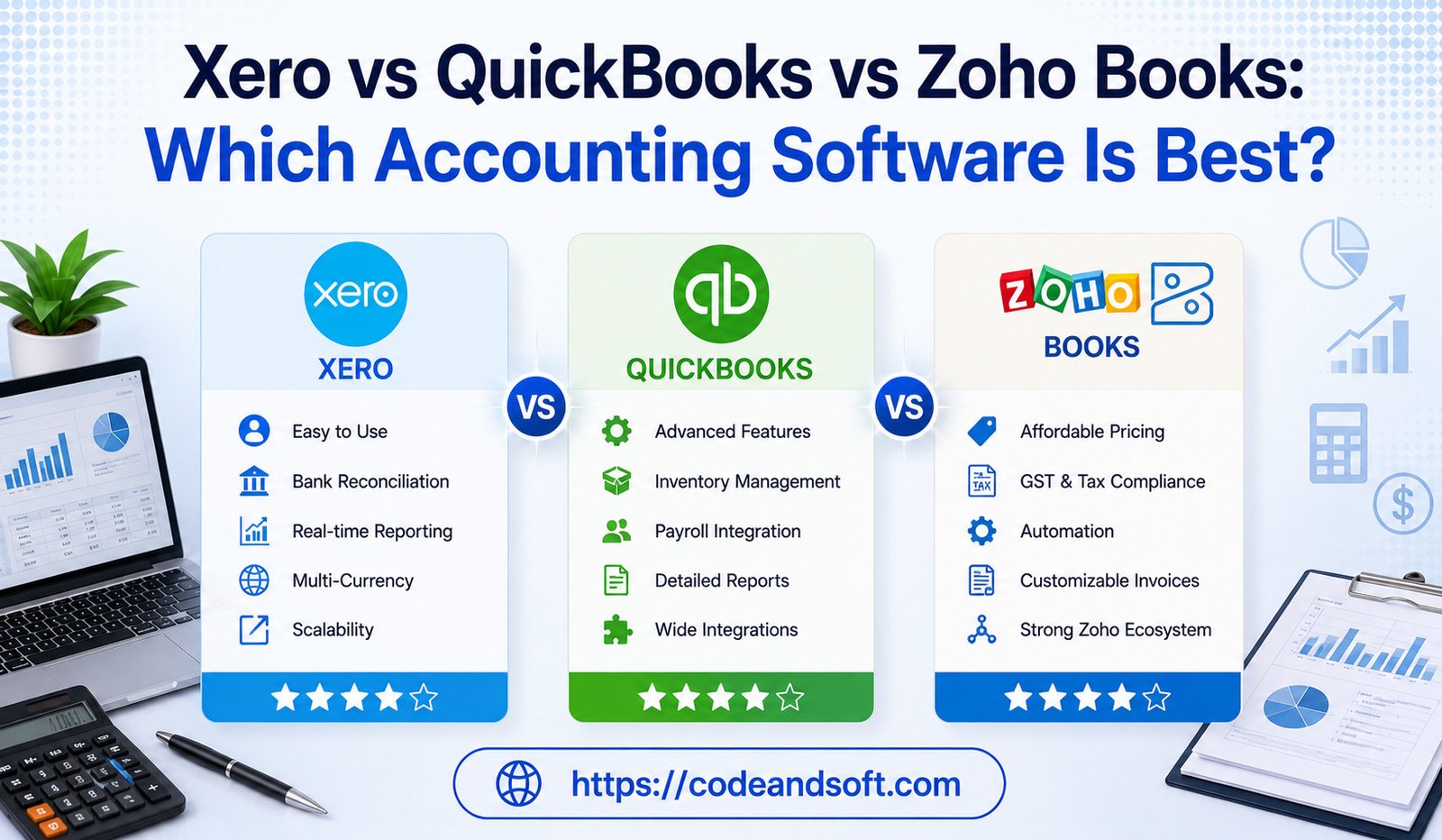
Among the most popular accounting platforms available today, Xero, QuickBooks, and Zoho Books are widely used by small businesses, startups, freelancers, and growing enterprises. Each platform offers powerful accounting features, cloud accessibility, automation tools, and financial reporting capabilities.
However, choosing between Xero, QuickBooks, and Zoho Books can be challenging because each software solution has different strengths. Some businesses may prioritize advanced accounting features, while others may focus on affordability, simplicity, or integration options.
This detailed comparison explains the features, benefits, pricing considerations, advantages, and limitations of Xero, QuickBooks, and Zoho Books to help businesses choose the best accounting software for their needs.
What Makes Good Accounting Software?
Before comparing Xero, QuickBooks, and Zoho Books, it is important to understand the features businesses should look for in accounting software.
A good accounting platform should provide:
- Automated bookkeeping
- Invoice management
- Expense tracking
- Bank reconciliation
- Financial reporting
- Tax management
- Cloud access
- Mobile support
- Integration capabilities
- Data security
The ideal accounting software should reduce manual work, improve accuracy, and provide valuable financial insights.
Overview of Xero, QuickBooks, and Zoho Books
Xero
Xero is a cloud-based accounting software designed for small and medium-sized businesses. It is known for its clean interface, strong collaboration features, and excellent bank reconciliation capabilities.
Xero focuses on simplifying accounting processes while allowing business owners and accountants to manage financial data from anywhere.
QuickBooks Online
QuickBooks Online is one of the most recognized accounting platforms worldwide. Developed for small businesses and professionals, it provides a wide range of accounting features, reporting tools, and integrations.
QuickBooks is known for its comprehensive financial management capabilities and large ecosystem.
Zoho Books
Zoho Books is part of the Zoho business software ecosystem. It provides accounting, invoicing, expense management, and automation features at competitive pricing.
Zoho Books is popular among small businesses that want affordable accounting software with strong automation.
Xero vs QuickBooks vs Zoho Books: Feature Comparison
1. User Interface and Ease of Use
Xero
Xero offers a modern and simple interface designed for users who want easy navigation. The dashboard provides a clear overview of financial activities, including bank balances, invoices, and expenses.
Its user-friendly design makes it suitable for business owners who may not have extensive accounting knowledge.
QuickBooks
QuickBooks provides a powerful interface with many accounting features. While it offers more advanced functionality, new users may require some time to understand all available tools.
The platform provides guided assistance and learning resources to help users.
Zoho Books
Zoho Books has a clean and organized interface. It focuses on simplicity, making it easier for small business owners and beginners to manage accounting tasks.
Winner: Zoho Books and Xero
For simplicity and beginner-friendly experience, Zoho Books and Xero perform strongly.
2. Accounting Features
Xero Features:
- Bank reconciliation
- Invoice management
- Expense tracking
- Financial reporting
- Inventory tracking
- Project accounting
Xero provides strong core accounting features suitable for growing businesses.
QuickBooks Features:
- Bookkeeping
- Advanced reporting
- Payroll support
- Inventory management
- Expense tracking
- Tax preparation tools
QuickBooks offers a broader range of accounting capabilities.
Zoho Books Features:
- Automated workflows
- Invoicing
- Expense management
- Banking integration
- Tax management
- Customer management
Zoho Books provides essential accounting features with strong automation.
Winner: QuickBooks
QuickBooks has the advantage because of its extensive accounting features and reporting capabilities.
3. Invoicing Capabilities
Invoicing is an important function for businesses that depend on regular customer payments.
Xero Invoicing
Xero allows businesses to create professional invoices, track payments, and send automatic reminders.
QuickBooks Invoicing
QuickBooks provides customizable invoices, payment tracking, recurring billing, and customer management features.
Zoho Books Invoicing
Zoho Books offers advanced invoice automation, recurring invoices, payment reminders, and customer communication tools.
Winner: Zoho Books
Zoho Books provides strong invoicing features, especially for small businesses that need automation.
4. Expense Management
Expense tracking helps businesses control spending and improve financial planning.
Xero
Xero allows businesses to record expenses, capture receipts, and categorize transactions.
QuickBooks
QuickBooks provides detailed expense tracking with automatic categorization and reporting features.
Zoho Books
Zoho Books offers expense tracking, receipt management, and approval workflows.
Winner: QuickBooks
QuickBooks provides more advanced expense analysis and reporting options.
5. Bank Reconciliation
Bank reconciliation ensures financial records match actual bank transactions.
Xero
Xero is widely recognized for its strong bank reconciliation features.
QuickBooks
QuickBooks also provides automated bank feeds and reconciliation tools.
Zoho Books
Zoho Books offers bank integration and reconciliation features with automation options.
Winner: Xero
Xero has a strong reputation for efficient bank reconciliation.
6. Reporting and Analytics
Financial reports help businesses understand profitability, cash flow, and overall performance.
Xero Reports
Xero provides:
- Profit and loss reports
- Balance sheets
- Cash flow reports
- Business performance analysis
QuickBooks Reports
QuickBooks offers advanced reporting tools, including:
- Custom financial reports
- Profitability analysis
- Tax reports
- Business insights
Zoho Books Reports
Zoho Books provides financial reports with customization options and automation features.
Winner: QuickBooks
QuickBooks offers the most advanced reporting capabilities.
7. Mobile Accounting
Today’s businesses require convenient access to financial data, even when employees are working remotely.
Xero Mobile App
Xero allows users to create invoices, track expenses, and view financial information through mobile devices.
QuickBooks Mobile App
QuickBooks provides mobile access to invoices, expenses, payments, and reports.
Zoho Books Mobile App
Zoho Books offers mobile accounting features including invoice creation, expense tracking, and customer management.
Winner: Tie
All three platforms provide strong mobile accounting support.
8. Integration Capabilities
Businesses often use multiple tools for payments, payroll, customer management, and inventory.
Xero Integrations
Xero supports many third-party applications for payroll, payments, and business operations.
QuickBooks Integrations
QuickBooks has one of the largest accounting ecosystems with numerous integrations.
Zoho Books Integrations
Zoho Books integrates well with other Zoho applications and several external platforms.
Winner: QuickBooks
QuickBooks offers the widest range of integrations.
9. Pricing and Affordability
Pricing is an important factor, especially for startups and small businesses.
Xero Pricing
Xero offers different plans based on business requirements. It provides good value for businesses needing strong accounting features.
QuickBooks Pricing
QuickBooks provides multiple subscription plans with different levels of functionality.
Zoho Books Pricing
Zoho Books is generally considered a more affordable option, especially for small businesses.
Winner: Zoho Books
Zoho Books provides strong features at competitive pricing.
Xero vs QuickBooks vs Zoho Books: Pros and Cons
Xero
Pros:
- Easy-to-use interface
- Excellent bank reconciliation
- Strong collaboration tools
- Cloud-based access
Cons:
- Some advanced features require higher plans
- Reporting may be less advanced than QuickBooks
QuickBooks
Pros:
- Powerful accounting features
- Advanced reporting
- Large integration ecosystem
- Strong business support
Cons:
- Can be expensive for some small businesses
- More features may feel complex for beginners
Zoho Books
Pros:
- Affordable pricing
- Simple interface
- Strong automation
- Good integration with Zoho products
Cons:
- Fewer third-party integrations compared to QuickBooks
- Advanced features may be limited for larger companies
Which Accounting Software Is Best for Different Businesses?
Best for Small Businesses
Zoho Books is a strong choice for small businesses looking for affordable and easy-to-use accounting software.
Best for Growing Businesses
Xero is suitable for businesses that need collaboration features and reliable cloud accounting.
Best for Advanced Accounting Needs
QuickBooks is ideal for businesses requiring detailed reporting and advanced financial management.
Best for International Businesses
Xero is widely used globally and works well for businesses operating across different regions.
Best for Businesses Using Zoho Applications
Zoho Books works best for companies already using Zoho CRM, inventory, or other Zoho solutions.
How to Choose Between Xero, QuickBooks, and Zoho Books?
Businesses should consider the following factors before making a decision:
Business Size
Small businesses may prefer Zoho Books, while larger organizations may need QuickBooks features.
Accounting Complexity
Companies requiring advanced reporting and financial analysis may benefit from QuickBooks.
Budget
Businesses looking for affordable solutions may find Zoho Books more suitable.
Collaboration Needs
Companies working with accountants or remote teams may prefer Xero.
Final Verdict: Xero vs QuickBooks vs Zoho Books
There is no single accounting software that is perfect for every business. The best choice depends on specific requirements, budget, and business goals.
- QuickBooks is the best option for businesses needing advanced accounting features, detailed reports, and extensive integrations.
- Xero is ideal for businesses that want simple cloud accounting with excellent collaboration and reconciliation features.
- Zoho Books is a great choice for small businesses looking for affordable accounting software with automation capabilities.
For businesses focused on powerful financial management, QuickBooks offers the most complete solution. For companies seeking flexibility and collaboration, Xero is a strong option. For startups and small businesses wanting cost-effective accounting tools, Zoho Books provides excellent value.
Choosing the right accounting software can help businesses improve financial control, automate processes, and make smarter decisions for long-term growth.