
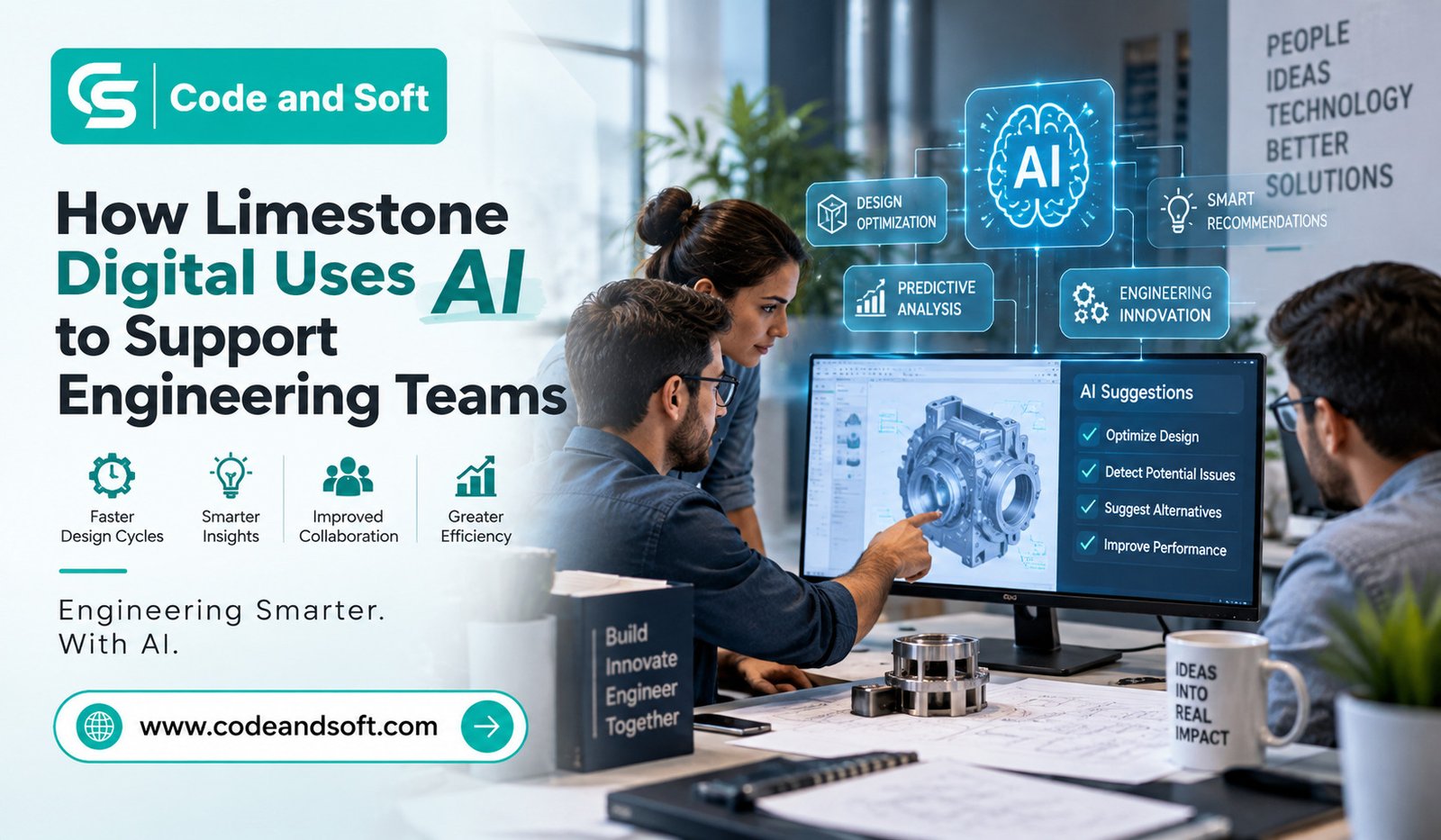

Artificial intelligence is quickly becoming part of the modern engineering workflow. But for most engineering teams, AI is not about replacing experienced developers or handing every technical decision over to a machine. Instead, it is about helping teams work faster, reduce repetitive tasks, find information more easily, and spend more time solving meaningful problems.
This is where Limestone Digital Uses AI as part of its approach to supporting engineering teams. By bringing AI into different parts of the development process, teams can improve productivity while still keeping human expertise at the center of important technical decisions.
If you work with software development, product engineering, or digital transformation, understanding how AI can support your daily workflow can help you make better use of the technology. From writing and reviewing code to troubleshooting and documentation, AI can become a practical assistant rather than another complicated tool to manage.
What Does Limestone Digital Uses AI Mean for Engineering Teams?
When you hear about companies using AI in engineering, it can be easy to imagine fully automated development. In reality, effective AI adoption is usually much more practical.
Limestone Digital Uses AI to support engineers with tasks where intelligent assistance can save time or improve efficiency. You can think of AI as an additional layer of support around the engineering process.
Instead of asking AI to make every decision, engineers can use it to generate suggestions, analyze information, explain unfamiliar code, identify possible problems, or speed up routine work.
This approach allows you to maintain control over the development process while using AI where it offers the most value.
The biggest advantage is not simply producing more code. It is reducing the amount of time you spend on repetitive work so you can focus on architecture, problem-solving, testing, product requirements, and other areas that require experience and judgment.
AI-Assisted Coding Can Speed Up Development
Writing code is one of the areas where AI can provide immediate assistance. Developers frequently work with repetitive structures, common programming patterns, API integrations, tests, and other tasks that can consume significant amounts of time.
With AI assistance, you can generate an initial implementation based on a clear description of what you need. You can also ask AI to suggest alternative approaches or explain how a particular function works.
For example, if you are implementing a common API endpoint, AI may help you create a starting point. Rather than beginning with an empty file, you can review the generated suggestion, modify it, and adapt it to your application’s requirements.
This distinction matters.
You are not simply accepting whatever AI produces. You are using it as a starting point and applying your own engineering judgment before anything becomes part of a production system.
For engineering teams, this can shorten development cycles without removing the human review that keeps software reliable.
AI Can Help You Understand Existing Code
Large and older codebases can be difficult to navigate, particularly when you join an existing project.
You may encounter functions written years ago, unfamiliar frameworks, complicated dependencies, or documentation that does not fully explain how everything works.
AI can act as a useful guide in these situations.
You can use AI to explain a section of code in simpler language, summarize what a function is doing, identify dependencies, or help you understand the relationship between different components.
This can be particularly useful when you are working on a project that you did not originally build.
Instead of spending hours trying to understand every line before making a small change, you can use AI to create an initial overview. You can then verify that explanation against the actual code and documentation.
For you as an engineer, this means less time spent searching for context and more time spent making informed changes.
Faster Debugging and Troubleshooting
Few things consume an engineering team’s time like unexpected bugs.
A small issue can sometimes require hours of investigation. You may need to examine logs, trace application behavior, review recent changes, reproduce the problem, and determine whether the issue comes from the application, infrastructure, database, or another dependency.
AI can support this troubleshooting process by helping you analyze error messages and identify potential causes.
You can provide an error message or relevant technical context and ask AI to suggest possible explanations. It may point you toward a configuration issue, dependency conflict, unexpected input, or logic problem that deserves further investigation.
The important point is that AI-generated suggestions are not automatically correct.
You still need to reproduce the issue, inspect the system, test possible fixes, and confirm the result. AI simply gives you another source of analysis that can help you reach the right answer more efficiently.
For busy engineering teams, even a small reduction in debugging time can have a meaningful impact on productivity.
AI Can Support Code Reviews
Code reviews are essential for maintaining software quality, but they can also become time-consuming when engineering teams are dealing with large numbers of pull requests.
AI can help provide an additional perspective during the review process.
For example, AI can look for potentially duplicated logic, obvious bugs, inefficient patterns, missing edge cases, or areas that may require additional testing.
This does not mean AI should replace peer review.
An experienced engineer can understand business requirements, architectural constraints, security considerations, and project-specific conventions in ways that an automated system may not fully understand.
Instead, AI can help you identify potential issues before or during human review.
That gives engineers more time to focus their review comments on important architectural and functional concerns rather than spending all their time identifying basic problems.
Improving Documentation With AI
Documentation is another area where engineering teams often struggle.
You may know how a system works, but finding time to document every API, process, component, or configuration can be difficult. As projects evolve, documentation can also become outdated.
AI can help you create initial documentation from existing technical information.
You can use it to summarize code, create explanations of functions, draft API documentation, or turn technical notes into a more readable format.
This can make documentation easier to maintain because you are not always starting from scratch.
You should still review AI-generated documentation carefully. Incorrect documentation can be worse than incomplete documentation because it can give future developers a false understanding of the system.
When used properly, however, AI can remove much of the tedious writing involved in documenting technical work.
Supporting Testing and Quality Assurance
Testing is another part of software engineering where AI can provide useful support.
You can use AI to suggest test cases based on a function’s expected behavior. It may also help identify edge cases that you have not considered or generate a starting point for unit and integration tests.
Imagine you have a function that processes customer information. Instead of testing only the expected input, AI may encourage you to consider empty values, unexpected formats, duplicate records, unusually large inputs, or invalid data.
This does not guarantee comprehensive test coverage, but it can expand the range of scenarios you consider.
For engineering teams, that additional perspective can help improve software quality while reducing some of the manual effort involved in preparing tests.
Helping Engineers Work With Complex Technologies
Technology stacks continue to evolve quickly.
You may need to work with a new programming language, cloud platform, framework, database, or development methodology without having years of experience with it.
AI can help reduce the initial learning curve.
You can ask questions about unfamiliar concepts, request simplified explanations, compare technical approaches, or work through examples. Instead of constantly switching between documentation pages and search results, you can use AI as an interactive learning assistant.
However, you should still rely on official technical documentation when making important implementation decisions.
AI can occasionally provide outdated or inaccurate information. Using it alongside reliable technical sources gives you the benefits of fast explanations without sacrificing accuracy.
AI Helps Engineers Spend More Time on High-Value Work
One of the strongest arguments for AI in engineering is not that it makes engineers unnecessary. It is that it can reduce the amount of low-value work engineers have to perform.
Consider how much time can disappear into repetitive activities:
- Writing basic code structures
- Creating repetitive tests
- Searching through documentation
- Explaining existing code
- Formatting technical information
- Investigating common errors
- Drafting documentation
- Summarizing changes
These tasks may be necessary, but they do not always require your highest level of engineering expertise.
When AI helps with them, you can redirect more of your attention toward system architecture, product strategy, performance optimization, security, user experience, and complex technical challenges.
That is where human engineering expertise continues to be extremely valuable.
Why Human Oversight Still Matters
AI can be powerful, but it is not infallible.
An AI-generated solution may look convincing while containing a subtle bug. It may recommend an outdated library, misunderstand a business requirement, or overlook a security issue.
That is why the most effective approach is usually collaboration between AI and experienced engineers.
When Limestone Digital Uses AI, the technology can support the engineering workflow, but engineers still need to evaluate the output, test solutions, protect sensitive information, and make final technical decisions.
You should treat AI-generated code and recommendations as material for review rather than unquestionable answers.
This mindset helps you benefit from AI without becoming overly dependent on it.
The Future of AI-Assisted Engineering
AI is likely to become increasingly integrated into software development.
As these technologies improve, you can expect AI assistants to become better at understanding large codebases, development environments, project requirements, and team workflows.
The future is therefore less about AI working separately from engineering teams and more about AI becoming part of the everyday development environment.
For you, that could mean faster access to information, smarter development tools, more automated testing, better documentation, and quicker troubleshooting.
But the fundamentals of good engineering will remain important: clear requirements, thoughtful architecture, secure development, testing, collaboration, and human judgment.
Final Thoughts
Limestone Digital Uses AI to demonstrate how artificial intelligence can become a practical support system for engineering teams. From coding and debugging to testing, documentation, and learning new technologies, AI can help reduce repetitive work and make technical workflows more efficient.
The real value comes when you use AI thoughtfully.
Rather than treating artificial intelligence as a replacement for engineering expertise, you can use it as an assistant that helps you move through routine tasks faster and explore solutions more efficiently.
When human experience and AI capabilities work together, engineering teams can spend less time on repetitive processes and more time building reliable, useful, and innovative digital products.