You probably know how easy it is to lose track of your money during a busy week. A quick coffee here, an online order there, a cab ride, a food delivery, and suddenly you are wondering where a large part of your salary went. The problem is not always that you are spending too much on one particular thing. Often, it is the small, frequent expenses that quietly add up.
This is where Expense Tracker Apps can make a real difference. Instead of relying on memory or checking your bank statement at the end of the month, you can use an expense tracker to see where your money is going as you spend it. With the right habits, an app can help you become more aware of your daily spending, manage your budget, and make smarter financial decisions.
What Are Expense Tracker Apps?
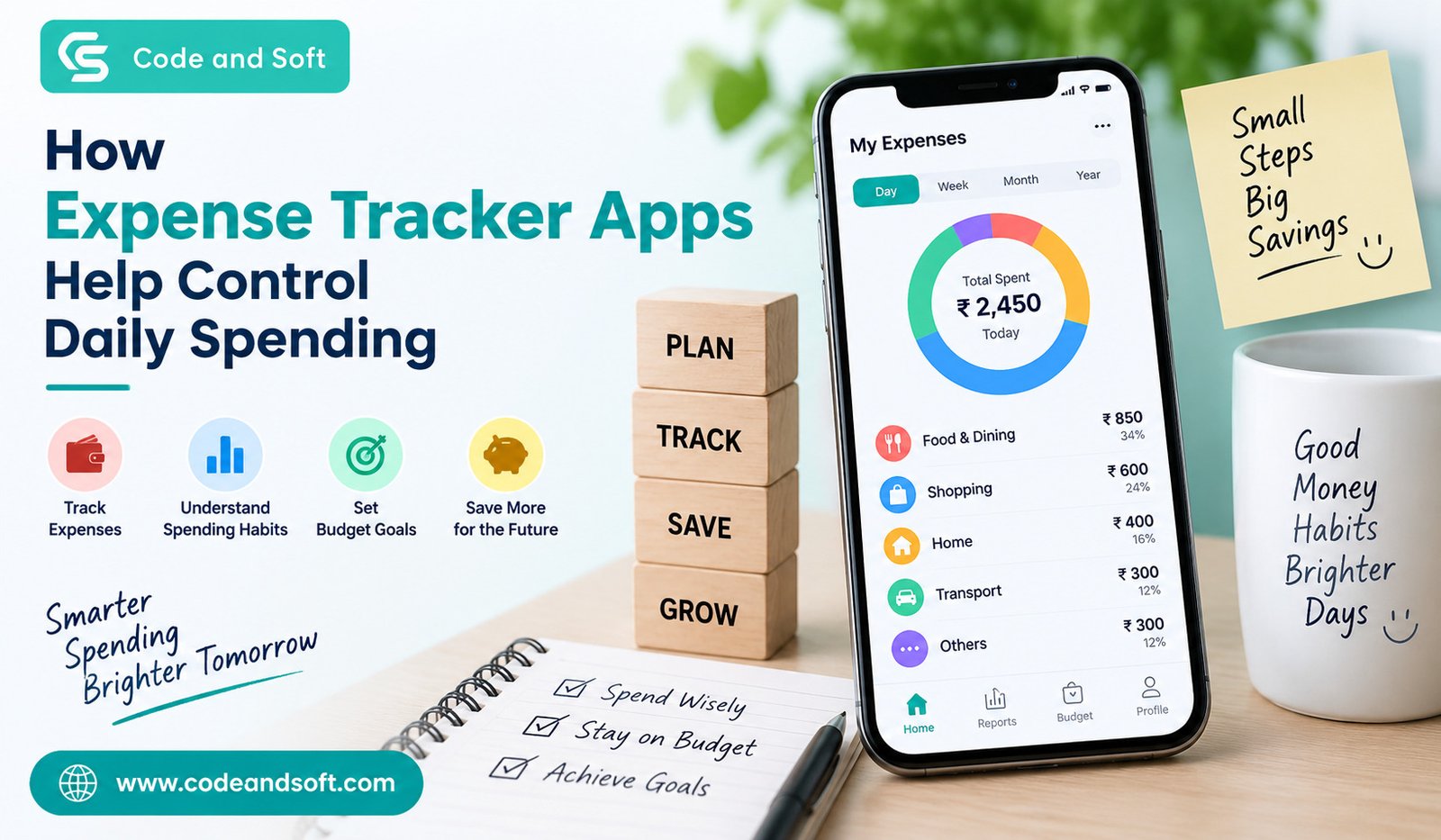
Expense Tracker Apps are digital tools that help you record, organize, and monitor your spending. Depending on the app you choose, you may be able to manually enter expenses, connect bank accounts, categorize purchases, create budgets, and review spending reports.
For example, if you spend ₹250 on lunch, ₹150 on transportation, and ₹500 on shopping in one day, you can record these expenses under categories such as food, travel, and shopping. Over time, the app builds a picture of your spending habits.
The biggest advantage is visibility. When you can actually see your expenses grouped by category, it becomes much easier to understand where your money is going.
Why Daily Spending Is Difficult to Control
Controlling daily spending can be harder than it sounds. You may have a monthly budget in mind, but everyday decisions can slowly push you beyond it.
A ₹100 or ₹200 purchase may not seem important when you make it. But if you make several small purchases every day, the total can become significant by the end of the month.
For instance, spending ₹200 extra every day might feel harmless. Over 30 days, however, that adds up to ₹6,000. Seeing the monthly figure can be very different from looking at each individual transaction.
Expense Tracker Apps help solve this problem by turning those scattered purchases into understandable information.
1. You Can See Exactly Where Your Money Goes
One of the simplest benefits of an expense tracker is awareness.
Instead of guessing how much you spend on food, entertainment, shopping, subscriptions, or transportation, you can look at the actual numbers. This can sometimes be surprising.
You might discover that online shopping is taking a larger share of your income than expected. Or perhaps food delivery is your biggest unnecessary expense. Maybe several small subscriptions are quietly consuming money every month.
Once you know the problem, you can start working on it.
You do not necessarily need to stop spending altogether. You simply become more conscious about which expenses are worth keeping and which ones can be reduced.
2. You Can Create a Realistic Daily Budget
A monthly budget can sometimes feel too broad. If you have ₹30,000 available for monthly expenses, it can be difficult to know how much you should actually spend each day.
Expense tracking can help you break your budget into smaller targets.
You could create separate limits for groceries, transportation, eating out, entertainment, shopping, and other categories. This gives you a clearer idea of how much money you can comfortably spend without affecting your other financial goals.
A realistic budget is easier to follow when you understand your normal spending patterns.
3. You Become More Careful About Impulse Purchases
Impulse spending often happens when you make a purchase without thinking about its impact on your overall budget.
You see a discount online and place an order. You decide to eat out because you are tired. You buy something small while waiting at a shopping mall. Individually, these purchases may seem insignificant.
When you regularly record them, however, you start noticing patterns.
You may begin asking yourself a simple question before buying something: “Do I really need this?”
That small pause can prevent unnecessary spending.
4. Expense Categories Make Spending Patterns Easier to Understand
A good expense tracker usually lets you organize transactions into categories.
You might have categories such as:
- Food and dining
- Groceries
- Transportation
- Shopping
- Entertainment
- Bills
- Subscriptions
- Healthcare
- Travel
- Education
- Other expenses
This organization gives you a quick overview of your financial habits.
For example, you may think you are spending too much on shopping, but after checking your data, you may discover that eating out is actually costing you more. Without tracking, it is easy to make assumptions about your finances.
With organized expense data, you can make decisions based on facts.
5. You Can Identify Unnecessary Expenses
Another useful feature of Expense Tracker Apps is that they can help you spot expenses that you may have forgotten about.
Recurring subscriptions are a good example. You might subscribe to several streaming platforms, music services, cloud storage plans, fitness apps, or other digital services.
Individually, these payments may not seem expensive. Together, they can become a noticeable monthly expense.
By reviewing your transactions regularly, you can identify services you rarely use and decide whether they are worth paying for.
The same approach can work for frequent food delivery, unnecessary shopping, expensive commuting habits, or other recurring purchases.
6. You Can Track Your Progress Over Time
Budgeting becomes more motivating when you can see progress.
Suppose you normally spend ₹8,000 per month on eating out. After tracking your expenses, you decide to reduce that amount to ₹5,000.
The following month, you can compare your spending and see whether your new habit worked.
This creates a simple feedback loop: track, review, adjust, and improve.
You do not have to completely change your lifestyle overnight. Even small improvements can make a difference when you maintain them consistently.
7. You Can Plan for Larger Financial Goals
Daily spending is connected to your bigger financial goals.
Maybe you want to build an emergency fund, purchase a laptop, plan a vacation, save for a vehicle, or simply have more money left at the end of every month.
When you understand your regular expenses, it becomes easier to find money that can be redirected toward those goals.
For example, if tracking reveals that you can comfortably reduce unnecessary spending by ₹3,000 a month, that money could potentially go toward savings instead.
The important point is that you are not simply cutting expenses. You are giving your money a clearer purpose.
8. You Can Make Better Decisions Before the Month Ends
One common budgeting mistake is waiting until the end of the month to check your finances.
By then, the money has already been spent.
Expense tracking gives you the opportunity to make adjustments while the month is still in progress.
If you notice that you have already used most of your entertainment budget halfway through the month, you can slow down your spending for the remaining days.
This makes budgeting an active process rather than something you only think about after your money is gone.
9. Expense Tracking Can Reduce Financial Stress
Money-related stress often comes from uncertainty.
You may know that you are spending money, but you may not know exactly how much or where it is going. That uncertainty can make financial planning feel overwhelming.
Tracking your expenses can give you a clearer picture.
Once you know your income, fixed expenses, variable expenses, and savings capacity, you can make decisions with greater confidence.
An expense tracker cannot solve every financial problem, but it can remove some of the guesswork.
How to Get the Most From Expense Tracker Apps
Simply installing an app is not enough. Your results depend on how consistently you use it.
Start by recording your regular expenses. Try to enter purchases as soon as possible rather than waiting several days. If you wait too long, you may forget smaller transactions.
You should also review your spending at least once a week. Look for categories where you are consistently going over budget.
Most importantly, avoid creating an unrealistic budget. If you normally spend money on entertainment or eating out, completely removing those categories may make your budget difficult to maintain.
Instead, set reasonable limits and gradually improve your spending habits.
What Should You Look for in an Expense Tracker App?
With so many financial apps available, choosing one can feel confusing. Focus on features that match your needs.
A useful app may offer:
- Simple expense entry
- Automatic transaction categorization
- Custom spending categories
- Monthly and weekly budgets
- Spending charts and reports
- Recurring expense tracking
- Multiple account support
- Savings goal tracking
- Data backup or synchronization
- Strong privacy and security features
If you prefer simplicity, a basic manual tracker may be enough. If you have multiple accounts and regular financial commitments, you may benefit from a more advanced option.
Final Thoughts
Controlling your daily spending does not mean saying no to everything you enjoy. It means knowing where your money is going and deciding whether your spending matches your priorities.
Expense Tracker Apps can make that process much easier. By recording purchases, categorizing expenses, setting budgets, and reviewing your habits, you can turn vague financial worries into clear information.
The real benefit comes from consistency. When you track your spending regularly, you start recognizing patterns that may have been invisible before. Those small discoveries can lead to better choices, fewer unnecessary purchases, and more money available for the things that actually matter to you.
You do not need to completely change your financial life in one day. Start by tracking what you spend today. Once you can see your habits clearly, you can decide what needs to change tomorrow.