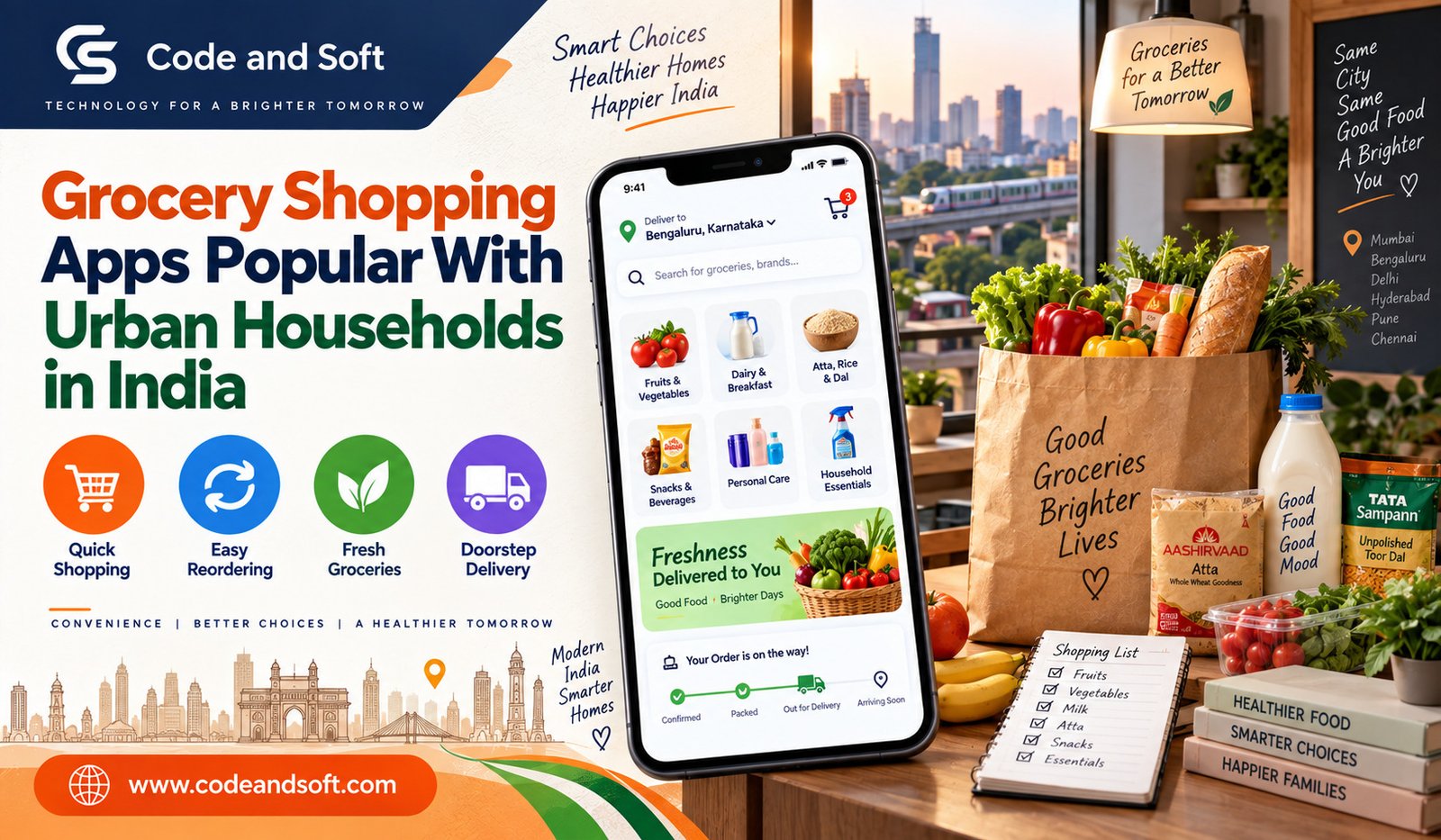
If you live in a busy Indian city, grocery shopping has probably changed quite a bit over the last few years. Instead of making a list, driving to a supermarket, standing in queues, and carrying heavy bags home, you can now open an app, add what you need, and wait for your order to arrive at your doorstep.
This shift has made Grocery Shopping Apps in India a regular part of urban life. Whether you need milk and bread before breakfast, vegetables for dinner, or a larger basket of household essentials, there is an app designed around your shopping habits.
Quick commerce has also changed what you expect from online grocery shopping. Platforms such as Blinkit, Zepto, Swiggy Instamart, BigBasket and newer fast-delivery services are competing for your attention. India’s quick-commerce ecosystem has expanded rapidly, with thousands of dark stores serving hundreds of cities.
So, which grocery apps are popular with urban households, and what makes them useful? Let’s take a closer look.
Why Are Grocery Shopping Apps Becoming So Popular?
Convenience is the biggest reason.
If you have a busy work schedule, shopping for groceries after work can feel like another task on an already long to-do list. Grocery apps allow you to shop from your phone while you’re travelling, taking a break at work, or relaxing at home.
You also get the advantage of comparing products without walking through several supermarket aisles. Prices, pack sizes, offers, ratings and availability are usually visible before you place an order.
Another major attraction is speed. Quick-commerce platforms have turned grocery delivery into an on-demand service rather than something you necessarily need to plan a day in advance. The market has increasingly moved beyond emergency purchases, with quick commerce becoming a major retail channel for everyday needs.
1. Blinkit
Blinkit has become one of the most recognisable names in India’s quick-commerce market. If you need groceries quickly, it is one of the first apps you are likely to consider.
The biggest attraction is its focus on fast delivery and a wide selection of everyday products. Depending on your location, you can find everything from milk, bread and vegetables to snacks, beverages, personal-care products and household cleaning supplies.
For you, Blinkit can be particularly useful when you suddenly realise that an important item is missing from your kitchen. Instead of postponing your meal or making a separate trip to the store, you can simply check the app.
Its large network is also helping it maintain a strong presence across urban markets. A 2026 mapping report identified Blinkit as having the largest dark-store network among the major platforms tracked in its study.
Best suited for: Quick top-up shopping, emergency groceries and everyday essentials.
2. Zepto
Zepto is another major name that has become popular among urban shoppers, particularly younger consumers who value convenience and fast delivery.
The app offers groceries, fresh produce, snacks, beverages, dairy products and various household essentials. Its interface is designed around quick browsing, making it relatively easy for you to search for products and place small orders.
Zepto’s appeal isn’t limited to speed. The platform has also built a strong presence in major metropolitan markets and continues to compete aggressively on product selection, promotions and customer experience.
If you frequently order smaller quantities rather than doing one large monthly grocery shop, Zepto can fit naturally into your routine.
Best suited for: Small grocery orders, quick purchases and frequent top-up shopping.
3. Swiggy Instamart
If you already use Swiggy for food delivery, Instamart offers an additional reason to stay within the same ecosystem.
Swiggy Instamart focuses on quick delivery of groceries and everyday essentials. You can use it for everything from fruits and vegetables to packaged foods, dairy products and household items.
One advantage for you is familiarity. If you’re already comfortable with the Swiggy app, moving between food delivery and grocery shopping doesn’t require learning an entirely different platform.
Swiggy has also expanded Instamart considerably. In August 2026, the company said Instamart had more than 14 million monthly transacting users and over 1,200 dark stores across more than 130 cities.
Best suited for: Existing Swiggy users who want food and grocery shopping in one app.
4. BigBasket
While quick-commerce apps have changed grocery shopping, BigBasket continues to be relevant for shoppers who prefer a broader and more planned grocery experience.
You can use BigBasket when you want to buy a larger collection of items rather than just a few things immediately. This can make it useful for weekly or monthly shopping.
Scheduled grocery delivery also remains relevant despite the popularity of instant delivery. Recent industry reporting suggests consumers often use quick commerce for urgent or smaller purchases while scheduled delivery remains useful for larger baskets and planned replenishment.
For you, that means you don’t necessarily have to choose between speed and planning. You can use different shopping models depending on what your household needs.
Best suited for: Weekly shopping, larger baskets and planned grocery purchases.
5. Flipkart Minutes
Flipkart is also becoming a stronger player in quick commerce through Flipkart Minutes.
The service allows you to order groceries and other everyday products with fast delivery in supported locations. Its expansion shows how competitive India’s quick-commerce market has become.
Flipkart Minutes has been expanding rapidly and is increasingly competing with established players. Recent reports indicate that Flipkart has been narrowing the gap with some established quick-commerce competitors.
If you already shop on Flipkart, having grocery delivery within the same broader ecosystem can make the service more convenient.
Best suited for: Flipkart users looking for fast delivery of groceries and everyday products.
6. JioMart
JioMart takes a somewhat different approach because of its connection with Reliance’s extensive retail network.
For you, JioMart can be useful when you’re looking for conventional supermarket-style grocery shopping through an online platform. Depending on your location, you may find packaged foods, staples, personal-care products, home essentials and other categories.
It can particularly appeal to households that prefer buying larger quantities and comparing prices before checking out.
The availability, delivery model and assortment can vary by location, so checking your local service area is important.
Best suited for: Planned shopping, household staples and shoppers looking for a broad retail selection.
Quick Commerce vs Traditional Online Grocery Shopping
One of the biggest changes you’ll notice is that online grocery shopping is no longer a single category.
You now have two common approaches.
Quick commerce is ideal when you need something immediately. You might have forgotten cooking oil, run out of bread or suddenly need snacks for guests.
Scheduled grocery delivery works better when you have a list of 15 or 20 products and don’t need them within minutes.
In fact, recent market observations show that consumers continue using both models for different purposes. Quick commerce tends to work well for emergencies and smaller purchases, while scheduled delivery remains useful for larger planned baskets.
This means you don’t necessarily need to be loyal to one app.
What Should You Check Before Ordering Groceries Online?
Before you tap the checkout button, it is worth checking a few things.
Compare the Final Price
Don’t look only at the product price. Delivery fees, handling charges, platform fees and other costs can affect the final bill.
Check Pack Sizes
A lower price doesn’t always mean a better deal. Compare the quantity carefully, especially for rice, flour, cooking oil, detergent and other household staples.
Look at Delivery Availability
The same app can provide very different service depending on your neighbourhood. An app that works extremely well in one city area may have fewer products or longer delivery times elsewhere.
Check Fresh Produce Carefully
For vegetables, fruits and dairy products, freshness matters more than simply getting the order quickly. Look at replacement and refund policies where available.
Use Offers Sensibly
Discounts can be useful, but don’t buy products you don’t need simply because they’re on sale. Your grocery bill can increase quickly when small impulse purchases keep getting added to the cart.
Why Urban Households Prefer These Apps
For you, the biggest benefit isn’t necessarily the technology behind these platforms. It’s the amount of time they can save.
Think about a typical weekday. You finish work, traffic is heavy, and you still need to buy milk, vegetables and breakfast supplies. Going to a supermarket could easily add another hour to your day.
With a grocery app, you can place the order in a few minutes.
That convenience is especially valuable for working professionals, students, families with young children and people living in densely populated cities.
The popularity of quick commerce also reflects a broader change in consumer expectations. People increasingly expect retailers to provide convenience, speed and easy digital ordering.
The Future of Grocery Shopping Apps in India
The competition is unlikely to slow down.
Major platforms are expanding their delivery networks, improving product availability and trying to become the app you open first whenever you need something. Quick commerce has already moved beyond groceries into categories such as personal care, household products and even electronics.
For you as a consumer, this competition can be beneficial. More platforms mean more choices, more offers and potentially better service.
At the same time, convenience should not replace smart shopping. Comparing prices, checking quantities and planning larger purchases can help you avoid paying more simply for speed.
Final Thoughts
Grocery Shopping Apps in India have changed the way urban households manage everyday shopping. Apps such as Blinkit, Zepto, Swiggy Instamart, BigBasket, Flipkart Minutes and JioMart offer different experiences, from rapid top-up orders to larger planned grocery purchases.
You don’t necessarily need to pick one platform and use it for everything. Instead, you can choose the app based on your immediate requirement. Need something urgently? A quick-commerce app may be the easiest option. Planning your weekly or monthly shopping? A scheduled-delivery service may make more sense.
Ultimately, the best grocery app for you is the one that offers the right combination of price, product availability, delivery speed and convenience in your area. As India’s digital grocery market continues to evolve, your shopping experience is likely to become even faster and more personalised.