If you have ever realised at 6 p.m. that you are out of milk, vegetables or the ingredients needed for dinner, you probably know how frustrating a last-minute supermarket trip can be. You have to find time to drive or walk to the store, search through crowded aisles, wait at the checkout and then carry everything home.
That experience is changing rapidly across Australia.
Same-Day Grocery Delivery Apps in Australia are making it possible for you to order everyday essentials from your phone and have them delivered to your doorstep on the same day. From supermarket-owned platforms to delivery apps working with major retailers, grocery shopping is becoming faster, more flexible and increasingly digital.
Woolworths, Coles, DoorDash, Uber Eats and Milkrun are among the services helping Australians rethink how they buy groceries. Woolworths, for example, offers same-day delivery as well as its faster Delivery Now option, while Coles provides same-day and rapid delivery in eligible locations.
So, what does this shift mean for you as a shopper? Let’s take a closer look.
Why Same-Day Grocery Delivery Is Becoming Popular
Convenience is probably the biggest reason you might choose grocery delivery.
Your schedule can change quickly. Perhaps you finish work late, have children at home, are preparing for unexpected guests or simply don’t want to spend your evening at the supermarket. Instead of rearranging your day around grocery shopping, you can open an app, select what you need and choose an available delivery option.
This is particularly useful for small, urgent purchases.
Running out of bread before breakfast? Need vegetables for dinner? Forgot a few ingredients for a recipe? Same-day delivery can turn those situations from a supermarket trip into a few minutes of online shopping.
The growth of rapid delivery also reflects a broader change in consumer expectations. Grocery shoppers increasingly want the flexibility to choose between planned deliveries and faster options depending on the situation.
How Grocery Delivery Apps Work
Using a same-day grocery delivery app is generally straightforward.
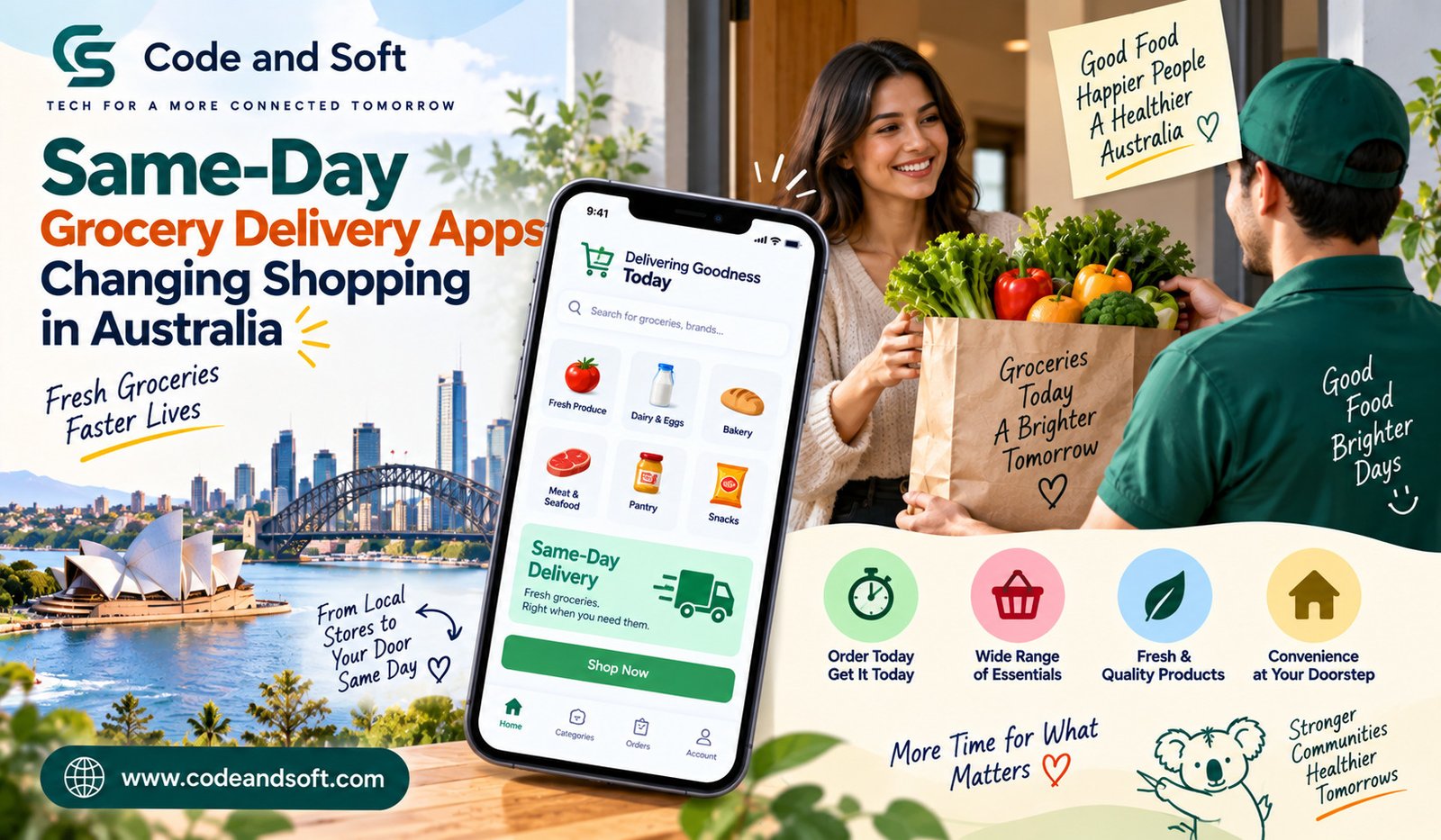
You begin by entering your delivery address. The app then shows the products and delivery options available in your area. You can browse categories such as fresh produce, dairy, meat, pantry items, snacks, beverages and household essentials.
After adding products to your basket, you select an available delivery window and complete payment.
Some services give you the option to track the order after it leaves the store. This means you don’t necessarily have to spend your afternoon waiting by the door.
Woolworths currently describes its online process in four simple stages: set your address, select a delivery window, shop and track the order. Its Delivery Now service can provide eligible customers with groceries from as little as 60 minutes in selected locations.
Coles also offers Rapid Delivery, designed for situations where you need groceries quickly, with eligible orders delivered within two hours.
Major Players Are Expanding the Same-Day Experience
The Australian grocery delivery market isn’t limited to traditional supermarket websites anymore.
Supermarkets are increasingly working with delivery platforms, giving you more ways to receive your shopping.
Woolworths
Woolworths has built a significant online grocery operation, offering scheduled delivery alongside faster options. Its Delivery Now service is available from selected stores, while MILKRUN provides another route for quick grocery delivery. Woolworths has also partnered with DoorDash to strengthen its on-demand grocery offering.
For you, this means you can choose between planning ahead and paying for extra speed when you need it.
Coles
Coles also provides same-day grocery delivery, with some orders handled by partner drivers such as Uber or DoorDash. Its current delivery options include scheduled delivery, same-day delivery and Rapid Delivery.
This approach gives you greater flexibility when deciding how quickly your groceries need to arrive.
DoorDash and Uber Eats
Apps originally associated with restaurant delivery have increasingly become grocery-shopping platforms.
This is an important change because you may already have one of these apps installed. Instead of opening a dedicated supermarket app, you can browse participating grocery stores through a familiar delivery platform.
That makes grocery shopping feel less like a separate chore and more like another everyday mobile transaction.
Same-Day Delivery Is Changing Your Shopping Habits
The biggest impact may not simply be that groceries arrive faster. It is that your shopping behaviour can change.
Traditional grocery shopping often encourages you to plan an entire weekly shop. You make a list, visit the supermarket and purchase everything at once.
Same-day delivery gives you another option.
You can still make a large weekly order, but you can also place smaller orders when something runs out. Instead of thinking, “I’ll buy it next time I’m at the supermarket,” you can order it from your phone.
This can be especially useful for fresh products. You might prefer buying smaller quantities of fruit, vegetables or dairy products rather than storing large amounts at home.
At the same time, speed does not always mean better value.
A 2025 CHOICE comparison found that grocery items ordered through popular third-party delivery apps were around 11% more expensive on average than comparable supermarket prices, before considering all delivery-related costs.
That means you need to balance convenience against price.
Convenience Comes With a Cost
One of the biggest advantages of same-day grocery delivery is also its biggest potential drawback: you’re paying for convenience.
Delivery fees can vary depending on the retailer, basket size, location, delivery window and membership plan.
For example, Woolworths currently lists Same Day delivery from $15 in its standard online delivery information, although fees can decrease with larger baskets or particular delivery windows. Delivery Now starts from $15 in many locations, with some locations starting at $18.
Coles lists same-day delivery from $13, subject to its conditions and availability.
You may therefore find that same-day delivery makes the most financial sense when the time you save is more valuable to you than the additional delivery cost.
For a small emergency order, however, the fees can make the convenience considerably more expensive.
You Also Need to Think About Product Prices
Delivery fees aren’t the only expense you should consider.
When you shop through third-party delivery platforms, product prices may differ from the prices you see in-store.
CHOICE’s investigation found that some grocery products were significantly more expensive through third-party delivery apps, with certain individual items showing mark-ups of more than 40%.
This doesn’t mean you should avoid delivery apps. Instead, it means you should compare the final basket total before placing your order.
If you’re making a large weekly grocery purchase, even a small difference in individual product prices can add up.
If you’re ordering a few urgent items because you cannot get to the supermarket, however, the extra cost may feel worthwhile.
The Role of Subscriptions and Memberships
Regular grocery delivery can become more attractive when you use a membership or subscription.
If you frequently order groceries online, paying individual delivery charges every time can become expensive. Subscription plans can reduce or eliminate certain delivery fees when you meet their minimum order requirements.
Woolworths, for instance, offers Delivery Unlimited, which provides $0 delivery fees on eligible same-day and next-day orders of $75 or more, while Delivery Now orders receive a discounted fee under its stated conditions.
For you, the calculation is relatively simple: if you order regularly, compare your expected delivery fees with the subscription price.
If you only order occasionally, paying for a membership may not make sense.
Faster Delivery Is Not Always the Best Choice
It can be tempting to select the fastest available option every time you shop.
But do you really need your groceries in an hour?
If you’re planning tomorrow’s dinner, a scheduled delivery window could be considerably cheaper than rapid delivery. If you’re preparing a meal right now and discover that an important ingredient is missing, speed becomes much more valuable.
This is why the future of grocery delivery isn’t necessarily about making every order arrive as quickly as possible.
Instead, you’re likely to see more choices: ultra-fast delivery when you need it, same-day delivery when you want convenience, and scheduled delivery when price and efficiency matter more.
Recent comparisons of Woolworths’ delivery options show this trade-off clearly, with faster services costing more while planned delivery can offer better value.
What About Fresh Food Quality?
Fresh produce is one area where you may still prefer shopping in person.
When you choose apples, tomatoes, avocados or other fresh products yourself, you can inspect their appearance and select exactly what you want.
With delivery, someone else does that selection for you.
The quality can still be perfectly acceptable, but substitutions and differences in size or ripeness can occasionally be frustrating. That’s why you may want to use delivery for packaged products and household essentials while continuing to buy certain fresh items in-store.
However, grocery retailers are improving their picking, packing and substitution processes, making online grocery shopping increasingly practical for full weekly shops.
Delivery Is Becoming More Accessible
Same-day grocery delivery can also make shopping easier for people who have difficulty travelling to a supermarket.
If you don’t drive, have limited mobility or simply can’t leave home easily, having groceries delivered can provide an important alternative.
The broader delivery sector is also receiving regulatory attention. In August 2026, Australia’s Fair Work Commission introduced a minimum hourly rate of $31.30 for eligible delivery drivers, alongside insurance and other protections under new standards covering gig workers delivering food, groceries and other products.
That could influence the economics of delivery services in the longer term, including how platforms structure fees and driver operations.
What the Future Could Look Like
The grocery shopping experience in Australia is moving toward a model where you decide how much speed and convenience you need.
You might make a large weekly order on Sunday, schedule it for Monday and avoid delivery fees by selecting a suitable window. Then, later in the week, you might use a rapid delivery service when you unexpectedly run out of something.
That combination could become normal.
The growing relationship between supermarkets and delivery platforms also suggests that grocery shopping will become increasingly integrated into apps you already use.
For you, the supermarket may no longer be a physical destination you visit every week. It could become a digital storefront that you access whenever you need something.
Final Thoughts
Same-Day Grocery Delivery Apps in Australia are changing more than the way groceries reach your doorstep. They are changing when you shop, how much you buy and how you manage your time.
The biggest advantage is flexibility. You can shop around your schedule instead of building your schedule around shopping.
But convenience comes with considerations. Delivery charges, product mark-ups, minimum order requirements and fresh-food quality can all affect whether an order represents good value.
The smartest approach is to use same-day delivery when it genuinely saves you time or solves a problem. For planned grocery shopping, compare delivery windows and total costs. For urgent needs, the extra expense may be worth it.
Ultimately, grocery shopping in Australia is becoming less about choosing between online and in-store shopping and more about choosing the right shopping method for the moment. And as delivery technology continues to improve, getting your groceries when you need them could become an increasingly normal part of everyday life.