The business world is changing faster than ever, and technology is playing a major role in how companies operate, compete, and grow. Software has moved beyond being a simple tool for managing tasks. Today, modern business software helps organizations automate operations, analyze data, improve customer experiences, manage remote teams, and make smarter decisions.
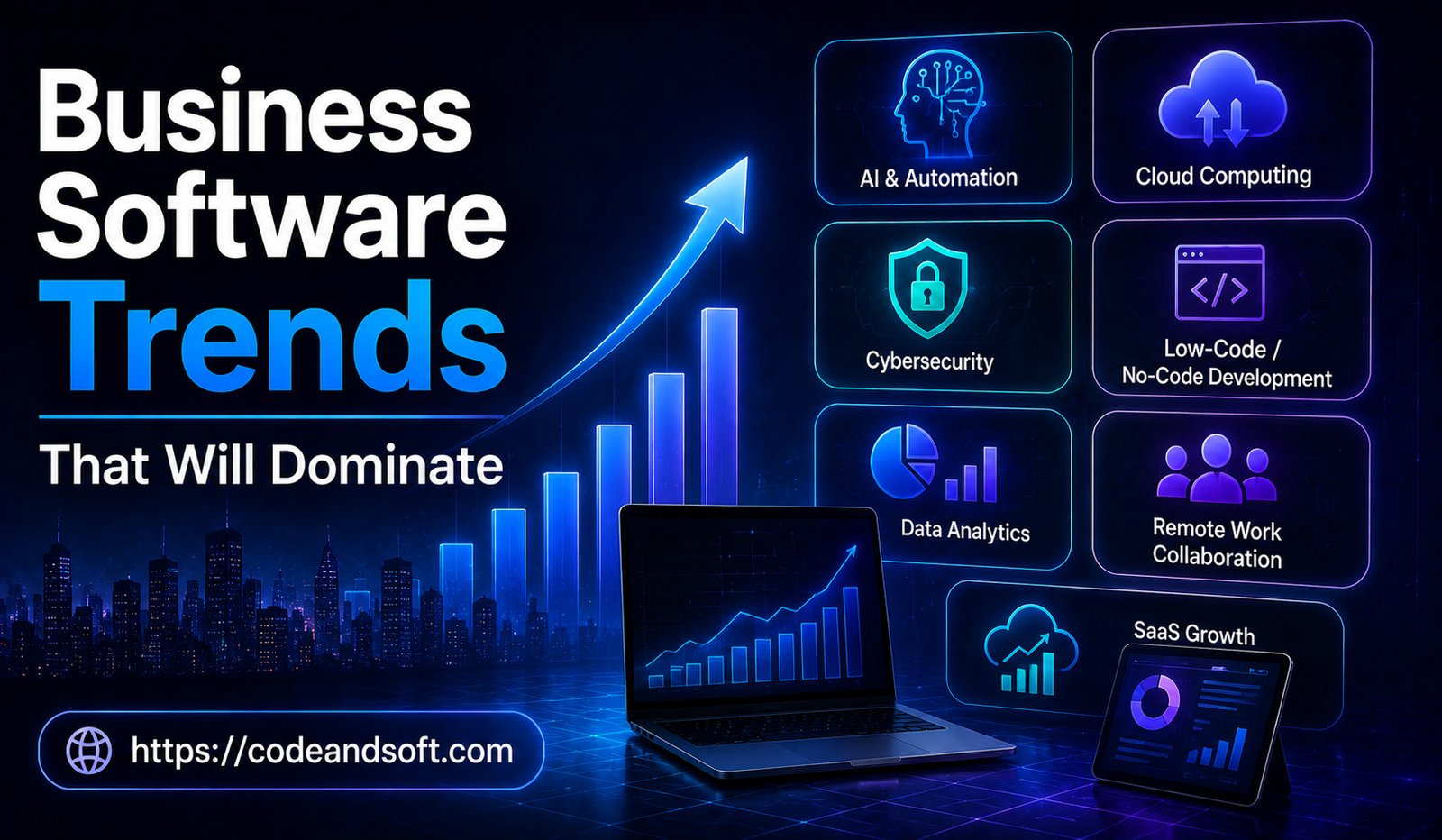
In 2026, businesses will continue adopting advanced software solutions to increase efficiency and stay competitive. Artificial intelligence, automation, cloud platforms, cybersecurity improvements, and data-driven technologies will shape the future of business software.
Companies that understand and adopt these trends will have a stronger advantage in a rapidly evolving digital environment. From small startups to global enterprises, software innovation will influence almost every area of business.
This article explores the top business software trends that will dominate 2026 and explains how they will impact organizations.
1. Artificial Intelligence Will Become the Core of Business Software
Artificial intelligence is no longer a future concept. In 2026, AI will become a standard feature in many business applications.
Software providers are integrating AI capabilities into customer management, accounting, marketing, human resources, cybersecurity, and productivity platforms.
AI-powered business software can help companies:
- Automate repetitive tasks
- Analyze large amounts of data
- Predict customer behavior
- Generate reports
- Improve decision-making
- Provide personalized recommendations
Similarly, AI-powered accounting software can identify spending patterns and provide financial insights.
Businesses will increasingly depend on AI to save time and improve operational efficiency.
2. AI Agents Will Transform Business Operations
One of the biggest software trends in 2026 will be the growth of AI agents.
Unlike traditional automation tools, AI agents can perform complex tasks independently by analyzing information, making decisions, and completing workflows.
Business AI agents may help with:
- Customer support
- Sales follow-ups
- Market research
- Data analysis
- Scheduling
- Employee assistance
For example, an AI sales assistant could identify potential customers, prepare reports, and recommend strategies without constant human input.
AI agents will allow employees to focus on creative and strategic work while software handles routine activities.
3. Cloud-Based Business Software Will Continue Growing
Cloud software has already transformed business operations, and its importance will continue increasing in 2026.
Instead of installing software on individual computers, companies are moving toward cloud-based platforms that provide flexibility and accessibility.
Popular cloud-based business software categories include:
- Accounting software
- Project management tools
- Customer relationship management systems
- Human resource platforms
- Communication tools
Benefits of cloud software include:
- Access from anywhere
- Lower infrastructure costs
- Automatic updates
- Better collaboration
- Easier scalability
Remote and hybrid work models will continue driving demand for cloud solutions.
4. Business Automation Software Will Expand Rapidly
Automation will remain one of the biggest priorities for companies in 2026.
Businesses are searching for ways to reduce manual work and improve productivity.
Automation software helps manage tasks such as:
- Email marketing
- Invoice processing
- Employee onboarding
- Data entry
- Customer communication
- Workflow management
By automating repetitive processes, companies can reduce errors and allow employees to focus on higher-value activities.
Small businesses will especially benefit from affordable automation tools that were previously available only to large organizations.
5. Cybersecurity Software Will Become More Advanced
Cyberattacks, data breaches, ransomware, and online fraud continue to threaten organizations of all sizes.
In 2026, cybersecurity software will focus on smarter protection through artificial intelligence and real-time monitoring.
Important cybersecurity software features will include:
- AI threat detection
- Identity protection
- Data encryption
- Zero-trust security
- Automated response systems
Businesses will invest more in security platforms because protecting customer and company data has become a major priority.
6. Data Analytics Software Will Drive Better Decisions
In 2026, companies will rely more on advanced analytics software to understand customers, improve operations, and predict market trends.
Modern analytics platforms will provide:
- Real-time dashboards
- Predictive insights
- Customer behavior analysis
- Performance tracking
- Automated reporting
Businesses will no longer depend only on historical data. They will use intelligent software to predict future opportunities and challenges.
7. Customer Relationship Management Software Will Become Smarter
Customer expectations are changing, and businesses need better ways to understand and serve their audiences.
Customer relationship management (CRM) software will become more intelligent with AI-powered features.
Modern CRM platforms will help businesses:
- Track customer interactions
- Personalize marketing campaigns
- Predict customer needs
- Improve sales performance
- Automate communication
AI-powered CRM systems will provide deeper insights and help companies create stronger customer relationships.
8. Remote Work and Collaboration Software Will Evolve
Remote and hybrid work are now permanent parts of many organizations.
In 2026, collaboration software will continue improving to support distributed teams.
Future collaboration tools will include:
- AI meeting assistants
- Smart scheduling
- Real-time translation
- Automated summaries
- Virtual workspaces
Businesses will invest in software that helps employees communicate effectively regardless of location.
Popular collaboration categories include:
- Video conferencing
- Team messaging
- Project management
- Document collaboration
9. Low-Code and No-Code Platforms Will Gain Popularity
Low-code and no-code software development platforms will become increasingly important in 2026.
These platforms allow users to create applications without advanced programming knowledge.
Businesses use these tools to:
- Build internal applications
- Automate workflows
- Create customer portals
- Develop business solutions faster
Benefits include:
- Faster development
- Lower costs
- Less dependence on developers
- Increased innovation
Employees from different departments will be able to create solutions without waiting for traditional software development processes.
10. Industry-Specific Software Solutions Will Increase
Generic software solutions are no longer enough for many businesses.
In 2026, more companies will adopt industry-specific software designed for their unique requirements.
Examples include:
- Healthcare management software
- Real estate platforms
- Manufacturing systems
- Education technology solutions
- Retail management software
Industry-focused software provides specialized features and better results compared to general-purpose tools.
11. Financial Management Software Will Become More Intelligent
Financial software will continue evolving with automation and AI capabilities.
Modern financial management platforms will help businesses:
- Track expenses
- Forecast revenue
- Manage cash flow
- Automate invoices
- Analyze financial performance
AI-powered financial tools will provide businesses with faster and more accurate financial insights.
Small businesses will benefit significantly because advanced financial management tools will become more accessible.
12. Employee Management Software Will Improve Workplace Experience
Human resource software will become more advanced as businesses focus on employee productivity and satisfaction.
Modern HR software will support:
- Recruitment automation
- Employee performance tracking
- Payroll management
- Training programs
- Workforce analytics
AI will help companies identify employee trends and improve workplace decisions.
13. Blockchain-Based Business Software Will Expand
Blockchain technology will continue influencing certain business software applications.
Companies may use blockchain-based solutions for:
- Secure transactions
- Supply chain tracking
- Digital identity management
- Data verification
14. Personalization Will Become a Major Software Feature
Businesses are increasingly focused on providing personalized experiences.
Software platforms will use artificial intelligence and advanced data analytics to personalize:
- Product and service recommendations
- Marketing campaigns and communications
- User interface layouts and experiences
- Business insights and performance reports
15. Sustainability Management Software Will Grow
Environmental responsibility is becoming increasingly important for businesses.
In 2026, companies will adopt software that helps monitor sustainability goals.
These platforms can track:
- Energy usage
- Carbon emissions
- Resource consumption
- Environmental performance
Sustainability software will help organizations meet environmental targets and improve transparency.
How Businesses Can Prepare for Software Trends in 2026
Companies should take proactive steps to benefit from upcoming software developments.
Evaluate Current Software Systems
Businesses should review existing tools and identify areas for improvement.
Invest in Scalable Solutions
Choose software that can grow with business needs.
Train Employees
Technology is valuable only when employees know how to use it effectively.
Prioritize Security
Cybersecurity should be included in every software decision.
Embrace Automation
Companies should identify repetitive tasks that can be automated.
Conclusion
Business software trends in 2026 will be shaped by artificial intelligence, automation, cloud computing, cybersecurity, analytics, and smarter collaboration tools.
Companies are no longer using software only to complete tasks. They are using technology to create better strategies, improve customer relationships, reduce costs, and build competitive advantages.
From AI agents and automation platforms to advanced analytics and industry-specific solutions, the next generation of business software will transform how organizations operate.
Businesses that invest in the right technologies and prepare for these trends will be better positioned to succeed in the digital economy of 2026 and beyond.