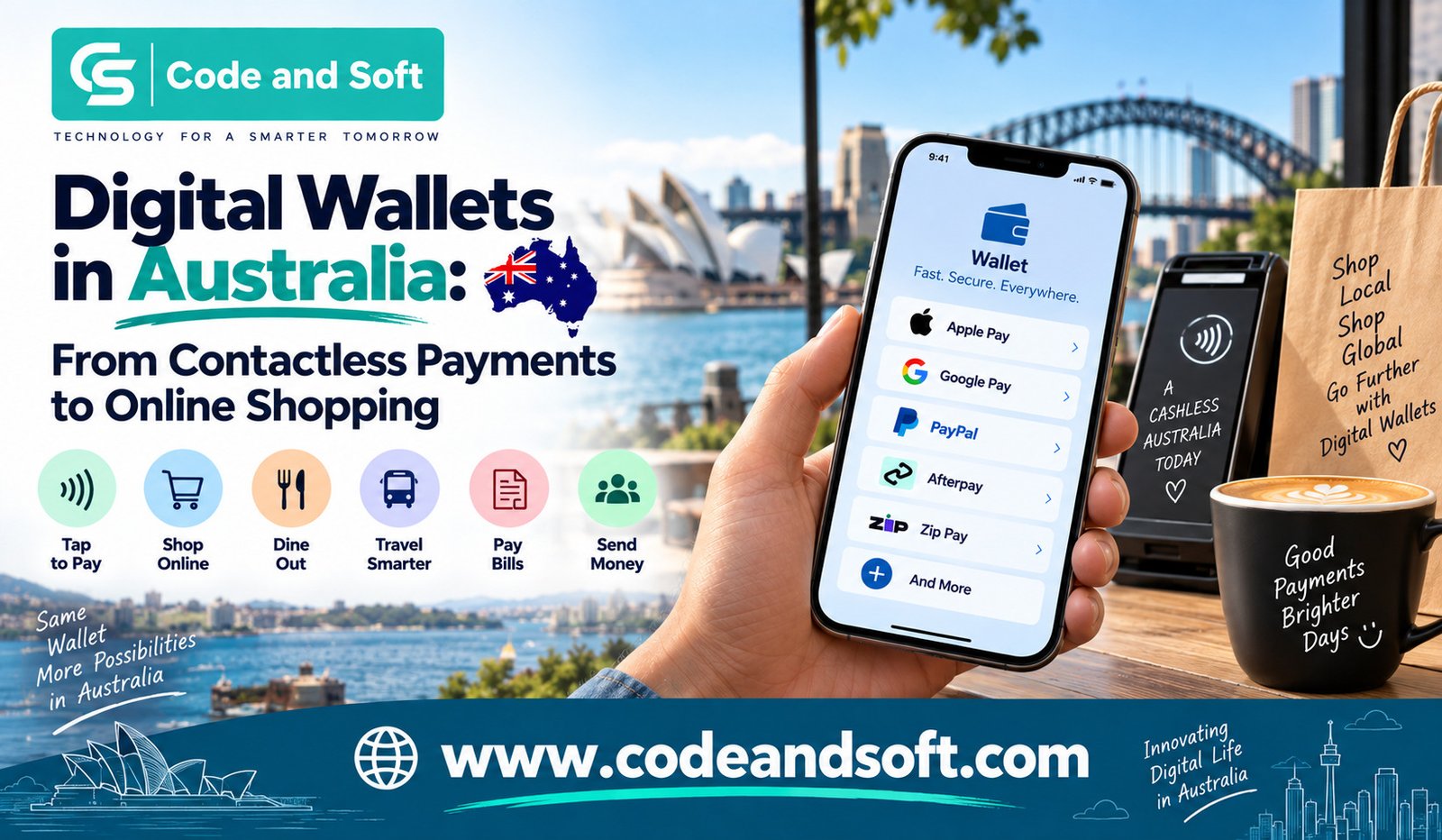

If you have ever paid for a coffee by holding your phone over a card reader, bought something online without typing your card number, or used your smartwatch to pay for groceries, you have already experienced the convenience of a digital wallet.
In Australia, this way of paying has moved well beyond being a piece of new technology. Digital Wallets Use In Australia is becoming part of everyday spending, from quick tap-and-go purchases at local shops to online shopping, subscriptions and travel-related payments.
Recent Reserve Bank of Australia data shows just how quickly this behaviour has developed. In its 2025 Consumer Payments Survey, 43% of consumers used a mobile device to make a contactless payment during the survey week, compared with 35% in 2022. Online payments also represented around 20% of consumer payments in 2025.
So, if you are living, studying, working or shopping in Australia, what does the rise of digital wallets actually mean for you?
What Is a Digital Wallet?
A digital wallet is essentially a secure place on your smartphone, smartwatch or other compatible device where you can add payment cards and use them without carrying the physical card everywhere.
Instead of pulling your debit or credit card from your wallet, you can authenticate on your device and tap it against a compatible payment terminal. Most major mobile wallets use NFC, or near-field communication, to enable these contactless transactions.
Australia was already familiar with tap-and-go card payments, which helped make mobile wallets an easy next step. Rather than changing how you pay completely, a digital wallet puts a version of your existing card onto your phone or wearable device.
The Australian Parliament describes mobile wallets such as Apple, Google and Samsung’s services as an important part of the country’s changing payments landscape.
For you, the biggest difference is simple: your phone can become your wallet.
Apple Pay: A Convenient Choice for iPhone Users
If you use an iPhone, Apple Pay is probably one of the first digital payment options you will consider.
Apple Pay works through the Wallet app, allowing you to add eligible debit and credit cards. Once your card is set up, you can use your iPhone or Apple Watch at contactless payment terminals.
The experience is particularly useful when you are making quick purchases. You do not necessarily need to take your physical card out of your pocket or bag. You can authenticate your payment using Face ID, Touch ID or your passcode, depending on your device.
Apple Pay also goes beyond physical stores. You can use it on participating websites and apps, which can make online checkout considerably faster because you do not always have to manually enter lengthy card details. Apple says Apple Pay is accepted on millions of websites and apps.
Imagine ordering something online while travelling on a train. Instead of searching for your card and entering its number, you may simply select Apple Pay and confirm the purchase.
That small difference can make online shopping feel much smoother.
Google Wallet: More Than Just a Payment Tool
If you use an Android smartphone, Google Wallet gives you another straightforward way to make contactless payments.
Google Wallet can store eligible payment cards and other digital items, while Google Pay handles payments where supported. To make contactless payments, your Android phone needs NFC capability, and your particular card must be supported by your bank or card issuer.
For you, the attraction is not simply being able to leave your physical card at home. Google Wallet can bring several everyday items together in one digital space.
You might use it when buying lunch, paying at a supermarket or making a purchase through a supported online service. You can also use compatible wearable devices for payments in supported regions and circumstances.
This flexibility makes Google Wallet particularly useful if you already rely heavily on your Android phone throughout the day.
Samsung Wallet: Combining Payments With Your Galaxy Device
If you own a compatible Samsung smartphone or smartwatch, Samsung Wallet gives you another way to turn your device into a payment tool.
Samsung’s approach fits naturally into its wider device ecosystem. You can use a compatible device for contactless purchases while also keeping other useful digital items together.
For you, this can be especially convenient if you already use Samsung devices for banking, communication, shopping and everyday organisation.
The rise of Samsung’s wallet also demonstrates something important about Digital Wallets Use In Australia: Australians are not relying on one single technology. Different mobile ecosystems are providing similar basic payment experiences while competing on convenience and additional features.
The Reserve Bank has identified Apple, Google and Samsung as the most prominent mobile-wallet providers in Australia’s market.
Fitbit Pay and Payments From Your Wrist
What if you do not even want to take your phone out?
Wearable payment technology has helped push digital wallets another step forward. Fitbit Pay, where supported on compatible Fitbit devices and through participating issuers, has shown how a wearable can become part of the payment experience.
The concept is simple. Instead of reaching for your smartphone, you can use a compatible smartwatch or wearable at a contactless terminal.
This can be useful when you are exercising, walking, travelling or simply want to carry fewer things.
Although smartphone wallets dominate the conversation around digital payments, wearable payments highlight where the technology can go next: payments becoming less about carrying a specific object and more about having an authorised device with you.
Digital Wallets and Australian Online Shopping
Contactless payments may be the most visible use of digital wallets, but online shopping is another major part of their growth.
When you shop online, the traditional checkout process can involve entering your card number, expiry date, security code and billing information. It is not particularly difficult, but it can become frustrating when you are shopping from a small phone screen.
Digital wallets can reduce this friction.
You might see an Apple Pay, Google Pay or another wallet option at checkout. Rather than typing everything manually, you can select the wallet, confirm your details and authenticate the purchase.
The RBA found that online payments accounted for around 20% of consumer payments in 2025, up from 18% in 2022. It also found that mobile and app payments represented 46% of online payments in 2025.
That tells you something about how shopping habits are changing. Your phone is no longer simply the device you use to browse an online store. Increasingly, it is also the place where you complete the transaction.
Why Australians Are Choosing Digital Wallets
There are several reasons you may prefer a digital wallet.
Convenience is probably the biggest one. If your phone is already in your hand, tapping it against a terminal can feel easier than reaching for a physical card.
Speed matters too. Digital wallets can make checkout faster, particularly when you are buying something inexpensive and do not want to spend time entering information.
Security is another important consideration. Mobile wallets can use tokenisation and device authentication rather than simply presenting your physical card details to a merchant. For example, Apple says Apple Pay uses a device-specific number and unique transaction code instead of sharing the actual card number with merchants.
There is also the simple benefit of having fewer things to carry. If you already take your smartphone everywhere, adding payment functionality to it can make your everyday routine feel more streamlined.
What About PayPal, PayID and Other Options?
Digital payments in Australia are not limited to mobile wallets.
You may already use services such as PayPal when shopping online or PayID when transferring money to another person. These services are different from traditional mobile wallets, but they are part of the wider movement towards digital payments.
PayID has seen particularly strong growth. According to the RBA’s 2025 survey, around half of respondents said they had used PayID during the previous year, compared with 32% in 2022.
You may therefore find yourself using several digital payment methods depending on what you are doing. You could use a mobile wallet at a café, PayID to send money to a friend and PayPal when buying something from an online merchant.
The important point is that you now have more choices than simply cash or a physical bank card.
Are Digital Wallets Replacing Physical Cards?
Not completely.
Even as Digital Wallets Use In Australia continues to grow, physical cards remain extremely important. The RBA found that cards continued to be the most widely used consumer payment method in 2025, with debit cards accounting for around half of consumer payments.
That means you do not necessarily have to choose one or the other.
You might use your phone for most everyday purchases while keeping your physical card as a backup. There can also be situations where a particular terminal, card, bank or service does not support the digital wallet you prefer.
The smartest approach is therefore not necessarily to abandon physical payments completely. Instead, you can use digital wallets when they make your life easier.
The Future of Digital Wallets in Australia
The growth of mobile payments suggests that digital wallets are becoming a normal part of Australia’s payment ecosystem rather than a temporary trend.
The Australian Parliament reported that digital wallets accounted for 49% of in-store transactions by November 2025, illustrating how significant these services have become.
For you, this could mean increasingly seamless connections between shopping, banking, transport, loyalty programs and digital identification.
Your phone or wearable device may gradually become less like an accessory and more like a personal everyday payment hub.
The interesting part is that the transition does not require you to completely change your behaviour. You can start by adding one eligible card to Apple Pay, Google Wallet or Samsung Wallet and using it the next time you make a contactless purchase.
From there, online shopping, subscriptions and other digital services can become part of the same experience.
Final Thoughts
Digital Wallets Use In Australia reflects a broader change in the way you manage everyday payments. What once required a physical wallet can now be handled through a smartphone or wearable device.
Whether you choose Apple Pay, Google Wallet, Samsung Wallet, Fitbit Pay or another digital payment option, the goal is largely the same: make paying quicker, simpler and more convenient.
Australia’s strong tap-and-go culture has created a natural environment for digital wallets to grow. As online shopping and mobile payments continue to become part of everyday life, your phone may increasingly become the first thing you reach for when it is time to pay.