
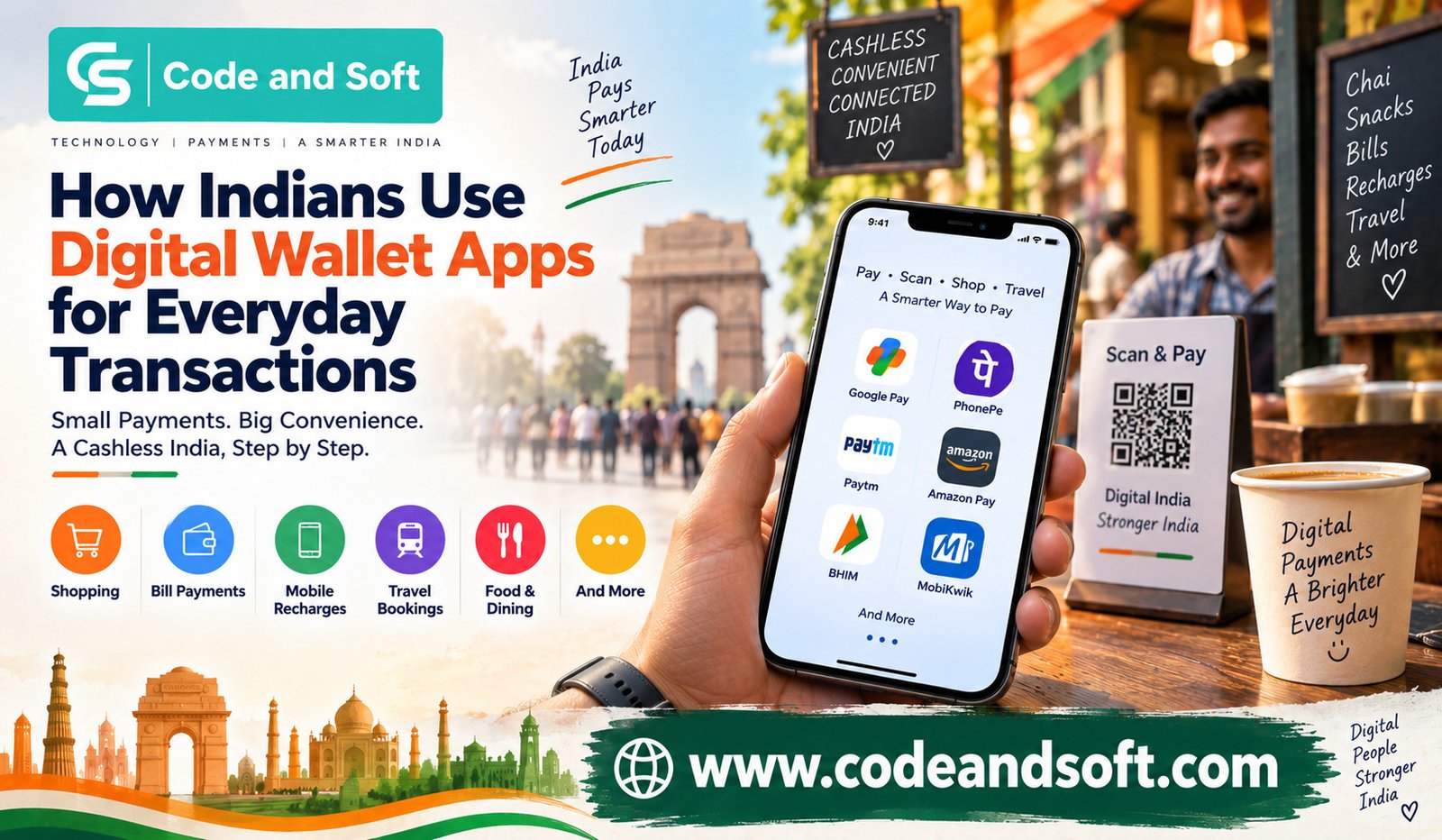

If you live in India, chances are you have used a digital wallet or mobile payment app at least once today. Whether you are paying for your morning tea, ordering groceries, splitting a restaurant bill, recharging your phone, or sending money to a family member, digital payments have become part of everyday life.
The growth of smartphones, affordable internet access, QR codes, and instant bank transfers has made it easier for you to move away from cash for many routine purchases. For millions of Indians, a quick scan or a few taps on a phone can now replace the need to carry a wallet full of notes and coins.
This growing habit reflects the changing Digital Wallets Use In India, where convenience is one of the biggest reasons people choose mobile payment solutions. But digital wallets are not used only for shopping. They have become useful tools for managing small payments, subscriptions, bills, transfers, and many other financial activities.
Why Digital Wallets Have Become Popular in India
One of the biggest reasons you may prefer a digital wallet is simple: it saves time.
Instead of searching for cash or waiting for change, you can open an app, scan a QR code, and complete a payment within seconds. This is particularly useful when you are buying something from a small shop, paying an auto-rickshaw driver, or purchasing food from a local vendor.
Digital payment apps have also become increasingly accessible. You do not necessarily need to visit a bank branch every time you want to make a routine payment. Once your payment account is properly connected and configured, many transactions can be handled directly from your smartphone.
For you, this means financial tasks that once required cash, paperwork, or a physical card can often be completed digitally.
UPI Has Changed the Way You Pay
When discussing the Digital Wallets Use In India, it is difficult to ignore the influence of UPI.
The Unified Payments Interface has made instant account-to-account payments incredibly common. Although UPI and traditional digital wallets are not exactly the same thing, consumers often experience them through the same mobile payment ecosystem.
Apps such as PhonePe, Google Pay, Paytm, and other payment platforms allow you to use QR codes, UPI IDs, mobile numbers, or other supported methods to make payments.
You can walk into a neighbourhood shop and see a QR code placed beside the cash counter. Instead of asking whether the shop accepts cards, you can simply scan the code and pay.
This has helped digital payments become part of ordinary transactions rather than something reserved for large purchases.
PhonePe for Everyday Payments
PhonePe is one of the apps you may come across frequently when making everyday payments.
You can use it to pay merchants, transfer money, recharge mobile connections, pay bills, and manage several other digital payment activities. Its widespread acceptance means you may find PhonePe QR codes everywhere from supermarkets to small roadside businesses.
For everyday users, the appeal is largely about familiarity. Once you become comfortable with the process, paying through a QR code can feel almost as natural as handing over cash.
You may also use the app when splitting expenses with friends. Instead of collecting cash after dinner, you can send or request your share digitally.
Google Pay Makes Small Payments Simple
Google Pay is another popular option for people who want to make quick payments from their smartphones.
You might use it when buying lunch, paying a local service provider, sending money to relatives, or sharing expenses with friends.
One reason these apps fit naturally into your routine is that you do not have to think of every payment as a separate financial task. A quick transfer can take place during a conversation, while travelling, or even while you are standing at a shop counter.
The convenience becomes especially noticeable when you start using digital payments regularly.
Paytm and the Evolution of Mobile Wallets
Paytm has played an important role in India’s mobile payment story.
For many Indian consumers, Paytm was one of the early apps that made the idea of keeping money and making payments through a phone feel normal. Over time, its ecosystem has expanded across different payment and financial services.
You may use Paytm for merchant payments, recharges, bill payments, and other supported services. Its presence among merchants has also contributed to the broader acceptance of digital transactions.
The important change is not simply that you have another payment app on your phone. It is that digital transactions have become familiar enough to be used for very small purchases.
Amazon Pay for Shopping and More
Amazon also offers Amazon Pay, which can be useful when you already use Amazon’s ecosystem.
You may use it while shopping online, paying bills, purchasing supported services, or making payments through participating merchants.
For frequent online shoppers, having payment functionality integrated into a familiar platform can reduce friction. You do not necessarily need to switch between multiple services whenever you want to complete a purchase.
This is one reason digital payment apps increasingly compete not just on payment functionality but also on the wider experience surrounding it.
Digital Wallets Are Useful for More Than Shopping
When you think about digital wallets, you may initially associate them with buying products. In reality, your daily use can extend much further.
You might use a payment app to:
- Pay electricity and water bills
- Recharge your mobile phone
- Pay broadband bills
- Purchase tickets
- Send money to family
- Split restaurant expenses
- Pay domestic service providers
- Make small business payments
- Shop at local stores
- Pay for food delivery
- Handle recurring digital expenses
This variety explains why Digital Wallets Use In India has grown beyond traditional shopping.
Your phone has effectively become a convenient financial tool that you can carry everywhere.
QR Codes Have Made Digital Payments Easier
One of the most visible signs of India’s digital payment culture is the QR code.
You can find QR codes at large retail stores, small tea stalls, vegetable markets, pharmacies, restaurants, and service businesses. The technology itself is not complicated from your perspective.
You point your phone’s camera at the code, enter the amount if required, check the payment details, and authorize the transaction.
For merchants, accepting digital payments can also reduce the need to keep large amounts of cash available. For you, it means fewer situations where you need to worry about carrying exact change.
This simple interaction has helped digital payments move from urban technology to an everyday option across many different types of communities.
Digital Wallets Help You Track Spending
Another advantage you may notice after switching to digital payments is the transaction history.
When you use cash, it can be surprisingly difficult to remember exactly where small amounts went. A few hundred rupees spent here and there can quickly disappear without leaving a clear record.
Digital payment apps, on the other hand, generally provide transaction records within the app or associated payment account.
This can help you review your spending habits.
You might discover that frequent food deliveries, online subscriptions, coffee purchases, or small shopping trips are taking up more of your monthly budget than expected.
In that sense, digital payments can give you greater visibility into your everyday financial behaviour.
The Convenience of Splitting Bills
Imagine having dinner with four friends. Instead of one person paying the entire amount and everyone searching for cash afterward, you can divide the expense digitally.
You can send your share immediately or use supported payment-request features.
The same approach works for shared travel expenses, household purchases, birthday gifts, and group activities.
For younger consumers especially, instant person-to-person payments have changed the social side of money. You no longer have to worry as much about carrying small amounts of cash or finding an ATM before meeting friends.
Digital Payments Are Changing Small Businesses Too
The impact of digital wallets is not limited to consumers.
If you run or visit a small business, you have probably noticed how common digital payment acceptance has become. A local shopkeeper can display a QR code and receive payments directly through a supported payment system.
For you as a customer, this creates more payment choices.
You may still prefer cash in certain situations, but having the option to pay digitally makes transactions more flexible.
For small businesses, digital records can also make it easier to review incoming payments compared with relying entirely on physical cash.
What You Should Remember About Digital Wallet Security
Convenience should not mean ignoring security.
When you use payment apps, you should remain careful about who you are sending money to and what information you share.
Never share your UPI PIN, passwords, or authentication details with someone claiming to be a bank or payment-service representative. You should also check the recipient’s details before approving a transaction.
Be particularly cautious about unexpected payment requests, suspicious links, fake customer-support numbers, and messages asking you to install unfamiliar applications.
A digital payment is usually quick, but that also means a mistake can happen quickly. Taking a few seconds to verify the transaction can save you from unnecessary problems.
What the Future of Digital Wallets Could Look Like
The way you use payment apps is likely to keep evolving.
Digital payments are becoming increasingly integrated into shopping, transportation, food delivery, entertainment, subscriptions, and other everyday services. Instead of thinking about a payment app as something you open only when you need to send money, you may increasingly see it as part of your broader digital lifestyle.
At the same time, cash is unlikely to disappear completely. Different situations call for different payment methods, and many people still prefer keeping some physical money with them.
The future is therefore more likely to be about choice rather than one payment method replacing everything else.
Final Thoughts
The rise of Digital Wallets Use In India reflects a much bigger change in how you handle everyday money. From paying a neighbourhood shopkeeper to sending money to a friend, digital transactions have become fast, convenient, and familiar.
Apps such as PhonePe, Google Pay, Paytm, and Amazon Pay have helped make mobile payments part of ordinary routines. QR codes have made merchant payments easier, while digital transaction histories can help you understand where your money goes.
For you, the biggest benefit is straightforward: everyday payments can happen with fewer barriers and less dependence on physical cash.
As smartphones and digital financial services continue to become part of daily life, the way Indians pay will keep changing—but the goal remains the same: making ordinary transactions simpler, faster, and more convenient.