
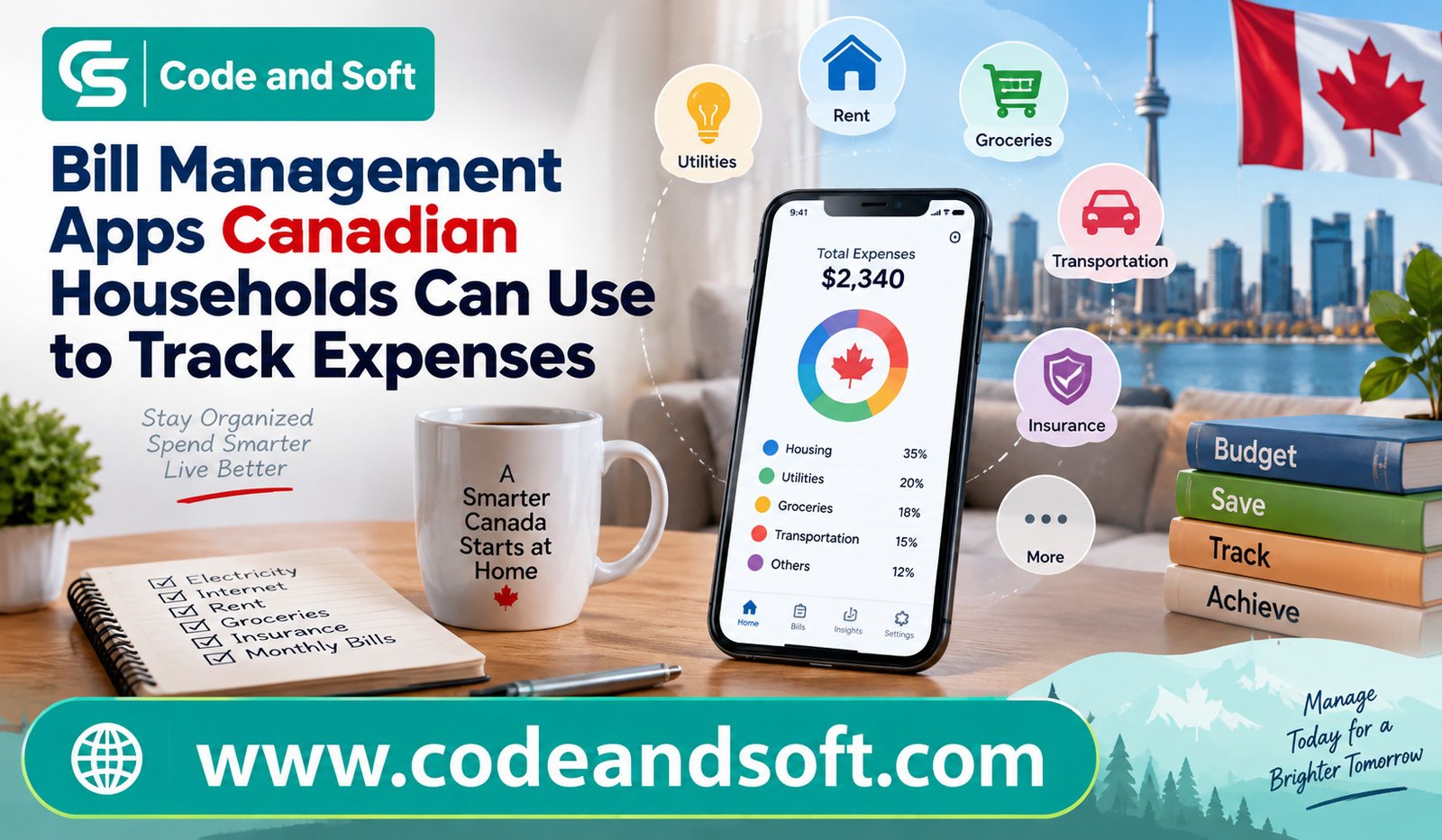

Managing household money can feel surprisingly difficult. Your income may arrive on schedule, but expenses rarely behave quite as neatly. Rent or mortgage payments, groceries, electricity, internet, insurance, subscriptions, credit card payments, and unexpected purchases can quickly turn a simple monthly budget into a moving target.
That is where the right money-management app can make a real difference.
Instead of checking several banking apps, searching through email receipts, or trying to remember when the next bill is due, you can use a financial app to bring much of your spending information together. With the right setup, you can see where your money is going, identify recurring expenses, create spending limits, and make better decisions before the end of the month.
If you are searching for Bill Management Apps Use In Canada, you have several options worth considering. Some are designed specifically for personal budgeting, while others are better suited to households that also manage freelance work or small-business finances.
Here are some of the most useful options to explore.
Why Bill Management Apps Can Help Canadian Households
You do not necessarily need a complicated financial system to manage your household budget. What you need is visibility.
When your bills and everyday purchases are spread across different accounts, it is easy to underestimate how much you are spending. A streaming subscription here, a restaurant purchase there, and a higher-than-usual utility bill can quietly push you beyond your monthly plan.
Bill management apps can help you organize this information in one place. Depending on the platform you choose, you may be able to connect bank accounts, categorize transactions, create budgets, monitor recurring payments, and review your cash flow.
The biggest benefit is not simply seeing your expenses. It is understanding your spending habits well enough to make changes.
1. Monarch Money
Monarch Money is a strong choice if you want a detailed household view of your finances.
Monarch is available in Canada, including through its Canadian App Store and Google Play availability.
The platform brings accounts together so you can review transactions, spending, cash flow, investments, and net worth from one place. It also provides recurring-expense tracking, allowing you to view bills and subscriptions in a calendar or list format and receive reminders.
For household budgeting, you can choose between category-based budgeting and Flex Budgeting. This gives you some freedom to decide how detailed you want your monthly plan to be.
Monarch can be particularly useful if you manage finances with a partner. You can bring separate and joint accounts into one household view and work together on budgets and financial goals.
Best for: Families and couples wanting an all-in-one view of household finances.
2. Buxfer
Buxfer is another option worth considering if you want detailed expense tracking and budgeting.
Buxfer specifically supports Canadian financial institutions and says it can automatically sync with major Canadian banks. Its Canadian support includes institutions such as RBC, TD, CIBC, BMO, Scotiabank, Tangerine, Desjardins, EQ Bank, and others.
One useful feature is its budgeting system. You can establish weekly, monthly, or yearly spending limits for different categories and receive alerts when you exceed those limits.
You can also use Buxfer to monitor recurring bills, track spending patterns, forecast future expenses, and manage shared expenses. Its multiple-currency functionality can be useful if your household regularly handles money in more than one currency.
For example, you could create separate budgets for groceries, transportation, utilities, entertainment, and travel. Over time, the information can show you which categories consistently consume more of your income than expected.
Best for: People who want detailed budgeting, bank synchronization, and spending controls.
3. QuickBooks Online
QuickBooks Online Canada is slightly different from the other options on this list.
It is primarily a business accounting platform rather than a household budgeting app. However, it can be valuable if you are self-employed, run a small business from home, or have household finances connected to freelance or business income.
QuickBooks Online lets you track income and expenses, organize receipts, create reports, and manage bills. Its Canadian version also supports features designed around Canadian business accounting needs.
You can also create budgets and compare actual income and expenses against your planned figures.
This distinction matters. If you simply want to know how much you spend on groceries every month, QuickBooks may offer more functionality than you need. But if you have consulting income, a side business, invoices, business expenses, and tax-related records to manage, its broader accounting features can become much more useful.
Best for: Self-employed Canadians, freelancers, and households combining personal financial planning with business accounting.
4. Neontra
Neontra is a Canadian-focused personal finance platform that aims to give you a broader picture of your financial life.
You can connect Canadian and US financial accounts, organize transactions, track investments, monitor cash flow, and calculate your net worth. Neontra also supports CAD and USD as part of its multi-currency functionality.
One feature that makes Neontra interesting for Canadian households is its wider approach to assets and liabilities. Rather than looking only at bank transactions, you can also track things such as property, vehicles, investments, loans, and other financial information.
The platform automatically categorizes transactions and provides an overview of income and expenses. You can also establish budgets and financial goals and review personalized insights about your financial position.
If you want to move beyond simply tracking bills and start thinking about your overall financial position, this broader approach may be appealing.
Best for: Canadians who want budgeting combined with net-worth, investment, property, and financial planning features.
5. YNAB
YNAB is another popular budgeting platform you can consider if your main goal is to become more intentional about spending.
Instead of simply recording what you spent, the platform encourages you to decide how available money should be allocated across different priorities.
That approach can be useful when your household has several competing goals. You might need to cover rent, groceries, utilities, debt payments, travel, emergency savings, and annual expenses from the same income.
YNAB can help you create a plan before the money disappears into everyday spending.
Best for: Households that want a structured, hands-on budgeting approach.
6. PocketSmith
PocketSmith is worth looking at if you are particularly interested in forecasting.
Rather than focusing only on your current spending, forecasting tools can help you think about what your finances could look like in the coming months.
For example, you can consider upcoming recurring bills, expected income, savings goals, and larger planned purchases. That can make it easier to recognize a potentially expensive month before it arrives.
Best for: People who like financial forecasting and longer-term planning.
7. Goodbudget
Goodbudget takes inspiration from the traditional envelope budgeting method.
The concept is straightforward: you divide your available money among spending categories instead of treating your entire bank balance as money available to spend.
You could create categories for groceries, utilities, transportation, entertainment, household purchases, and savings. When one category starts getting close to its limit, you have a clear signal to slow down.
Best for: Beginners who prefer simple category-based budgeting.
How to Choose the Right Bill Management App
There is no single best option for every Canadian household.
Before choosing an app, think about what you actually need.
If you mainly want household budgeting and recurring-bill tracking, a personal finance platform such as Monarch Money or Buxfer may be a good starting point. If you want to track property, investments, loans, and net worth alongside everyday spending, Neontra may be more appropriate.
If you are self-employed, QuickBooks Online could make more sense because you may need accounting, invoicing, expense records, and financial reports in addition to household budgeting.
You should also check whether the app connects reliably with your Canadian financial institutions. Bank connectivity can make a major difference because manually entering every transaction can quickly become a chore.
What You Should Track Each Month
Once you choose an app, do not feel that you need to monitor every dollar obsessively.
Start with the expenses that have the biggest impact on your household.
Track:
- Rent or mortgage payments
- Electricity and other utilities
- Internet and mobile services
- Insurance
- Groceries
- Transportation
- Credit card payments
- Loan payments
- Streaming and other subscriptions
- Childcare or education costs
- Dining and entertainment
- Savings contributions
Then look for patterns.
If your grocery spending keeps rising, you can investigate why. If several subscriptions are barely being used, you can cancel them. If your utility costs fluctuate significantly, you can build a more realistic monthly buffer.
The goal is not to make your financial life complicated. It is to make your money easier to understand.
Final Thoughts
Finding the right Bill Management Apps Use In Canada can make household budgeting feel much less overwhelming. Instead of keeping receipts, spreadsheets, banking apps, and payment reminders scattered everywhere, you can bring more of your financial information into a single system.
Monarch Money can be useful for households that want budgeting, recurring expenses, and collaboration. Buxfer offers detailed expense tracking and Canadian bank support. QuickBooks Online is particularly valuable if business finances are part of your life. Neontra provides a broader view covering spending, investments, property, debt, and net worth.
You can also explore YNAB, PocketSmith, and Goodbudget depending on how you prefer to manage money.
Ultimately, the best app is the one you will actually use. Start by connecting the accounts you regularly rely on, categorize your main expenses, identify your recurring bills, and review your spending once a week. Once you can clearly see where your money is going, making better household financial decisions becomes much easier.