
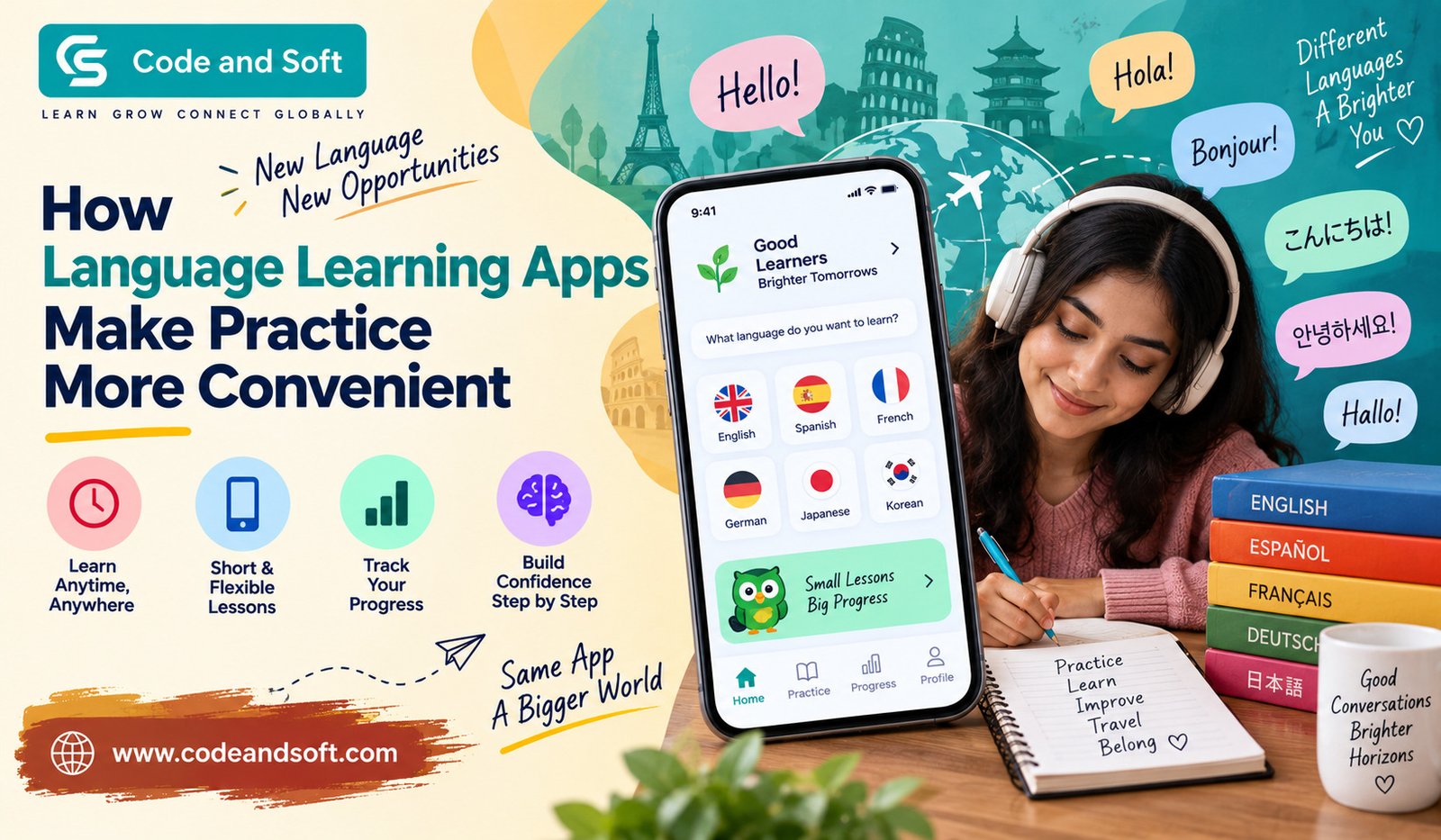
Learning a new language can open the door to better communication, travel experiences, career opportunities, and meaningful connections with people from different backgrounds. But if you have ever tried learning a language, you already know that finding enough time to practice can be one of the biggest challenges.
You may start with good intentions, buy a course, collect study materials, or make a weekly schedule. Then work gets busy, family responsibilities come up, or you simply do not feel like sitting through another long lesson. Before you know it, your language practice becomes irregular.
This is where Language Learning Apps can make a real difference. Instead of requiring you to follow a fixed classroom schedule, these apps allow you to bring language practice into your everyday routine. Whether you have five minutes during your morning coffee or twenty minutes before bed, you can turn small pockets of free time into useful learning sessions.
You Can Practice Almost Anywhere
One of the biggest advantages of Language Learning Apps is convenience. You do not necessarily need a desk, notebook, or classroom to practice. Your smartphone can become your personal language-learning tool.
You can complete a vocabulary exercise while commuting, listen to pronunciation examples while walking, or review previously learned words while waiting for an appointment. Even a short session can help you stay connected to the language.
This flexibility is especially useful when your daily schedule is unpredictable. Rather than thinking, “I don’t have an hour to study,” you can simply ask yourself, “Do I have ten minutes?”
That small change in mindset can make regular practice much easier.
Short Lessons Fit Into Your Daily Routine
Long study sessions can sometimes feel overwhelming. If you are tired after work or have a busy day ahead, the idea of spending an hour learning vocabulary and grammar may be enough to make you postpone studying.
Language Learning Apps often break lessons into smaller activities. You might practice ten new words, complete a short grammar exercise, listen to a few sentences, or answer a quick quiz.
These short sessions make learning feel more manageable.
You can create a routine around moments that already exist in your day. For example, you could practice vocabulary after breakfast, review phrases during your lunch break, and spend a few minutes listening to the language before going to sleep.
The goal is not always to study for a long time. It is to keep showing up.
You Get Instant Feedback
When you practice on your own using a textbook, it can be difficult to know whether you are making mistakes. You might write a sentence incorrectly or pronounce a word the wrong way without realizing it.
Many Language Learning Apps provide immediate feedback after you answer a question or complete an exercise. If you select the wrong answer, the app can show you the correct one. Some apps also provide pronunciation exercises that allow you to compare or improve your speaking.
Instant feedback makes practice more interactive. Instead of waiting for a teacher to review your work, you can identify certain mistakes while they are still fresh in your mind.
This can also make your learning process more efficient because you know which areas need additional attention.
You Can Learn at Your Own Pace
Everyone learns differently. You may remember vocabulary quickly but need more time to understand grammar. Someone else might have the opposite experience.
A fixed classroom environment cannot always adapt perfectly to every learner. With Language Learning Apps, you generally have more control over how quickly you move through lessons.
If a topic feels difficult, you can repeat it. If you already understand a particular concept, you can move forward. You can also return to older lessons whenever you feel that you need a refresher.
This gives you more freedom to build a learning routine that matches your personal needs instead of trying to keep up with someone else’s schedule.
Repetition Becomes Easier
Remembering a new language is not simply about learning something once. Repetition plays an important role in helping you retain vocabulary, phrases, and grammatical patterns.
The problem is that remembering to review old material can be difficult when you are studying with traditional resources.
Many Language Learning Apps are designed around regular revision. They may remind you to review words you previously learned or bring older concepts back into your practice sessions.
This means you do not have to plan every revision session yourself. Your app can help you maintain contact with words and phrases that might otherwise disappear from your memory.
The more regularly you revisit important material, the more familiar it can become.
You Can Improve Listening and Pronunciation
Reading a language is only one part of communication. If your goal is to have real conversations, you also need to become comfortable hearing and speaking the language.
Language Learning Apps can make listening practice much more accessible. You can hear words, phrases, dialogues, and sentences without needing to find separate audio resources.
This is useful because you can practice listening whenever you have headphones available.
You can also repeat difficult phrases several times. If a particular word does not sound clear the first time, you can listen again instead of simply moving on.
For pronunciation practice, some apps offer speaking exercises. These can encourage you to say words aloud rather than only recognizing them on a screen.
The more comfortable you become with hearing and producing the language, the less intimidating real conversations may feel.
Gamification Can Make Practice More Enjoyable
Let’s be honest: studying vocabulary from a long list is not always exciting.
Language Learning Apps often use game-like features to make practice more engaging. Points, levels, streaks, challenges, badges, and progress indicators can give you a reason to return each day.
These features may seem simple, but they can help turn language practice into a habit.
Instead of thinking of your session as another task on your to-do list, you may start seeing it as a quick daily challenge. Completing a short lesson can also give you a sense of progress, especially when you can look back and see how much material you have covered.
However, you should remember that these features are there to support learning, not replace it. Your main goal should still be developing useful language skills.
You Can Practice According to Your Goals
Not everyone learns a language for the same reason.
You might want to learn basic phrases before traveling abroad. Perhaps you need professional vocabulary for your career, or you want to communicate with friends and family in another language. You may simply enjoy learning languages as a personal hobby.
Language Learning Apps can make it easier to focus your practice around your goals.
If you are preparing for a trip, you can prioritize greetings, directions, food, shopping, and common travel phrases. If your focus is work, you may want to spend more time on professional vocabulary and formal communication.
Having a clear purpose can make your practice more relevant. When you learn phrases that you are likely to use in real life, you have a stronger reason to remember them.
You Can Track Your Progress
Progress can be difficult to notice when you are learning something gradually. You might feel like you are not improving, even though you understand much more than you did a few weeks ago.
Many Language Learning Apps give you ways to monitor your activity. You may be able to see completed lessons, vocabulary learned, practice time, levels, or other indicators of progress.
This can give you a clearer picture of your effort.
Tracking progress can also help you identify patterns. Maybe you learn better in the morning, or perhaps you are more consistent when you practice for ten minutes every day rather than studying for an hour once a week.
Once you understand what works for you, you can adjust your routine accordingly.
You Can Make Practice a Habit
Consistency is often more important than occasional intense study.
Imagine practicing a language for ten minutes every day. That may not seem like much on any individual day, but over several weeks and months, those small sessions add up.
The convenience of Language Learning Apps makes this type of consistency easier to achieve. You do not have to travel to a class or wait for a particular lesson time. Your learning materials are already on your phone.
You can therefore connect practice with an existing habit. For example, you could study immediately after brushing your teeth, during your daily commute, or while having your evening tea.
Once the activity becomes part of your routine, you may no longer have to rely entirely on motivation.
The Best Results Come From Using Apps Wisely
Although Language Learning Apps can make practice much more convenient, you should not expect an app alone to make you fluent.
Apps are excellent for vocabulary building, repetition, listening exercises, grammar practice, and maintaining a regular learning routine. However, real-world communication requires more than completing exercises.
You should also look for opportunities to use the language outside the app. Try speaking with other learners, listening to podcasts, watching videos, reading simple articles, or having conversations with native speakers.
Think of the app as one part of your overall learning toolkit.
Final Thoughts
Learning a language does not always require long hours of uninterrupted study. Sometimes, the most effective approach is simply finding ways to practice more consistently.
Language Learning Apps make that possible by bringing learning directly into your daily life. You can practice almost anywhere, complete short lessons, receive instant feedback, review difficult vocabulary, improve listening and pronunciation, and track your progress over time.
Most importantly, you can build a routine that works around your life rather than completely changing your life around language learning.
So, if your busy schedule has been stopping you from learning a new language, start small. Open an app, spend a few minutes practicing, and make that effort part of your everyday routine. Those small sessions may not feel significant at first, but with consistency, they can take you much closer to becoming a confident language learner.