
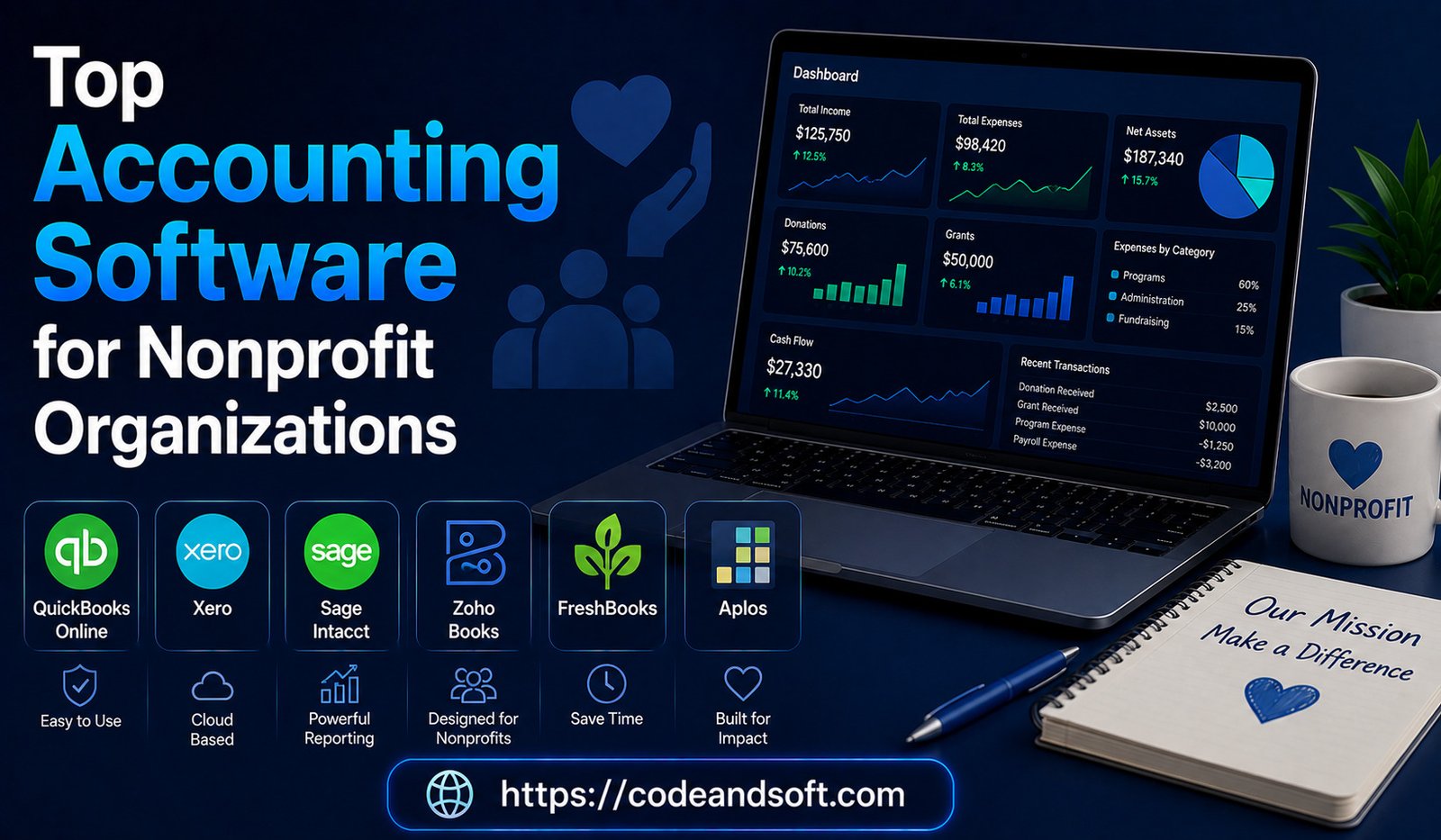

Unlike traditional businesses, nonprofits must carefully track donations, grants, restricted funds, program expenses, and compliance with financial regulations. In 2026, accounting software designed for nonprofit organizations has become more intelligent, cloud-based, and automation-driven. Whether you’re running a charitable foundation, educational institution, religious organization, healthcare nonprofit, or community service organization, selecting the right accounting software can improve transparency, accountability, and financial decision-making.
Why Nonprofits Need Specialized Accounting Software
Nonprofit accounting differs significantly from business accounting. Instead of focusing primarily on profits, nonprofit organizations must demonstrate responsible stewardship of donated funds and ensure that financial resources are used according to donor restrictions and organizational objectives.
Specialized nonprofit accounting software helps organizations:
- Track restricted and unrestricted funds
- Manage grants and funding sources
- Monitor program expenses
- Prepare donor reports
- Simplify audit preparation
- Generate financial statements
- Improve transparency
- Ensure regulatory compliance
Essential Features of Nonprofit Accounting Software
Important capabilities include:
- Fund accounting
- Grant management
- Donor tracking
- Budget planning
- Bank reconciliation
- Expense management
- Accounts payable
- Accounts receivable
- Payroll integration
- Financial reporting
- Multi-user collaboration
- Audit trails
- Cloud access
- Tax compliance
- Dashboard reporting
These tools help finance teams manage daily accounting tasks efficiently while providing complete visibility into organizational finances.
Top Accounting Software for Nonprofit Organizations in 2026
1. QuickBooks Online Advanced
QuickBooks continues to be one of the most popular accounting solutions for small and medium-sized nonprofit organizations.
Key Features
- Income and expense tracking
- Budget management
- Bank reconciliation
- Financial reporting
- Payroll integration
- Cloud accessibility
- Donation tracking through integrations
Advantages
- Easy to learn
- Large ecosystem of integrations
- Affordable subscription plans
- Reliable customer support
2. Sage Intacct Nonprofit
Sage Intacct is widely recognized as one of the most powerful accounting solutions built specifically for nonprofit organizations.
Key Features
- Advanced fund accounting
- Grant management
- Multi-entity accounting
- AI-powered reporting
- Revenue recognition
- Budget management
- Automated financial statements
Advantages
- Comprehensive nonprofit features
- Excellent reporting tools
- High scalability
- Strong financial controls
3. Blackbaud Financial Edge NXT
Blackbaud has long been associated with nonprofit financial management.
Key Features
- Fund accounting
- Grant tracking
- Donor management integration
- Budget forecasting
- Financial dashboards
- Compliance reporting
- Cloud deployment
Best For
Large nonprofit organizations with complex financial operations.
Advantages
- Designed specifically for nonprofits
- Excellent grant management
- Advanced reporting capabilities
4. Aplos
Aplos focuses exclusively on nonprofit and faith-based organizations.
Key Features
- Fund accounting
- Donation management
- Event registration
- Online giving integration
- Budget tracking
- Financial reporting
- Member management
Best For
Churches, charities, and community organizations.
Advantages
- User-friendly interface
- Affordable pricing
- Nonprofit-focused design
5. Xero
Xero offers cloud accounting features suitable for smaller nonprofit organizations.
Key Features
- Expense tracking
- Financial reporting
- Invoice management
- Budgeting
- Payroll integrations
- Bank reconciliation
- Cloud collaboration
Best For
Small nonprofits requiring simple cloud accounting.
Advantages
- Modern interface
- Easy collaboration
- Excellent mobile accessibility
6. Zoho Books
Zoho Books provides affordable accounting automation for nonprofit organizations.
Key Features
- Automated workflows
- Expense management
- Financial reporting
- Bank reconciliation
- Tax management
- Vendor management
- Custom reporting
Best For
Budget-conscious nonprofit organizations.
Advantages
- Competitive pricing
- Automation features
- Integration with Zoho applications
7. Oracle NetSuite Social Impact
Key Features
- Financial consolidation
- Multi-currency accounting
- Grant tracking
- Budget forecasting
- AI-powered analytics
- Compliance reporting
- ERP integration
Best For
International nonprofits and large charitable organizations.
Advantages
- Highly scalable
- Enterprise-grade reporting
- Global financial management
8. Microsoft Dynamics 365 Finance
Key Features
- Financial reporting
- AI insights
- Budget planning
- Cash flow forecasting
- Multi-entity accounting
- Power BI integration
- Cloud collaboration
Best For
Large nonprofit institutions.
Advantages
- Advanced analytics
- Strong security
- Excellent Microsoft ecosystem integration
9. FreshBooks
FreshBooks is a straightforward accounting solution suitable for smaller nonprofits and community organizations.
Key Features
- Expense tracking
- Invoice management
- Financial reports
- Time tracking
- Payment processing
- Budget monitoring
Best For
Small nonprofit teams with simple accounting needs.
Advantages
- Easy implementation
- Intuitive interface
- Affordable plans
10. Wave Accounting
Wave remains a popular option for nonprofits with limited budgets.
Key Features
- Income tracking
- Expense management
- Financial reporting
- Receipt scanning
- Bank synchronization
- Basic invoicing
Best For
Small nonprofit organizations and volunteer-led charities.
Advantages
- Free core accounting features
- Easy to use
- Suitable for startups
Benefits of Using Nonprofit Accounting Software
Better Financial Transparency
Modern accounting software provides clear visibility into donations, grants, expenses, and available funds.
Improved Donor Confidence
Accurate financial records increase trust among donors, grant providers, and board members.
Simplified Fund Accounting
Organizations can separately manage restricted, unrestricted, and designated funds without manual calculations.
Faster Financial Reporting
Automated reporting significantly reduces the time required to prepare monthly and annual financial statements.
Grant Management
Many nonprofit accounting platforms help track grant income, expenditures, reporting deadlines, and compliance requirements.
Regulatory Compliance
Software simplifies compliance with accounting standards, tax regulations, and audit requirements.
Fund Accounting Explained
One of the biggest differences between nonprofit and traditional accounting is fund accounting.
Fund accounting separates financial resources into different categories based on donor restrictions or organizational purposes.
Common fund types include:
- Unrestricted funds
- Restricted funds
- Temporarily restricted funds
- Permanently restricted funds
- Endowment funds
- Grant funds
- Program funds
This approach ensures donations are used according to donor intentions and legal requirements.
Key Reports Every Nonprofit Should Generate
Reliable accounting software should produce:
- Statement of Financial Position
- Statement of Activities
- Cash Flow Statement
- Budget vs Actual Report
- Grant Expense Reports
- Donor Contribution Reports
- Program Expense Reports
- Functional Expense Reports
- Fund Balance Reports
- Audit Reports
These reports help nonprofit leaders evaluate financial health and maintain accountability.
AI Is Transforming Nonprofit Accounting
Artificial intelligence is becoming increasingly valuable in nonprofit financial management.
AI-powered accounting software can:
- Categorize transactions automatically
- Detect unusual expenses
- Predict future cash flow
- Generate financial summaries
- Automate invoice processing
- Improve budgeting accuracy
- Identify duplicate transactions
- Support audit preparation
Automation reduces administrative work while improving financial accuracy.
Cloud Accounting Advantages
Cloud accounting has become the preferred choice for nonprofit organizations.
Benefits include:
- Remote access
- Automatic backups
- Secure data storage
- Lower IT costs
- Real-time collaboration
- Faster software updates
- Mobile accessibility
Cloud platforms also make it easier for accountants, auditors, and board members to collaborate securely.
Factors to Consider Before Choosing Software
Selecting the right accounting solution requires careful evaluation.
Organization Size
Small nonprofits may need basic accounting software, while larger organizations often require advanced fund accounting and grant management.
Budget
Software costs should align with the organization’s financial resources without sacrificing essential features.
Ease of Use
A simple interface reduces training time and encourages staff adoption.
Reporting Capabilities
The software should generate customizable financial reports for donors, board members, auditors, and regulators.
Security
Choose software offering:
- Data encryption
- Multi-factor authentication
- User permissions
- Secure cloud hosting
- Audit logs
Integration
Look for compatibility with:
- Payroll systems
- CRM platforms
- Online donation tools
- Banking services
- Fundraising software
Common Implementation Challenges
Organizations may experience:
- Data migration difficulties
- Staff training requirements
- System integration issues
- Process changes
- Initial setup costs
Planning, training, and phased implementation can help overcome these challenges.
Best Practices for Nonprofit Financial Management
To maximize the value of accounting software:
- Reconcile bank accounts regularly.
- Separate restricted and unrestricted funds.
- Monitor grant spending closely.
- Review financial reports monthly.
- Maintain detailed audit trails.
- Back up financial records securely.
- Train staff on accounting procedures.
- Use automation to reduce manual work.
Following these practices promotes transparency, compliance, and long-term financial sustainability.
Conclusion
Accounting software has become an essential tool for nonprofit organizations in 2026. Whether managing donations, tracking grants, preparing financial reports, or ensuring compliance, the right solution can streamline operations and strengthen financial accountability.
Solutions such as Sage Intacct Nonprofit, Blackbaud Financial Edge NXT, Aplos, QuickBooks Online Advanced, Oracle NetSuite Social Impact, Microsoft Dynamics 365 Finance, Xero, Zoho Books, FreshBooks, and Wave Accounting offer a wide range of features tailored to organizations of different sizes and needs.
By choosing software that supports fund accounting, automation, cloud collaboration, and accurate reporting, nonprofit organizations can spend less time on administrative work and more time advancing their mission and creating meaningful impact in the communities they serve.