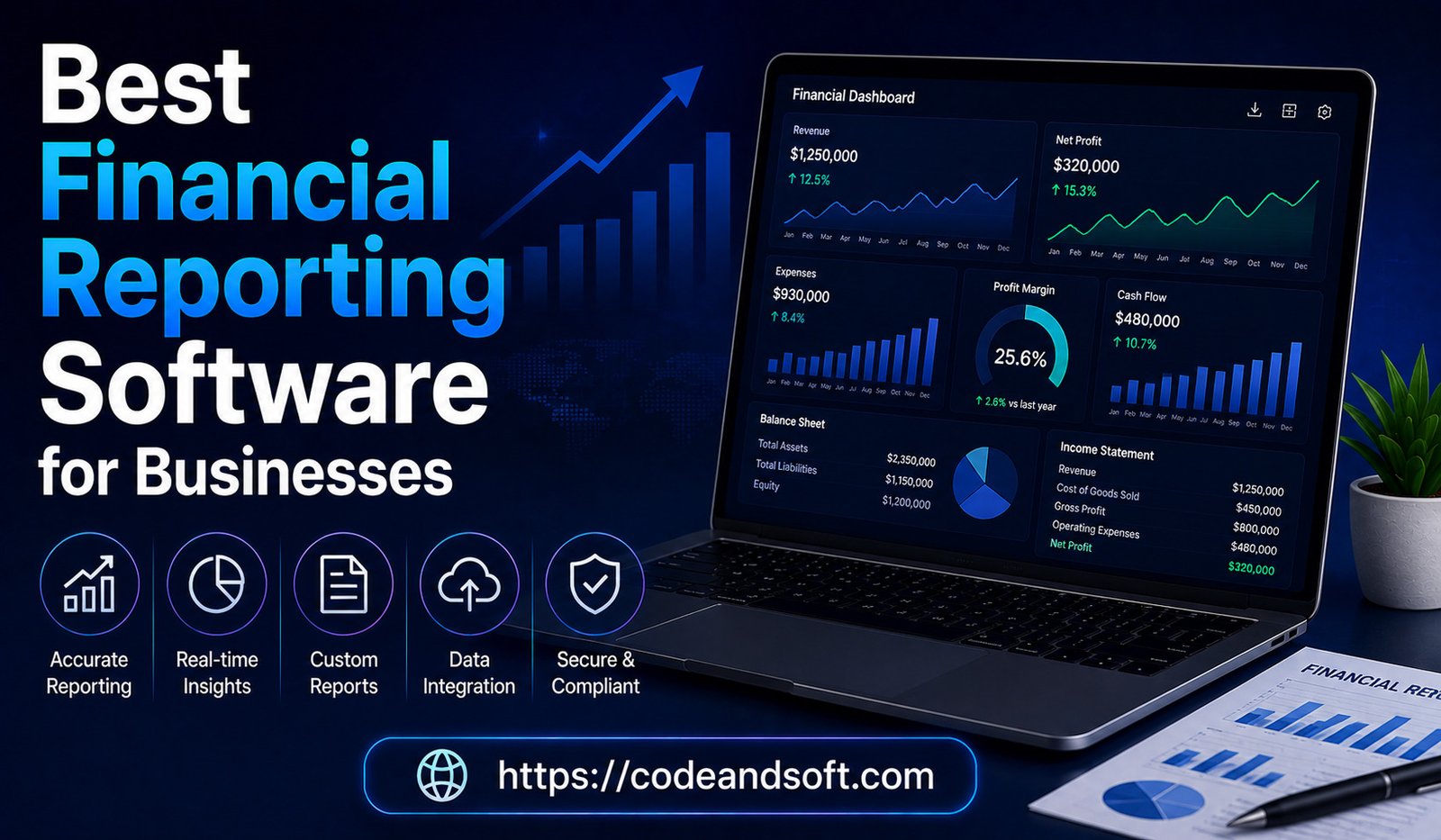

Financial reporting has become more than a compliance requirement in today’s fast-paced business environment. In 2026, organizations rely on financial reporting software to gain real-time insights, improve decision-making, ensure regulatory compliance, and enhance operational efficiency. Modern finance teams require solutions that automate reporting, integrate with multiple business systems, and provide accurate financial data without the delays associated with manual spreadsheets.
For finance professionals, selecting the right financial reporting software can significantly improve budgeting, forecasting, financial analysis, and executive reporting. The best platforms combine artificial intelligence, cloud technology, automation, and advanced analytics to help businesses stay competitive in an increasingly data-driven economy.
This guide explores the best financial reporting software for businesses in 2026, highlighting their features, benefits, and the factors finance professionals should consider before making an investment.
Why Financial Reporting Software Matters in 2026
Businesses generate massive amounts of financial data every day. Managing this information manually increases the risk of errors, slows reporting cycles, and makes strategic planning more difficult.
Modern financial reporting software addresses these challenges by automating data collection, consolidating financial information, and producing accurate reports in real time. These platforms also help organizations comply with changing accounting standards and tax regulations while improving collaboration across finance departments.
Instead of spending days preparing monthly reports, finance professionals can focus on interpreting financial performance and advising business leaders.
Key Features of Modern Financial Reporting Software
The best financial reporting platforms offer a wide range of capabilities designed to improve efficiency and accuracy.
Essential features include:
- Real-time financial dashboards
- Automated report generation
- General ledger integration
- Budgeting and forecasting tools
- Cash flow analysis
- Multi-company consolidation
- Multi-currency support
- AI-powered financial insights
- Bank reconciliation
- Tax reporting
- Audit trails
- Role-based user permissions
- Cloud accessibility
- Custom report templates
- KPI tracking
These features help finance teams streamline reporting while supporting better business decisions.
Best Financial Reporting Software for Businesses in 2026
1. Microsoft Dynamics 365 Finance
Microsoft Dynamics 365 Finance remains one of the leading enterprise financial management platforms in 2026.
Key Features
- Advanced financial reporting
- AI-driven forecasting
- Budget planning
- Cash flow management
- Global compliance support
- Multi-entity accounting
- Real-time analytics
- Power BI integration
Best For
Large enterprises and multinational organizations requiring advanced financial management capabilities.
Advantages
- Excellent scalability
- Strong automation
- Enterprise-grade security
- Comprehensive financial controls
2. Oracle NetSuite ERP
Oracle NetSuite continues to dominate cloud financial management for growing businesses.
Key Features
- Automated financial statements
- Revenue recognition
- Financial consolidation
- Expense management
- KPI dashboards
- Audit compliance
- Real-time reporting
Best For
Medium-sized businesses and expanding enterprises.
Advantages
- Cloud-native architecture
- Strong reporting flexibility
- Excellent global accounting support
3. SAP S/4HANA Finance
SAP remains a preferred solution for large organizations requiring advanced reporting and analytics.
Key Features
- Real-time financial close
- Predictive analytics
- AI-powered insights
- Financial planning
- Asset accounting
- Treasury management
- Integrated business intelligence
Best For
Large corporations with complex financial operations.
Advantages
- Exceptional performance
- Deep analytics
- Strong compliance capabilities
4. QuickBooks Online Advanced
QuickBooks continues to be one of the most popular financial reporting platforms for small and medium-sized businesses.
Key Features
- Profit and loss reports
- Balance sheets
- Cash flow reports
- Budget tracking
- Automated invoicing
- Expense management
- Bank reconciliation
Best For
Small businesses and accounting firms.
Advantages
- Easy implementation
- User-friendly interface
- Affordable pricing
- Large integration ecosystem
5. Xero
Xero remains a favorite cloud accounting solution for businesses seeking flexibility and simplicity.
Key Features
- Financial dashboards
- Expense tracking
- Invoice management
- Payroll integration
- Budget reports
- Fixed asset management
- Bank reconciliation
Best For
Small businesses and startups.
Advantages
- Modern interface
- Excellent cloud accessibility
- Strong automation features
6. Sage Intacct
Sage Intacct is widely recognized for its powerful financial reporting capabilities.
Key Features
- Multi-dimensional reporting
- AI-powered automation
- Revenue recognition
- Financial consolidation
- Budgeting
- Cash management
- Compliance reporting
Best For
Growing organizations with complex accounting requirements.
Advantages
- Excellent reporting customization
- Strong financial controls
- Cloud-native platform
7. Zoho Books
Zoho Books continues to gain popularity due to its affordability and automation capabilities.
Key Features
- Financial reports
- Automated workflows
- Tax compliance
- Inventory management
- Bank reconciliation
- Invoice automation
- Expense tracking
Best For
Small businesses and startups.
Advantages
- Cost-effective
- Easy learning curve
- Excellent integration with Zoho ecosystem
8. FreshBooks
FreshBooks focuses on service-based businesses and freelancers.
Key Features
- Financial summaries
- Expense reports
- Client invoicing
- Payment tracking
- Tax estimates
- Time tracking
- Cash flow reports
Best For
Consultants, agencies, and freelancers.
Advantages
- Simple interface
- Fast setup
- Strong invoicing capabilities
9. Workday Adaptive Planning
Workday provides powerful planning and financial reporting tools for modern enterprises.
Key Features
- Scenario planning
- Financial forecasting
- Budget management
- Workforce planning
- Executive dashboards
- Automated reporting
Best For
Mid-sized and enterprise organizations.
Advantages
- Advanced planning capabilities
- Excellent forecasting
- High scalability
10. BlackLine
BlackLine specializes in financial close automation and accounting operations.
Key Features
- Account reconciliation
- Journal entry automation
- Financial close management
- Compliance monitoring
- Risk management
- Audit support
Best For
Large accounting departments.
Advantages
- Faster month-end close
- Reduced manual errors
- Strong governance features
Benefits of Financial Reporting Software
Improved Accuracy
Automation minimizes manual data entry and calculation errors, resulting in more reliable financial reports.
Faster Reporting
Finance teams can generate reports within minutes rather than days.
Better Decision-Making
Real-time dashboards enable executives to make informed financial decisions based on current business performance.
Regulatory Compliance
Modern software automatically supports accounting standards, tax regulations, and audit requirements.
Enhanced Collaboration
Cloud-based systems allow finance teams, auditors, and executives to access financial information from anywhere.
AI-Powered Insights
Artificial intelligence identifies trends, predicts future financial performance, and highlights unusual transactions that require attention.
Essential Reports Every Business Should Generate
Effective financial reporting software should produce:
- Income Statement
- Balance Sheet
- Cash Flow Statement
- Trial Balance
- Accounts Receivable Aging
- Accounts Payable Aging
- Budget vs Actual Report
- Profitability Analysis
- Expense Reports
- Revenue Reports
- Tax Reports
- Financial Ratio Analysis
These reports provide a comprehensive picture of an organization’s financial health.
How AI Is Improving Financial Reporting
AI can:
- Detect anomalies in financial transactions
- Forecast cash flow
- Automate reconciliations
- Classify expenses
- Predict future revenue
- Generate management insights
- Identify fraud risks
- Improve budgeting accuracy
Finance professionals spend less time preparing reports and more time analyzing financial performance.
Cloud-Based Reporting Advantages
Cloud financial reporting software offers numerous benefits.
These include:
- Automatic software updates
- Secure data backups
- Remote accessibility
- Lower infrastructure costs
- Faster collaboration
- Real-time financial visibility
- Improved disaster recovery
Cloud deployment has become the preferred option for businesses of all sizes.
Choosing the Right Financial Reporting Software
Finance professionals should evaluate several factors before selecting a solution.
Business Size
Small businesses often require simple cloud accounting platforms, while enterprises need comprehensive ERP systems.
Scalability
Choose software capable of supporting future business growth.
Integration
Ensure compatibility with payroll, CRM, banking systems, inventory management, and ERP applications.
Security
Look for features such as:
- Multi-factor authentication
- Data encryption
- User permissions
- Audit logs
- Secure cloud hosting
Customization
The software should allow businesses to create customized reports tailored to management requirements.
Ease of Use
An intuitive interface reduces employee training time and increases productivity.
Customer Support
Reliable technical support ensures smooth implementation and ongoing system performance.
Common Challenges During Implementation
Organizations may face several challenges when introducing new financial reporting software.
These include:
- Data migration issues
- Employee resistance
- Integration complexity
- Initial implementation costs
- User training requirements
- Process redesign
Proper planning and staff training help minimize these challenges.
Best Practices for Finance Professionals
To maximize the value of financial reporting software:
- Automate repetitive reporting tasks.
- Review financial data regularly.
- Monitor key performance indicators.
- Implement strong cybersecurity controls.
- Keep accounting policies updated.
- Train finance teams on new features.
- Regularly back up financial information.
- Use AI insights alongside professional judgment.
These practices improve reporting accuracy while supporting better financial management.
Conclusion
Financial reporting software has become an indispensable tool for businesses in 2026. From automating report generation and improving compliance to delivering real-time analytics and AI-powered insights, today’s platforms enable finance professionals to work more efficiently and provide greater strategic value to their organizations.
Whether a business chooses Microsoft Dynamics 365 Finance, Oracle NetSuite, SAP S/4HANA, QuickBooks Online Advanced, Xero, Sage Intacct, Zoho Books, FreshBooks, Workday Adaptive Planning, or BlackLine, the right solution depends on factors such as business size, reporting complexity, integration needs, and long-term growth plans.
As artificial intelligence and cloud technology continue to reshape the finance industry, organizations that invest in modern financial reporting software will be better equipped to improve accuracy, enhance decision-making, strengthen compliance, and achieve sustainable business success.