
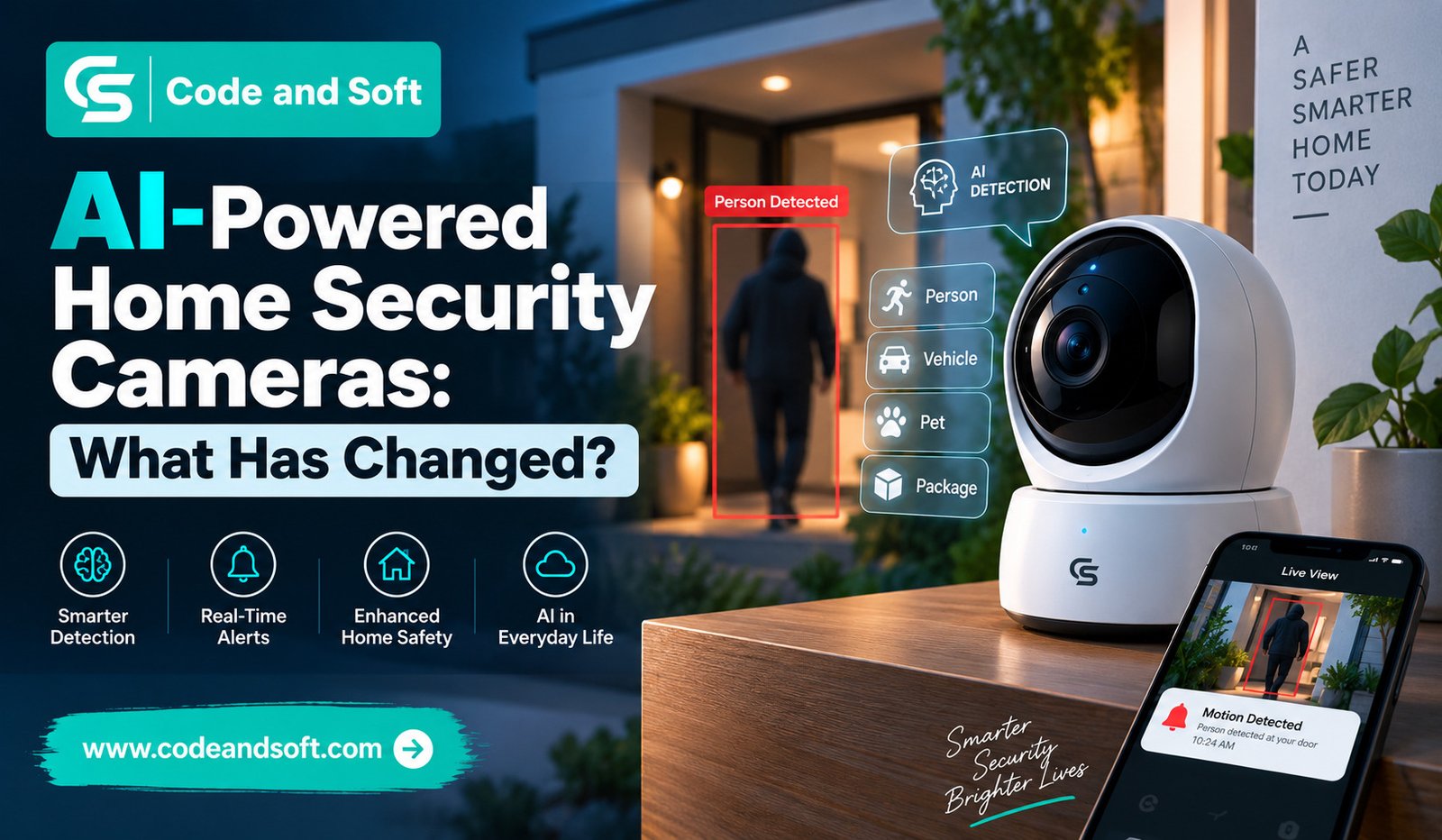

Home security cameras have come a long way from simply recording whatever happens in front of the lens. A few years ago, you mainly looked for features such as video resolution, night vision, storage capacity, and whether you could access the camera remotely. Today, the conversation has shifted.
With AI-Powered Cameras, your security system can do much more than record video. It can recognize movement, identify people, distinguish between different types of activity, reduce unnecessary alerts, and help you understand what is happening around your home.
This change is making home surveillance more practical for everyday use. Instead of spending time watching hours of footage or responding to every movement notification, you can rely on smarter detection and more useful alerts.
So, what exactly has changed, and how can these cameras make your home security setup more effective? Let’s take a closer look.
From Simple Recording to Smart Detection
Traditional security cameras were primarily designed to capture video. When something moved in front of the camera, the system might start recording or send you a basic motion alert.
The problem was that not every movement represented a security concern.
A passing vehicle, a tree moving in the wind, a pet walking across the yard, or even changing shadows could trigger an alert. If you received too many notifications, you might eventually start ignoring them.
AI-Powered Cameras approach the problem differently.
Instead of treating every movement equally, modern cameras can analyze what they see. Depending on the model and its software capabilities, the camera may be able to determine whether the movement involves a person, vehicle, animal, or another object.
That means you can receive more meaningful notifications rather than a constant stream of generic motion alerts.
Person Detection Has Become More Useful
One of the biggest changes you’ll notice is improved person detection.
Imagine you have a camera covering your front entrance. In the past, the camera could notify you whenever something moved within its viewing area. Now, AI-based detection can help determine whether the movement is likely caused by a person.
This can be particularly useful if your camera faces a street or driveway.
For example, you might configure alerts so that you are notified when a person enters a specific area while ignoring routine vehicle movement. This gives you more control over what deserves your attention.
Some systems can also recognize familiar faces, although this capability varies considerably between manufacturers, models, regions, and privacy settings.
For you, the biggest advantage is simple: the camera can provide more context instead of just saying that “motion was detected.”
AI Can Help Reduce False Alerts
False alerts have always been one of the frustrations of home security cameras.
You may have experienced it yourself. Your phone buzzes late at night, you immediately check the camera, and then discover that it was just your dog walking through the garden.
With AI-Powered Cameras, intelligent classification can reduce these unnecessary notifications.
The camera may analyze whether an object is a person, vehicle, animal, or something else before sending an alert. Some systems also allow you to create activity zones, giving you greater control over which areas should be monitored closely.
For example, if your camera covers both your driveway and the road outside your home, you may not want an alert every time a car passes. You can potentially configure the system to focus more heavily on the driveway.
This doesn’t make AI detection perfect, but it can make everyday monitoring considerably less annoying.
Your Camera Can Understand More Than Motion
Another major change is the amount of information cameras can extract from recorded footage.
Instead of simply storing hours of video, newer systems can attach useful descriptions or classifications to events.
You might be able to search for events involving a person or vehicle rather than manually scrolling through an entire day’s recordings.
This becomes particularly valuable when you’re trying to find a specific incident.
Suppose you know someone entered your driveway sometime between 2 PM and 5 PM. With a system that supports intelligent event filtering, you may be able to narrow your search to relevant person or vehicle detections.
That saves you from sitting through hours of footage just to find a few seconds that matter.
Smarter Alerts Give You More Control
Modern security cameras are increasingly focused on giving you actionable information.
A basic alert might simply tell you:
“Motion detected.”
An intelligent alert could provide more useful information, such as a person being detected in a monitored area.
The exact capabilities depend on the camera and its software, but the overall goal is the same: give you enough context to decide whether you need to check the live feed.
This is particularly helpful when you’re away from home.
Instead of opening your security app every time you receive an alert, you can quickly determine whether the event appears routine or deserves closer attention.
AI-Powered Cameras Are Improving Outdoor Security
Outdoor cameras face a particularly difficult challenge. Weather, changing light, insects, trees, pets, vehicles, and people can all appear in the same scene.
AI can help cameras interpret these situations more effectively.
For example, a camera installed near your gate might distinguish between a person entering the property and a vehicle passing outside. A backyard camera could potentially differentiate between a pet and a person.
Some systems also support detection of specific activities or objects, although you should always check the exact features available on the model you are considering.
The result is a security system that can be more selective about what it considers important.
Better Night-Time Awareness
Night vision itself isn’t new, but AI is changing how cameras can interpret footage in difficult lighting.
Many modern security cameras combine infrared night vision, color night vision, low-light sensors, and software-based image processing.
AI can then help analyze the resulting footage.
This doesn’t mean your camera can magically see everything in complete darkness. Image quality still depends on the sensor, lighting, lens, installation position, and weather conditions.
However, modern systems can provide clearer and more useful information than older basic cameras.
If you’re installing a camera outside your home, you should pay close attention to its actual night-time performance rather than choosing a model based only on its daytime resolution.
Local AI vs Cloud-Based Processing
One important change you should understand is where the AI processing takes place.
Some AI-Powered Cameras process certain information directly on the camera or through a local hub. Others rely heavily on cloud services.
Local processing can offer advantages such as faster responses and reduced dependence on an internet connection for specific detection functions. It may also appeal to you if you are particularly concerned about sending camera footage to external servers.
Cloud processing, on the other hand, can provide powerful computing capabilities and make it easier for manufacturers to improve their services over time.
Neither approach is automatically perfect.
When choosing a camera, you should check where video is processed, what data is stored, how long it is retained, and whether advanced AI features require a subscription.
Privacy Has Become More Important
As cameras become smarter, privacy becomes an even bigger consideration.
A traditional camera recording video is already something you need to manage carefully. When AI can analyze people, identify objects, or potentially recognize faces, the privacy implications become more significant.
Before installing a camera, you should think about where it points.
Avoid unnecessarily recording areas where your neighbors or other people reasonably expect privacy. You should also review the manufacturer’s privacy policy and understand what happens to your footage.
Strong passwords, two-factor authentication, software updates, and secure Wi-Fi are also important.
The smartest camera in the world won’t provide much protection if your account is poorly secured.
Smart Home Integration Is Expanding
Another major development is integration with the wider smart home.
Your security camera may work alongside smart doorbells, locks, lights, alarms, and voice assistants.
For example, when a camera detects activity, your smart lights could potentially turn on. A doorbell camera might work together with other security devices to provide a more complete picture of what’s happening around your entrance.
This creates a security ecosystem rather than a collection of independent gadgets.
However, compatibility is important. Before buying multiple devices, check whether they work with the smart-home platform and ecosystem you already use.
AI Doesn’t Replace Human Judgment
Despite all these improvements, you shouldn’t treat AI detection as a guaranteed security system.
AI can make mistakes.
A camera might misidentify an object, fail to recognize someone, or trigger an alert because of unusual lighting or environmental conditions. Detection accuracy can also vary depending on camera placement and the specific environment.
Think of AI as an additional layer of assistance rather than a replacement for your judgment.
You should still position cameras carefully, keep firmware updated, use strong account security, and consider other physical security measures such as good lighting, strong doors and locks, and alarms.
What Should You Look For in an AI Security Camera?
If you’re planning to upgrade your home security, don’t choose a camera based solely on the word “AI” on the packaging.
Look at the complete feature set.
Consider:
- Detection types: Check whether it can identify people, vehicles, animals, or other relevant objects.
- Video quality: Higher resolution can make important details easier to identify.
- Night vision: Look at real-world low-light performance rather than relying only on specifications.
- Storage: Check whether footage is stored locally, in the cloud, or through both options.
- Subscription requirements: Some advanced features may require a monthly or annual plan.
- Privacy controls: Look for encryption, authentication options, privacy zones, and clear data policies.
- Activity zones: These can help you focus alerts on areas that matter.
- Smart-home compatibility: Make sure the camera works with your existing devices.
- Weather resistance: Outdoor cameras need protection against rain, dust, and temperature changes.
- App experience: A camera is much more useful when its mobile app is easy to navigate and alerts are understandable.
The Future of Home Security Is Becoming More Context-Aware
The biggest change isn’t simply that cameras now have AI. It’s that your security system is becoming more capable of understanding what is happening instead of merely recording it.
You can expect this trend to continue.
Future AI-Powered Cameras are likely to focus even more on context, smarter event analysis, faster notifications, improved search, and tighter integration with other home-security devices.
For you, this could mean spending less time monitoring cameras and more time receiving useful information when something genuinely deserves your attention.
The technology still has limitations, and privacy should remain a priority. But when properly configured, AI can turn a basic surveillance camera into a much more intelligent security tool.
Final Thoughts
Home security cameras have changed significantly. What was once mainly a device for recording video has evolved into a smarter monitoring system capable of analyzing activity and providing more relevant information.
AI-Powered Cameras can help reduce unnecessary alerts, identify different types of activity, make footage easier to search, and connect with other smart-home devices.
That doesn’t mean every AI camera is automatically better. You still need to consider image quality, privacy, storage, subscription costs, reliability, and the conditions where you’ll install it.
If you choose carefully and configure your system properly, AI can make home security more convenient and responsive. Instead of simply showing you what happened, your camera can help you understand what happened and why it may matter.