
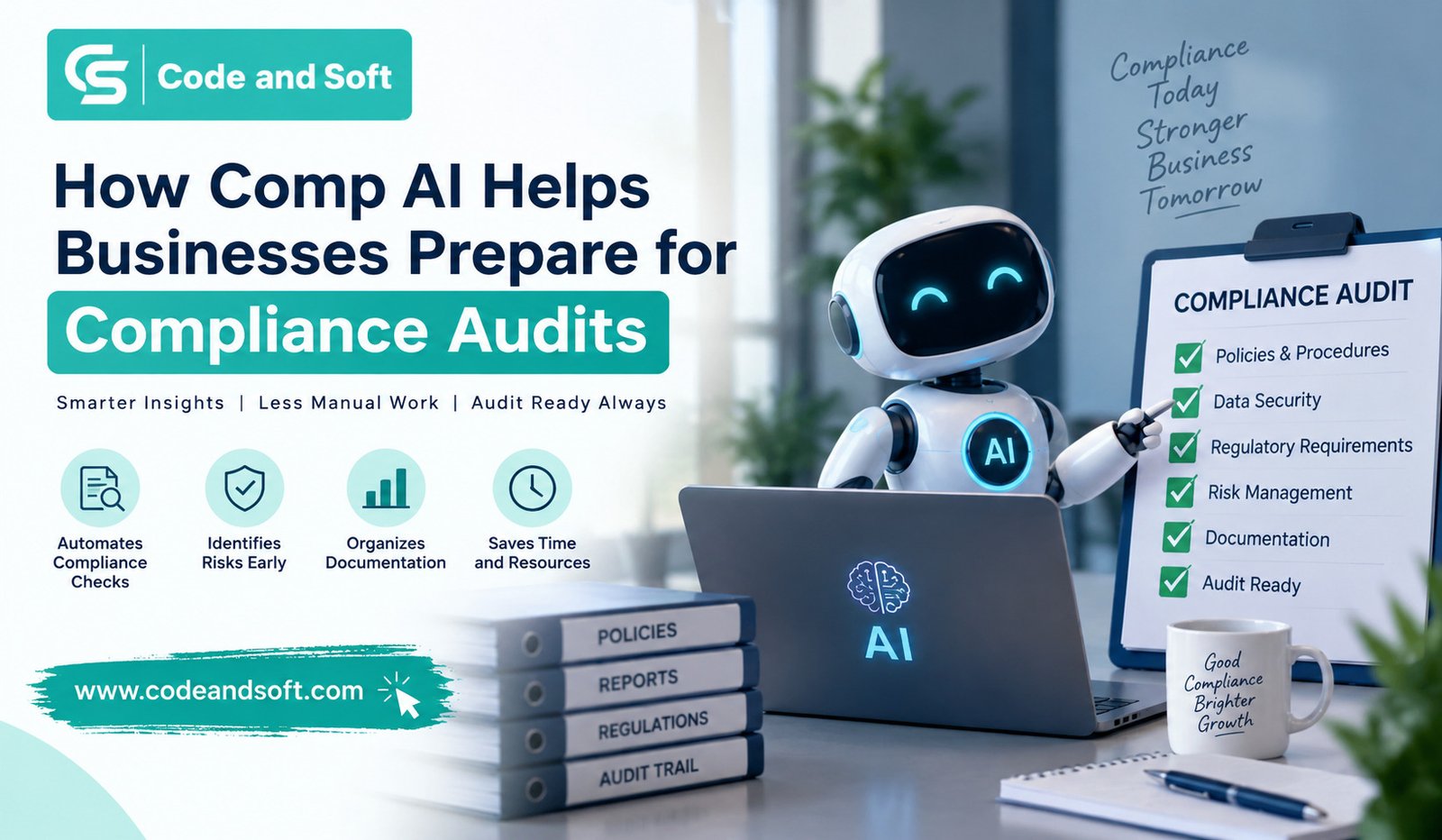

If you’ve ever sat through a compliance audit, you already know the feeling. Weeks before the auditor even walks in the door, your team is buried under spreadsheets, half-updated policy documents, and a Slack channel titled something like “AUDIT PREP – URGENT” that nobody wants to open. You’re chasing screenshots of access controls from three different departments, hoping someone remembers where last year’s evidence folder went, and quietly praying nothing has changed since the last SOC 2 renewal.
Compliance isn’t optional anymore — whether you’re chasing SOC 2, ISO 27001, HIPAA, or GDPR readiness, customers and partners expect proof that you take security seriously. But the process of actually getting and staying audit-ready has historically been manual, tedious, and expensive. That’s exactly the gap Comp AI was built to close, and it’s worth walking through how Comp AI helps businesses prepare for compliance audits in a way that doesn’t drain your team’s time or your budget.
The Old Way of Preparing for Audits Doesn’t Scale
Before getting into what Comp AI actually does, it helps to understand why the traditional approach breaks down so often. Most companies handle compliance the same way they handle taxes — they ignore it until the deadline is close, then scramble.
You’ll typically see a few recurring problems:
- Evidence collection is scattered across tools, inboxes, and personal drives, so nobody has a single source of truth.
- Policies get written once, then forgotten, so by the time an auditor asks for your incident response plan, it references a tool you stopped using two years ago.
- Security teams spend more time proving they’re compliant than actually improving security.
- Consultants and audit firms charge steep fees just to walk you through requirements you could largely handle yourselves with the right tooling.
None of this is because your team isn’t capable. It’s because compliance work is inherently repetitive, detail-heavy, and easy to deprioritize when there’s a product to ship or a customer fire to put out. That’s precisely the kind of work that benefits from automation and intelligent oversight — which brings us to where Comp AI fits in.
What Comp AI Actually Does
Comp AI is built around a simple idea: compliance shouldn’t require you to become a full-time compliance officer just to keep your business running smoothly. Instead of treating audit prep as a once-a-year fire drill, it turns it into an ongoing, mostly automated process that lives alongside your everyday operations.
Here’s where you’ll notice the biggest shift once you start using it.
1. Continuous Evidence Collection Instead of Last-Minute Scrambling
One of the most tedious parts of any audit is gathering evidence — screenshots of access permissions, logs proving your backups ran, documentation showing employees completed security training. Comp AI connects directly to the tools you already use (your cloud provider, your HR system, your identity provider, your ticketing tool) and pulls this evidence automatically, on an ongoing basis.
Instead of digging through six months of history right before an auditor’s deadline, you’ll have a living record that’s already been collected and organized. When audit season arrives, you’re not starting from zero — you’re just handing over what’s already there.
2. Real-Time Visibility Into Your Compliance Posture
You don’t have to wait for an external audit to find out you have gaps. Comp AI gives you a live dashboard showing exactly where you stand against the framework you’re targeting — what controls are satisfied, what’s incomplete, and what needs attention before it becomes a problem.
This matters more than it might seem at first glance. Auditors don’t just want to see that you’re compliant on the day they show up; they want evidence that you’ve maintained compliance consistently over time. A live view of your posture means you can catch and fix issues weeks or months in advance, rather than discovering them mid-audit when it’s too late to do much about it.
3. Automated Policy Management
Every framework requires a stack of written policies — access control policies, data retention policies, incident response plans, and so on. Writing these from scratch is slow, and keeping them updated as your business changes is even harder. Comp AI provides templated, framework-aligned policies you can customize to your business, and it flags when a policy is out of date or no longer reflects your actual practices.
This alone saves you from one of the most common audit failures: policies that look good on paper but don’t match what your team is actually doing day to day.
4. Mapping Controls Across Multiple Frameworks
If you’re pursuing more than one certification — say SOC 2 now and ISO 27001 down the line — you don’t want to duplicate your entire compliance program from scratch for each one. Comp AI maps overlapping controls across frameworks, so work you’ve already done for one certification counts toward the next. You end up building a compliance foundation once and reusing it, rather than starting over every time a new customer asks for a new certification.
5. Working Directly With Your Auditor
When it’s time for the actual audit, Comp AI doesn’t just leave you to figure out the handoff. It’s designed to give your auditor structured, organized access to the evidence and documentation they need, which speeds up the entire review process. Auditors spend less time chasing you down for missing artifacts, and you spend less time answering the same follow-up questions over and over.
Why This Approach Actually Changes the Experience
It’s easy to read a list of features and nod along without registering what it means day to day. So here’s the practical difference: instead of dedicating a chunk of your quarter to audit prep, you’re spending a little bit of ongoing attention on compliance throughout the year. The workload gets spread out and automated rather than concentrated into a stressful sprint.
You also get something that’s harder to quantify but genuinely valuable — confidence. When you know your evidence is being collected continuously and your posture is visible at any moment, you stop dreading the audit conversation with a prospective customer. You can answer “are you SOC 2 compliant?” without an awkward pause and a promise to follow up next week.
There’s a cost angle here too. Traditional compliance consulting and manual audit prep can run into tens of thousands of dollars, especially if you’re bringing in outside help every renewal cycle. By automating a large share of the evidence collection, monitoring, and documentation work, you reduce how much external support you need and how many hours your internal team burns on manual tracking.
Getting the Most Out of It
If you’re considering bringing a tool like this into your compliance process, a few things will make the transition smoother:
- Start by connecting your core systems early, even before you’re actively pursuing a certification. The earlier evidence collection begins, the stronger your audit trail looks later.
- Assign one internal owner who checks the dashboard regularly, rather than treating it as a set-it-and-forget-it tool. Automation handles the collection, but someone still needs to act on the gaps it surfaces.
- Treat policy updates as a living process. When your infrastructure or team changes, update the relevant policy right away instead of waiting for the next audit cycle to catch up.
- Loop your auditor in early on how you’re managing evidence, so there are no surprises about format or access when the actual review begins.
The Bigger Picture
Compliance audits will never disappear, and as your business grows, you’ll likely be asked for more certifications, not fewer. The companies that handle this well aren’t the ones with the biggest compliance teams — they’re the ones who’ve built systems that keep them audit-ready by default.
That’s really the shift worth paying attention to. Comp AI helps businesses prepare for compliance audits not by making the audit itself disappear, but by making the months leading up to it far less chaotic. You end up with cleaner records, fewer surprises, and a team that can focus on actual security work instead of paperwork. And when the auditor finally does show up, you’re not scrambling — you’re just handing over what you’ve already built.